
Short Smoked Salmon: A Taste of Culinary Bliss
The first time I tasted truly exceptional smoked salmon, it wasn’t in a fancy restaurant, but at a small family gathering on the coast of Washington. The salmon, caught that very morning, had been lightly kissed by smoke, its rich flavor heightened by a hint of sweetness and spice. The memory of that tender, flaky fish, enjoyed with loved ones against the backdrop of the ocean, has stayed with me, and I’ve been on a lifelong quest to recreate that perfect balance of flavors ever since. This short smoked salmon recipe captures that essence, delivering a taste of culinary bliss right in your own kitchen.
Recipe Overview
- Prep Time: 20 minutes
- Cook Time: 1 hour
- Total Time: 5 hours 20 minutes (includes brining and soaking)
- Servings: 4
- Yield: Approx. 2 lbs smoked salmon
- Dietary Type: Pescatarian, Gluten-Free, Dairy-Free
Ingredients
- 2 lbs fresh salmon fillets, of similar thickness, scales removed but skin left on, cut into strips about 3-inch wide
- ½ cup hot water in a 2 cup measuring cup
- ¼ lb salt, any type (but you don’t need a scale)
- ¼ cup white sugar
- 2 tablespoons garlic powder (not garlic salt)
- 2 tablespoons finely ground black pepper
- ½ gallon cold water
- 1 clean brown paper bag
Equipment Needed
- Large, non-reactive pot (stainless steel, ceramic, porcelain, or glass)
- Measuring cups
- Measuring spoons
- Food-grade brining container (zipper bag, bowl, pot, or Tupperware)
- Roasting pan (if using a zipper bag)
- Plastic wrap
- Paper towels
- Grill or smoker with a rack
- Digital thermometer with probe
- Serrated steak knife
Instructions
- Prepare the brine in a large non-reactive pot (stainless, ceramic, porcelain, or glass). This can be done days in advance and kept chilled if desired. Add the hot water to a one cup measuring cup. Then, pour in salt until the water line reaches the ¾ cup mark. This should use approximately ¼ pound of salt, regardless of whether you use table salt, kosher salt, pickling salt, or sea salt. The volume of these salts may differ, but their water displacement will be the same!
- Pour the salt slurry into a very clean non-reactive container large enough to hold the salmon and ½ gallon of water. Add the sugar, garlic powder, and black pepper. Stir until most of the sugar is dissolved. The garlic and pepper will not dissolve much at first. Then, add the cold water.
- Select your brining container carefully. It needs to be food grade, large enough to hold the salmon and the brine with the salmon submerged, and it cannot be made of aluminum, copper, or cast iron, all of which can react with the salt. Avoid using garbage bags, garbage cans, Home Depot buckets (they are not food grade), or a styrofoam cooler, which might give the salmon an off flavor and will be difficult to clean.
- Zipper bags work well. For larger cuts, consider using Reynolds Brining Bags, Ziploc XL, or XXL bags. If brining in a zipper bag, periodically grab the bag and squish things around and flip the salmon so the brine can reach all sides. Place the bag in a roasting pan to catch any leaks. Alternatively, you can use bowls, pots, and Tupperware.
- Submerge the salmon skin side up in the brine and refrigerate. Ensure the flesh is thoroughly submerged. If necessary, use a plate with a weight on top to keep it under. Cover with plastic wrap (not aluminum foil). Gently stir the container occasionally to ensure all parts of the salmon come into contact with the brine.
- The brining time depends on the thickness of the fillets. Brine 2-inch thick fillets for about 2 hours in the fridge, and 1-inch fillets for 1 hour. Drain the salmon and discard the brine. Rinse the salmon to remove surface salt, and soak it in clear water for about an hour. This helps eliminate excess salt. Pat dry with paper towels.
- Some prefer to place the fillets in the fridge for up to 3 hours to allow a shiny, tacky film (pellicle) to form on the surface, believing it helps retain moisture and smoke. While it may offer benefits, I’ve found no significant quality difference with or without a pellicle. However, a few hours of resting will help the brine distribute evenly through the flesh.
- Cut pieces of brown paper bag or plain white paper about the same size as each piece of salmon and place the salmon on the paper, skin side down. Do not use foil or parchment paper, as the salmon should stick to the paper to help remove the skin later. If glazing, sprinkle some brown sugar on top of the fillets or brush them with maple syrup. Place the salmon on a rack on your grill or smoker, ensuring they are not touching each other. Insert a digital thermometer temperature probe into the thickest part of the thickest fillet.
- Preheat your smoker to about 225°F. Place the salmon into the preheated smoker and position the fillet with the probe in the coolest part of the smoker. Add the desired wood for smoking.
- As the salmon approaches doneness, you may notice bubbles of milky liquid coming to the surface. This is a natural protein liquid from within the muscle fibers and is harmless, though it may not look appealing. You can wipe it off or brush it off with a wet brush. Remove the salmon when it reaches an internal temperature of about 140°F, but no more than 150°F. Total cooking time will be approximately 60 minutes, depending on the actual temperature of your oven and the thickness of the salmon.
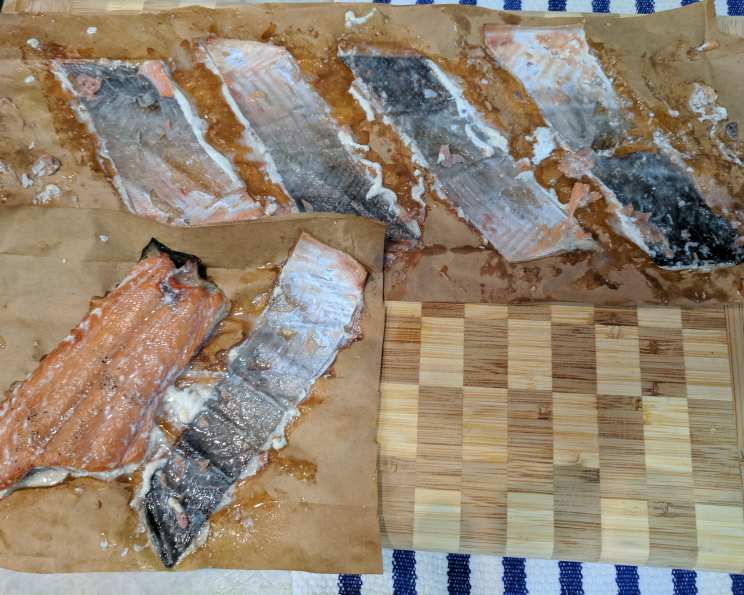
- Remove the fillets and let them cool for about 15 minutes, until they are cool enough to handle. Then, peel off the paper; the skins should come right off with it. Examine the skin side, and if there is any dark brown flesh, scrape it off with a serrated steak knife and discard it, as it can taste muddy.
Expert Tips & Tricks
- Brine Customization: Experiment with adding other spices to your brine, such as dried dill, onion powder, or citrus zest, to create your unique flavor profile.
- Smoke Wisely: Use different types of wood chips to impart various smoky flavors. Alder is classic for salmon, but applewood, cherry, or hickory can also be delicious.
- Temperature Control: Maintaining a consistent temperature in your smoker is crucial for even cooking. Invest in a reliable smoker thermometer and monitor it closely.
- Don’t Overcook: Overcooked salmon will be dry and crumbly. Use a digital thermometer and err on the side of undercooking. The salmon will continue to cook slightly as it rests.
- Pellicle Enhancement: If you want to encourage pellicle formation, place the brined and dried salmon uncovered in the refrigerator, with a fan blowing gently over it, for several hours.
Serving & Storage Suggestions
Serve the short smoked salmon chilled or at room temperature. It’s delicious on its own, flaked into salads, or served with crackers, cream cheese, and dill. For a complete meal, pair it with roasted garlic mashed potatoes and a stone-ground mustard and mayonnaise sauce, as mentioned in the original memory.
Store leftover smoked salmon in an airtight container in the refrigerator for up to 3-4 days. You can also freeze it for longer storage (up to 2 months), but be aware that freezing may slightly alter the texture. Reheat gently in a low oven or enjoy it cold. Do not leave smoked salmon at room temperature for more than 2 hours.
Nutritional Information
| Nutrient | Amount per Serving | % Daily Value |
|---|---|---|
| Calories | 361 kcal | N/A |
| Calories from Fat | 91 g | 25% |
| Total Fat | 10.1 g | 15% |
| Saturated Fat | 1.9 g | 9% |
| Cholesterol | 104.3 mg | 34% |
| Sodium | 11171.3 mg | 465% |
| Total Carbohydrate | 18.2 g | 6% |
| Dietary Fiber | 1.3 g | 5% |
| Sugars | 12.6 g | N/A |
| Protein | 47.6 g | 95% |
Note: Nutritional information is an estimate and may vary based on specific ingredients and preparation methods.
Variations & Substitutions
- Spice it Up: Add a pinch of cayenne pepper or a dash of hot sauce to the brine for a spicy kick.
- Citrus Infusion: Include lemon, orange, or grapefruit zest in the brine for a bright, citrusy flavor.
- Herbal Delight: Incorporate fresh herbs like dill, thyme, or rosemary into the brine.
- Sweet Alternatives: Use honey or maple syrup instead of white sugar in the brine.
- Lower Sodium: While the sodium content is high due to the smoking process, you can try reducing the salt in the brine slightly, but be aware that it may affect the curing process and flavor.
FAQs (Frequently Asked Questions)
Q: Why is it important to use a non-reactive pot for the brine?
A: Reactive metals like aluminum, copper, and cast iron can interact with the salt in the brine, altering the flavor of the salmon and potentially leaching harmful substances into the food.
Q: Can I use smoked salt in the brine?
A: While you can use smoked salt, it may make the final product too salty. It’s best to use regular salt for the brine and rely on the smoking process for the smoky flavor.
Q: How do I know when the salmon is done?
A: The best way to determine doneness is to use a digital thermometer. The salmon is ready when it reaches an internal temperature of 140°F to 150°F.
Q: What if I don’t have a smoker? Can I use my grill?
A: Yes, you can use a grill to smoke salmon. Create a smoking environment by placing wood chips in a smoker box or foil pouch and positioning it over direct heat. Keep the grill temperature low and indirect.
Q: My smoked salmon is too salty. What can I do?
A: Soaking the salmon in fresh water before smoking helps reduce the salt content. If it’s still too salty, try serving it with creamy accompaniments like cream cheese or avocado to balance the flavor.
Final Thoughts
This short smoked salmon recipe is an invitation to embark on a culinary journey, transforming fresh salmon into a delicacy bursting with flavor. Don’t be intimidated by the process; with a little patience and attention to detail, you can create restaurant-quality smoked salmon in your own kitchen. I encourage you to experiment with different brining spices and wood chips to find your perfect flavor combination. Share your creations with friends and family, and let their applause be your reward. Pair it with a crisp white wine or a refreshing craft beer, and savor the moment. Happy smoking!