
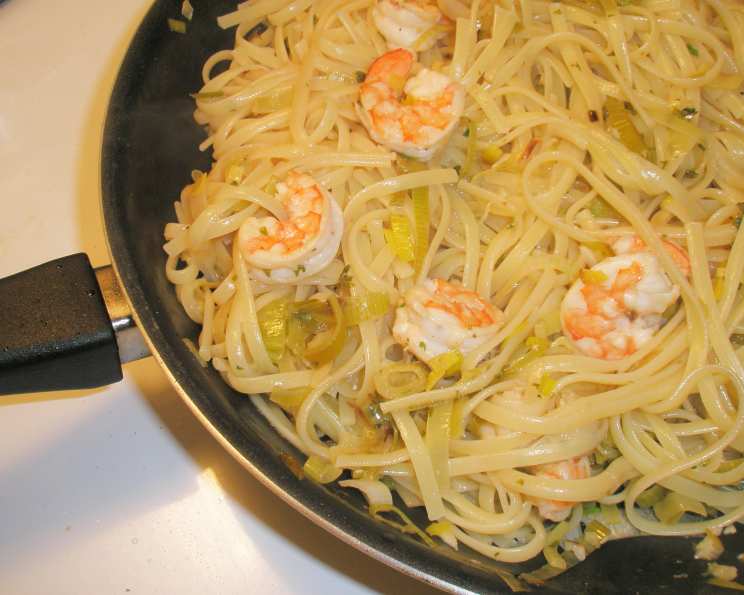
Shrimp and Leek Linguine in White Wine Sauce
The first time I tasted this dish, I was in a tiny trattoria tucked away on a cobbled street in Rome. The aroma of garlic, white wine, and the sea filled the air, promising a simple yet elegant experience. The linguine, perfectly al dente, coated in a delicate sauce studded with sweet shrimp and tender leeks, was a revelation. Each bite transported me, solidifying a lifelong love affair with Italian cuisine and the magic of perfectly balanced flavors.
Recipe Overview
- Prep Time: 20 minutes
- Cook Time: 20 minutes
- Total Time: 40 minutes
- Servings: 4
- Dietary Type: Pescatarian
Ingredients
- 1 lb small uncooked shrimp, peeled, deveined, shells reserved
- 1 3⁄4 cups water
- 6 tablespoons olive oil
- 2 large garlic cloves, minced
- 2 1⁄2 cups thinly sliced leeks (white and pale green parts only from about 2 large)
- 3 tablespoons chopped fresh oregano
- 2 teaspoons minced lemon peel
- 1⁄4 cup dry white wine
- 2 tablespoons fresh lemon juice
- 1 lb linguine
- Chopped fresh parsley
- Salt and pepper to taste
Equipment Needed
- Medium saucepan
- Measuring cup
- Heavy large skillet
- Slotted spoon
- Large pot
Instructions
- Begin by preparing the shrimp stock. Place the reserved shrimp shells in a medium saucepan. Add 1 3/4 cups water and a generous pinch of salt.
- Bring the mixture to a boil over medium-high heat. Once boiling, cover the saucepan, reduce the heat to medium-low, and simmer until the liquid has reduced to 1 cup, approximately 15 minutes. This concentrated shrimp stock will add depth and complexity to the sauce.
- Strain the shrimp stock into a measuring cup, pressing on the shells to extract as much liquid as possible. Discard the shells. Set the strained stock aside.
- While the shrimp stock is simmering, prepare the shrimp. Heat 3 tablespoons of olive oil in a heavy large skillet over medium-high heat. Add the peeled and deveined shrimp to the skillet and sauté until they turn opaque and pink, about 2 minutes. Be careful not to overcook the shrimp, as they will become rubbery.
- Using a slotted spoon, transfer the cooked shrimp to a medium bowl. Set aside.
- Reduce the heat to low. Add the remaining 3 tablespoons of olive oil to the same skillet.
- Add the minced garlic and sauté until it becomes fragrant and soft, about 1 minute. Ensure the garlic doesn’t brown, as this can impart a bitter taste.
- Stir in the thinly sliced leeks, chopped fresh oregano, and minced lemon peel. Cover the skillet and cook until the leeks are soft and tender, about 3 minutes. The leeks should be translucent and slightly sweet.
- Uncover the skillet and add the dry white wine, fresh lemon juice, and the reserved shrimp-shell liquid.
- Increase the heat to high and boil the sauce until it has reduced by half, approximately 2 minutes. This reduction will intensify the flavors and create a richer sauce. Remove the skillet from the heat.
- Meanwhile, cook the linguine in a large pot of boiling salted water until it is al dente, tender but still firm to the bite, stirring occasionally to prevent sticking. Follow the package instructions for cooking time, but check for doneness a minute or two early.
- Drain the cooked linguine, reserving 1 cup of the cooking liquid. This starchy water will help to bind the sauce to the pasta.
- Add the drained linguine and the sautéed shrimp to the skillet with the sauce. Toss to coat the pasta and shrimp evenly in the sauce.
- If the sauce seems too thick, add enough of the reserved pasta cooking liquid to moisten it to your desired consistency. The sauce should be creamy and cling to the pasta.
- Season the dish to taste with salt and pepper.
- Transfer the Shrimp and Leek Linguine to a large serving bowl. Garnish generously with chopped fresh parsley before serving.
Expert Tips & Tricks
- Don’t overcook the shrimp: Shrimp cooks very quickly. Overcooked shrimp will become rubbery and lose their delicate flavor. Cook them just until they turn pink and opaque.
- Use good quality olive oil: The flavor of the olive oil will shine through in the finished dish, so use a good quality extra virgin olive oil.
- Reserve pasta water: Pasta water is a secret weapon for creating creamy sauces. The starch in the water helps to emulsify the sauce and bind it to the pasta.
- Make ahead: The shrimp stock and the sauce can be made ahead of time. Store them separately in the refrigerator for up to 24 hours. When you’re ready to serve, simply reheat the sauce and cook the pasta.
- Add a touch of heat: For a spicier dish, add a pinch of red pepper flakes to the sauce along with the garlic.
Serving & Storage Suggestions
Serve the Shrimp and Leek Linguine immediately after cooking for the best flavor and texture. Garnish with extra chopped parsley and a lemon wedge for added freshness. This dish pairs well with a crisp white wine, such as a Pinot Grigio or Sauvignon Blanc.
Leftovers can be stored in an airtight container in the refrigerator for up to 2 days. To reheat, gently warm in a skillet over low heat, adding a splash of water or broth if needed to prevent drying out. Reheating in the microwave is also an option, but the pasta may become slightly softer. Freezing is not recommended as it can affect the texture of both the shrimp and the pasta.
Nutritional Information
| Nutrient | Amount per Serving | % Daily Value |
|---|---|---|
| Calories | 776 kcal | N/A |
| Calories from Fat | 217 kcal | N/A |
| Total Fat | 24 g | 37% |
| Saturated Fat | 3.5 g | 17% |
| Cholesterol | 173 mg | 57% |
| Sodium | 189 mg | 7% |
| Total Carbohydrate | 96 g | 32% |
| Dietary Fiber | 5 g | 20% |
| Sugars | 5 g | N/A |
| Protein | 39 g | 78% |
Variations & Substitutions
- Gluten-free: Use gluten-free linguine for a gluten-free option.
- Vegetarian: Substitute the shrimp with sautéed mushrooms or artichoke hearts. You can also omit the shrimp shell stock and use vegetable broth instead.
- Dairy-free: The recipe is naturally dairy-free. Ensure your white wine is also dairy-free.
- Spicy: Add a pinch of red pepper flakes to the sauce for a touch of heat.
- Herbs: Feel free to experiment with different herbs, such as basil, thyme, or chives.
- Vegetables: Add other vegetables, such as cherry tomatoes, zucchini, or bell peppers, to the sauce.
FAQs (Frequently Asked Questions)
Q: Can I use frozen shrimp for this recipe?
A: Yes, you can use frozen shrimp. Make sure to thaw them completely before cooking and pat them dry with a paper towel.
Q: What type of white wine is best for this recipe?
A: A dry white wine, such as Pinot Grigio or Sauvignon Blanc, works well in this recipe. Avoid sweet wines.
Q: Can I make this recipe ahead of time?
A: The shrimp stock and sauce can be made ahead of time and stored in the refrigerator for up to 24 hours. Cook the pasta and shrimp just before serving.
Q: How can I prevent the pasta from sticking together?
A: Be sure to use plenty of salted water when cooking the pasta, and stir it occasionally. Adding the pasta directly to the sauce after draining also helps prevent sticking.
Q: Can I add cream to the sauce?
A: While this recipe doesn’t traditionally include cream, you can add a splash of heavy cream or crème fraîche at the end for a richer sauce, if desired.
Final Thoughts
This Shrimp and Leek Linguine in White Wine Sauce is a dish that celebrates simple, fresh ingredients and classic Italian flavors. I encourage you to try this recipe and experience the delightful combination of sweet shrimp, tender leeks, and perfectly cooked pasta in a delicate white wine sauce. Don’t be afraid to experiment with the variations and substitutions to create your own unique version. Share your culinary creations and feedback with others – buon appetito!