
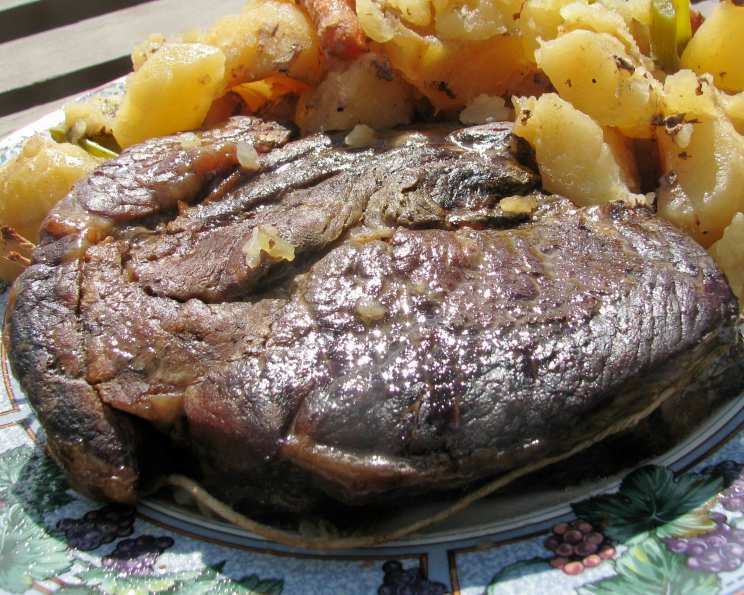
Slow-Cooked Beer-Braised Beef: A Culinary Embrace
The scent of braised beef instantly transports me back to my grandmother’s kitchen. I remember being a child, perched on a stool, watching her patiently tend to a large Dutch oven on the stovetop. The rich aroma of simmering beef, mingling with the earthy notes of beer and herbs, would fill the entire house, promising a comforting and unforgettable meal. It was more than just food; it was a symbol of love, warmth, and togetherness, a tradition I cherish and am delighted to share with you today.
Recipe Overview
- Prep Time: 15 minutes
- Cook Time (Slow Cooker): 6 hours
- Cook Time (Oven): 7-9 hours
- Total Time (Slow Cooker): 6 hours 15 minutes
- Total Time (Oven): 7-9 hours 15 minutes
- Servings: 4
- Dietary Type: Hearty Comfort Food
Ingredients
- 1 tablespoon canola oil
- 3 lbs beef chuck roast
- 12 ounces beer (amber ale or stout recommended)
- 1 onion, sliced
- 1 teaspoon soy sauce
- 1 teaspoon pepper
- 4 teaspoons dried basil
Equipment Needed
- Slow Cooker (optional)
- Large Pot or Dutch Oven (if not using a slow cooker)
- Tongs
- Measuring spoons and cups
Instructions
-
Slow Cooker Method: If using a slow cooker, skip the canola oil entirely. Place the beef chuck roast directly into the slow cooker.
-
Layer the Flavors: Top the beef with the remaining ingredients: the 12 ounces of beer, 1 sliced onion, 1 teaspoon of soy sauce, 1 teaspoon of pepper, and 4 teaspoons of dried basil.
-
Initial High Heat: Cook on high for 1 hour to kickstart the braising process. This helps the flavors meld quickly.
-
Long, Slow Simmer: Reduce the heat to low and cook for 5 hours, or until the roast is incredibly tender and easily falls apart when prodded with a fork. The total slow cooking time should be 6 hours.
-
Oven Method (Alternative): If you prefer using the oven, heat a large pot or Dutch oven over high heat.
-
Sear the Beef: Add 1 tablespoon of canola oil to the hot pot. Once the oil is shimmering, carefully place the beef chuck roast into the pot and brown it on all sides. This step is crucial for developing rich, deep flavors. Don’t overcrowd the pot; you may need to sear the beef in batches.
-
Build the Braising Liquid: After the beef is browned, add the 12 ounces of beer, 1 sliced onion, 1 teaspoon of soy sauce, 1 teaspoon of pepper, and 4 teaspoons of dried basil to the pot. Bring the mixture to a boil.
-
Oven Braising: Cover the pot tightly with a lid. Place the pot in a preheated 275-degree Fahrenheit (135 degrees Celsius) oven for 7-9 hours, or until the meat is wonderfully tender and yields easily to a fork. The exact cooking time will depend on the size and thickness of your roast.
-
Check for Doneness: Whether using a slow cooker or the oven, the beef is ready when it’s so tender that it practically falls apart with a gentle tug.
-
Rest and Shred: Once cooked, let the beef rest for about 15 minutes before shredding it with two forks. This allows the juices to redistribute, resulting in a more succulent and flavorful final product.
Expert Tips & Tricks
- Choosing the Right Beer: Opt for an amber ale, brown ale, or even a stout. The beer will add a depth of flavor to the braising liquid, so choose one that you enjoy drinking. Avoid overly hoppy IPAs, as their bitterness can intensify during the long cooking process.
- The Maillard Reaction is Key: Searing the beef is a vital step that shouldn’t be skipped. This process, known as the Maillard reaction, creates complex flavors and aromas that contribute significantly to the overall taste of the dish.
- Low and Slow is the Way to Go: Patience is key when braising beef. The long, slow cooking process allows the tough connective tissues to break down, resulting in incredibly tender and flavorful meat.
- Deglaze the Pot (Oven Method): After searing the beef (oven method), deglaze the pot with the beer by scraping up any browned bits from the bottom. These bits, known as fond, are packed with flavor.
- Adjusting the Braising Liquid: If the braising liquid seems too thin, you can thicken it at the end by simmering it on the stovetop for a few minutes with a slurry of cornstarch and water.
- Add Vegetables: For a heartier meal, add root vegetables such as carrots, potatoes, or parsnips to the pot during the last few hours of cooking. They will absorb the delicious braising liquid and become incredibly tender.
- Make it Ahead: This dish is perfect for making ahead of time. In fact, it often tastes even better the next day after the flavors have had a chance to meld together.
- Flavor Boost: Try adding a bay leaf or a sprig of fresh thyme to the braising liquid for an extra layer of flavor.
- Salt to Taste: Taste the braising liquid at the end and adjust the seasoning with salt, if needed. Remember that the flavors will concentrate as the liquid reduces.
Serving & Storage Suggestions
Serve the slow-cooked beer-braised beef hot, spooned over mashed potatoes, polenta, or rice. It’s also fantastic served on crusty rye bread as a hearty sandwich, perfect for soaking up the flavorful juices. Garnish with fresh parsley or chives for a pop of color.
Leftovers can be stored in an airtight container in the refrigerator for up to 3 days. For longer storage, freeze the beef in a freezer-safe container for up to 2 months. To reheat, simply warm the beef in a saucepan over medium heat, adding a little broth or water if needed to prevent it from drying out.
Nutritional Information
| Nutrient | Amount per Serving | % Daily Value |
|---|---|---|
| Calories | 560.5 kcal | N/A |
| Calories from Fat | N/A | 39% |
| Total Fat | 24.2 g | 37% |
| Saturated Fat | 9.6 g | 47% |
| Cholesterol | 224.5 mg | 74% |
| Sodium | 364.6 mg | 15% |
| Total Carbohydrate | 7.6 g | 2% |
| Dietary Fiber | 0.9 g | 3% |
| Sugars | 1.2 g | 4% |
| Protein | 73 g | 145% |
Note: Nutritional information is an estimate and may vary based on specific ingredients and portion sizes.
Variations & Substitutions
- Gluten-Free: Ensure the beer and soy sauce you use are gluten-free. Many breweries now offer gluten-free options. Tamari can be used as a gluten-free substitute for soy sauce.
- Spice it Up: Add a pinch of red pepper flakes or a chopped jalapeño to the braising liquid for a touch of heat.
- Wine Instead of Beer: If you prefer, you can substitute the beer with an equal amount of red wine. A Cabernet Sauvignon or Merlot would work well.
- Add Mushrooms: Sauté sliced mushrooms and add them to the pot during the last hour of cooking for an earthy flavor boost.
- Vegetarian Option: While this recipe is for beef, consider using large portobello mushrooms in place of the beef chuck for a vegetarian option. Braise them in the same beer-based liquid for a flavorful and satisfying dish.
FAQs (Frequently Asked Questions)
Q: Can I use a different cut of beef?
A: While beef chuck roast is ideal due to its marbling and connective tissue that breaks down during braising, you can also use brisket or short ribs. Adjust cooking time as needed.
Q: Can I skip the searing step?
A: While you can skip it, searing the beef adds significant flavor through the Maillard reaction. It’s highly recommended for the best results.
Q: What if I don’t have dried basil?
A: You can substitute with 1 tablespoon of fresh basil, added during the last 30 minutes of cooking, or use another dried herb like oregano or thyme.
Q: Can I add other vegetables besides onion?
A: Absolutely! Carrots, celery, and potatoes are great additions. Add them about halfway through the cooking time to prevent them from becoming too mushy.
Q: How do I thicken the sauce if it’s too thin?
A: Remove the beef from the pot. In a small bowl, whisk together 1 tablespoon of cornstarch with 2 tablespoons of cold water. Slowly whisk the slurry into the simmering braising liquid and cook until thickened, about 1-2 minutes.
Final Thoughts
I encourage you to embrace the comforting ritual of slow-cooked beer-braised beef. It’s a dish that nourishes the body and soul, perfect for a cozy weeknight dinner or a special gathering with loved ones. Don’t be afraid to experiment with variations and make it your own. And most importantly, savor every moment of the cooking process and the delicious flavors that result. I would love to hear about your experience and any creative twists you add to this classic recipe. Cheers to good food and happy cooking!