
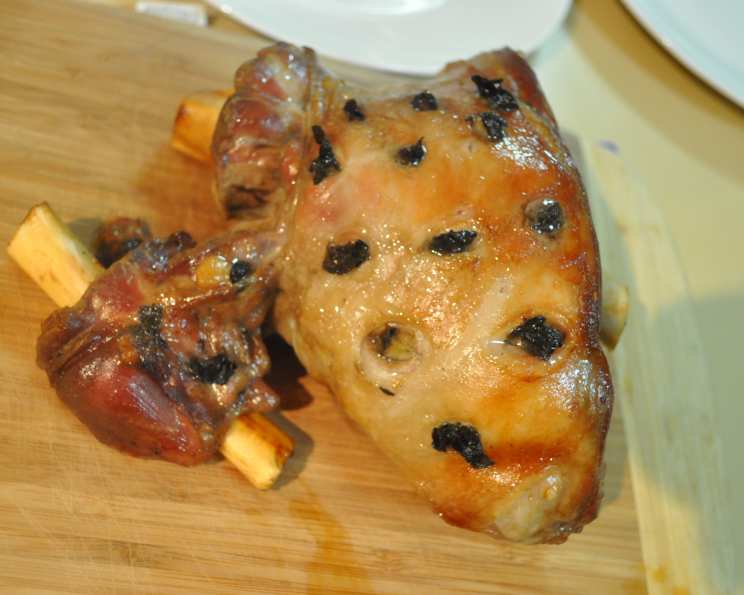
Slow Roasted Leg of Lamb With Oregano and Lemon
The aroma alone can transport me back to Sunday afternoons at my Yiayia’s (grandmother’s) house. The scent of oregano and lemon, infused into succulent lamb, would fill every corner of her cozy kitchen. The anticipation was palpable as we children would hover, mesmerized, waiting for the moment when the roasted leg of lamb, glistening with savory juices, would be brought to the table – a culinary centerpiece that symbolized family, love, and tradition. That memory is the reason I still make this dish, hoping to replicate that feeling for my own family.
Recipe Overview
- Prep Time: 20 minutes
- Cook Time: 3 hours 30 minutes
- Total Time: 3 hours 50 minutes
- Servings: 6
- Yield: 1 leg of lamb with potatoes and gravy
- Dietary Type: Gluten-Free
Ingredients
- 2 kg leg of lamb
- 3 cloves garlic, quartered
- 1/4 cup loosely packed fresh oregano
- 1/2 cup dry white wine
- 1 cup chicken stock
- 1/3 cup lemon juice
- 1 kg tiny new potatoes, quartered lengthways
- 1 medium lemon, cut into 8ths
- 2/3 cup olives, pitted (I like a mix of green and black)
- 1 tablespoon olive oil
- 2 tablespoons all-purpose flour
- 1 cup water
Equipment Needed
- Sharp knife
- Large flameproof baking dish
- Separate baking dish
Instructions
-
Preheat your oven to hot, approximately 200°C (400°F). It’s important to get a good sear on the lamb initially.
-
Using a sharp knife, make about 12 small cuts all over the leg of lamb. These cuts will act as pockets for flavor.
-
In each of those cuts, press a mixture of quartered garlic cloves and loosely packed fresh oregano. Really push the garlic and oregano in there to infuse the lamb with their aromatic flavors.
-
Place the prepared leg of lamb in a large flameproof baking dish. The dish should be large enough to hold the lamb comfortably and allow space for the juices to circulate.
-
Pour 1/2 cup of dry white wine, 1 cup of chicken stock, and 1/3 cup of lemon juice over the lamb. The combination of wine, stock, and lemon will create a delicious braising liquid that will keep the lamb moist and flavorful during the slow roasting process.
-
Cover the baking dish tightly. You can use a lid if your baking dish has one, or tightly cover it with aluminum foil. Make sure the foil is securely sealed to prevent steam from escaping.
-
Roast the leg of lamb in the hot oven for 30 minutes. This initial high-heat roasting will help to brown the surface of the lamb and develop a rich, savory crust.
-
After 30 minutes, reduce the oven temperature to moderate, about 160°C (320°F). Continue to roast the lamb, covered tightly, for a further 3 hours. During this time, occasionally brush the lamb with the pan juices. This will help to keep the lamb moist and flavorful, and will also create a delicious glaze.
-
When the leg of lamb has about 1 hour left to roast, prepare the potatoes, lemon wedges, and olives. Place the quartered new potatoes, lemon wedges, and pitted olives in a separate baking dish.
-
Drizzle the potatoes, lemon wedges, and olives with 1 tablespoon of olive oil. Toss everything together to ensure that the potatoes and olives are evenly coated with oil.
-
Place the dish with the potatoes, lemon wedges, and olives in the oven alongside the leg of lamb. Roast, uncovered, for the remaining hour, or until the potatoes are browned and tender. The lemons will become caramelized and slightly bitter, complementing the savory lamb.
-
After the lamb has roasted for a total of 3 hours and 30 minutes, check for doneness. The lamb should be extremely tender and easily pulled apart with a fork.
-
Transfer the cooked leg of lamb to a serving dish and cover it loosely to keep warm. Allow the lamb to rest for at least 15 minutes before carving. This will allow the juices to redistribute throughout the meat, resulting in a more tender and flavorful roast.
-
To make the gravy, heat 1 tablespoon of the reserved lamb juices in the same flameproof baking dish that you used to roast the lamb.
-
Stir in 2 tablespoons of all-purpose flour into the hot juices. Cook, stirring constantly, until the mixture is well browned. This will create a roux, which will thicken the gravy and add richness.
-
Gradually stir in the remaining lamb juices and 1 cup of water. Stir constantly to prevent lumps from forming.
-
Continue to stir until the gravy boils and thickens to your desired consistency. You can add more water if the gravy is too thick, or simmer it for longer if you want it to be thicker.
-
Slice the leg of lamb and serve with the roasted potato mixture and the homemade gravy. Discard the roasted lemon pieces, as they may be too bitter.
Expert Tips & Tricks
- Scoring the Fat: Before roasting, lightly score the fat cap on the leg of lamb in a crosshatch pattern. This helps the fat render evenly and creates a crispy, flavorful crust.
- Herb Variations: Feel free to experiment with other herbs besides oregano. Rosemary, thyme, or a combination of all three work beautifully.
- Marinating: For an even deeper flavor, marinate the leg of lamb overnight in the white wine, lemon juice, garlic, and oregano mixture before roasting.
- Checking Doneness: Use a meat thermometer to ensure the lamb is cooked to your liking. For medium-rare, aim for an internal temperature of 130-135°F (54-57°C). For medium, aim for 140-145°F (60-63°C). For well-done, aim for 155-160°F (68-71°C).
- Defatting the Gravy: To remove excess fat from the gravy, use a gravy separator or skim the fat from the surface with a spoon after it has cooled slightly.
Serving & Storage Suggestions
Serve the slow roasted leg of lamb hot, sliced thinly, and drizzled with the homemade gravy. The roasted potatoes, olives, and lemon wedges make a delicious and colorful side dish. This dish pairs well with a simple green salad or steamed vegetables.
Leftovers can be stored in an airtight container in the refrigerator for up to 3 days. To reheat, slice the lamb and warm it gently in the gravy over low heat, or microwave in short intervals. The roasted potatoes can be reheated in the oven or microwave. Leftover lamb can also be used in sandwiches, salads, or shepherd’s pie.
Nutritional Information
| Nutrient | Amount per Serving | % Daily Value |
|---|---|---|
| Calories | 873.1 kcal | N/A |
| Calories from Fat | 446 g | 51% |
| Total Fat | 49.6 g | 76% |
| Saturated Fat | 20.1 g | 100% |
| Cholesterol | 224.5 mg | 74% |
| Sodium | 390 mg | 16% |
| Total Carbohydrate | 34.1 g | 11% |
| Dietary Fiber | 4 g | 16% |
| Sugars | 3.6 g | N/A |
| Protein | 66.8 g | 133% |
Variations & Substitutions
- Gluten-Free Gravy: Use a gluten-free flour blend or cornstarch to thicken the gravy instead of all-purpose flour.
- Vegetable Variations: Add other vegetables to the roasting pan along with the potatoes, such as carrots, parsnips, or sweet potatoes.
- Wine Substitution: If you don’t have white wine on hand, you can use more chicken stock or vegetable broth.
- Herb Infusion: Add fresh rosemary sprigs directly into the roasting pan alongside the lamb for enhanced flavor.
- Spicy Kick: Add a pinch of red pepper flakes to the garlic and oregano mixture for a subtle spicy kick.
FAQs (Frequently Asked Questions)
Q: Can I use a different cut of lamb for this recipe?
A: While a leg of lamb is ideal, you can also use a shoulder of lamb. Keep in mind that the cooking time may need to be adjusted depending on the size and thickness of the cut.
Q: How do I prevent the lamb from drying out during the slow roasting process?
A: Make sure the baking dish is tightly covered with a lid or aluminum foil to trap moisture. Basting the lamb with the pan juices every hour also helps to keep it moist.
Q: Can I prepare the lamb ahead of time?
A: Yes, you can prepare the lamb up to 24 hours in advance. Simply rub the lamb with the garlic and oregano mixture, wrap it tightly in plastic wrap, and store it in the refrigerator until ready to roast.
Q: What is the best way to carve a leg of lamb?
A: Place the leg of lamb on a cutting board with the bone facing up. Use a sharp carving knife to slice the lamb thinly, following the grain of the meat.
Q: Can I freeze leftover roasted lamb?
A: Yes, you can freeze leftover roasted lamb. Wrap it tightly in plastic wrap and then in aluminum foil, or store it in an airtight container. Frozen lamb can be stored for up to 2-3 months. Thaw it overnight in the refrigerator before reheating.
Final Thoughts
I truly hope you try this recipe. It’s more than just a meal; it’s an experience. It’s a way to connect with tradition, to create memories, and to share a delicious and comforting dish with loved ones. Don’t be afraid to experiment with different herbs and vegetables to make it your own. And if you do make it, please share your feedback! This slow-roasted leg of lamb pairs beautifully with a crisp Greek salad and a glass of dry red wine, creating a complete and unforgettable meal. Enjoy!