
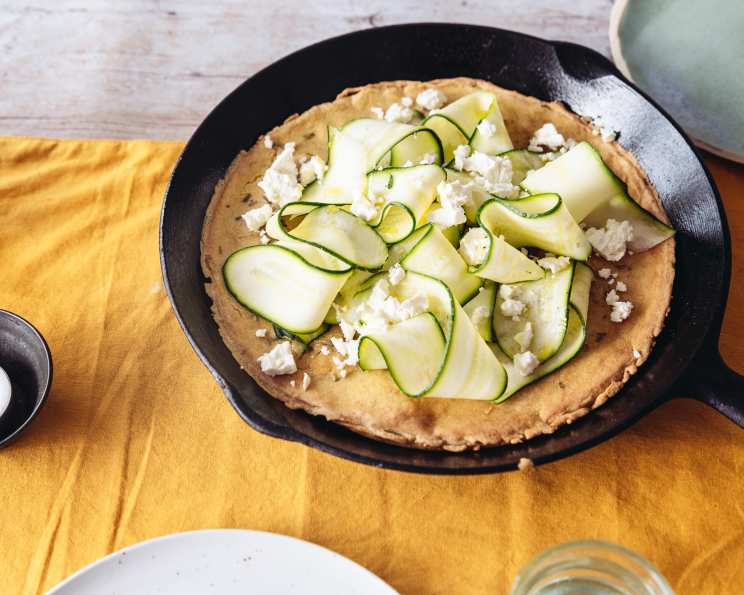
Socca: A Taste of the French Riviera, Gluten-Free
The first time I tasted socca, I was wandering through a bustling market in Nice, the sun warming my face and the scent of lavender hanging in the air. An elderly woman with twinkling eyes was expertly flipping these golden, crispy rounds on a massive, well-worn pan. She handed me a wedge, still steaming, and the simple, earthy flavor of chickpea flour, the slight char from the pan, and the drizzle of olive oil transported me. It was rustic perfection, a true taste of the Mediterranean, and I’ve been chasing that flavor ever since.
Recipe Overview
- Prep Time: 35 minutes (includes batter resting time)
- Cook Time: 13 minutes
- Total Time: 48 minutes
- Servings: 2 (main dish) or 4 (appetizer)
- Yield: 1 large socca (10-inch diameter)
- Dietary Type: Gluten-Free, Dairy-Free, Vegan, Kosher (Pareve)
Ingredients
- 1 cup chickpea flour
- ½ teaspoon salt
- ½ teaspoon pepper
- 1 cup warm water
- 3 tablespoons olive oil, divided
- ½ medium onion, sliced
- ½ tablespoon fresh rosemary leaves, minced
Equipment Needed
- Large bowl
- Whisk
- Measuring cups and spoons
- Heavy skillet, preferably cast-iron (10-inch diameter)
- Oven
Instructions
- Preheat your oven to 450°F (232°C). Place your cast-iron skillet inside the oven while it preheats. This is crucial for achieving that signature crispy crust.
- While the oven heats, prepare the batter. In a large bowl, sift together the chickpea flour, salt, and pepper. Sifting ensures a smooth batter without lumps.
- Add the minced fresh rosemary leaves to the sifted flour mixture. The rosemary adds a wonderful aromatic dimension.
- Slowly whisk in the warm water and 2 tablespoons of olive oil until you have a smooth batter. It should have the consistency of thick cream. Don’t overmix; just ensure there are no lumps.
- Cover the bowl and let the batter rest for at least 30 minutes at room temperature. This allows the chickpea flour to fully absorb the water and develop its flavor.
- After the resting period, stir the sliced onion into the batter. Ensure the onion slices are evenly distributed.
- Carefully remove the hot cast-iron skillet from the oven.
- Add the remaining 1 tablespoon of olive oil to the hot pan, swirling it around to coat the bottom and sides. This prevents the socca from sticking and contributes to that beautiful golden crust.
- Immediately pour the batter into the hot skillet.
- Bake in the preheated oven for 12-15 minutes, or until the socca is firm and the edges are set. The top may not be browned at this point.
- To achieve that characteristic charred top, set the socca a few inches below your broiler for 1-2 minutes, just long enough to brown it in spots. Watch it carefully to prevent burning.
- Remove the socca from the oven and let it cool slightly before slicing into wedges. Serve hot, with your favorite toppings.
Expert Tips & Tricks
- The Skillet is Key: A cast-iron skillet is ideal for socca because it retains heat exceptionally well, giving you that crispy bottom and evenly cooked top. If you don’t have cast iron, use another heavy, oven-safe skillet.
- Resting the Batter: Don’t skip the resting period! This allows the chickpea flour to hydrate properly, resulting in a smoother, more flavorful socca.
- Hot Pan, Hot Batter: The combination of a preheated skillet and a quick pour of batter is crucial for achieving the right texture.
- Broiler Beware: The broiler step adds that final touch of color and flavor, but it can quickly go from perfectly browned to burnt. Keep a close eye on it!
- Customize Your Herbs: Rosemary is classic, but thyme, oregano, or even a pinch of Herbes de Provence would be delicious additions.
- Spice it Up: A pinch of red pepper flakes in the batter adds a subtle kick.
Serving & Storage Suggestions
Serve socca hot, straight from the oven. It’s delicious on its own with a drizzle of olive oil and a sprinkle of sea salt, or you can get creative with toppings. Kalamata tapenade, ratatouille, sautéed vegetables, caramelized onions, olives, and anchovies are all excellent choices.
Leftover socca can be stored in an airtight container in the refrigerator for up to 3 days. To reheat, warm it in a skillet over medium heat or in a preheated oven at 350°F (175°C) until heated through and slightly crispy. Reheating in the microwave is not recommended, as it can make the socca soggy.
Nutritional Information
| Nutrient | Amount per Serving | % Daily Value |
|---|---|---|
| Calories | 370 kcal | N/A |
| Total Fat | 23.4 g | 36% |
| Saturated Fat | 3.1 g | 15% |
| Cholesterol | 0 mg | 0% |
| Sodium | 616.1 mg | 25% |
| Total Carbohydrate | 29.6 g | 9% |
| Dietary Fiber | 5.6 g | 22% |
| Sugars | 6.2 g | N/A |
| Protein | 10.7 g | 21% |
Note: Nutritional information is an estimate and may vary based on specific ingredients and preparation methods.
Variations & Substitutions
- Onion-Free: If you’re not a fan of onions, you can omit them entirely or substitute with other vegetables like thinly sliced zucchini or bell peppers.
- Herb Variations: Experiment with different herbs! Thyme, oregano, or even a pinch of chili flakes can add a unique flavor.
- Topping Ideas: The possibilities are endless! Try pesto, roasted vegetables, sun-dried tomatoes, or a sprinkle of Parmesan cheese (if not keeping it dairy-free).
- Different Flours: While chickpea flour is traditional, you could try experimenting with other gluten-free flours like brown rice flour or sorghum flour, but the texture and flavor will be different.
FAQs (Frequently Asked Questions)
Q: Can I make the batter ahead of time?
A: Yes! The batter can be made up to 24 hours in advance and stored in the refrigerator. Just be sure to stir it well before pouring it into the skillet.
Q: My socca is sticking to the pan. What am I doing wrong?
A: Ensure your skillet is well-seasoned and thoroughly heated before adding the olive oil and batter. You may need to use a little more olive oil to prevent sticking.
Q: Can I bake socca on a pizza stone?
A: While a pizza stone can help with even cooking, the high sides of a cast-iron skillet are essential for creating the socca’s characteristic crust.
Q: What is the best way to reheat socca?
A: The best way to reheat socca is in a skillet over medium heat or in a preheated oven at 350°F (175°C) until heated through and slightly crispy.
Q: My socca is too thick/thin. How can I adjust the recipe?
A: The consistency of the batter should be similar to thick cream. If it’s too thick, add a tablespoon or two of water. If it’s too thin, add a tablespoon of chickpea flour.
Final Thoughts
Socca is more than just a gluten-free pancake; it’s a taste of the sun-drenched French Riviera, a celebration of simple ingredients, and a blank canvas for your culinary creativity. Don’t be intimidated by its rustic appearance; it’s incredibly easy to make, and the results are wonderfully satisfying. I encourage you to try this recipe, experiment with different toppings, and share your creations with friends and family. Pair it with a crisp glass of rosé for a truly authentic Mediterranean experience. Bon appétit!