
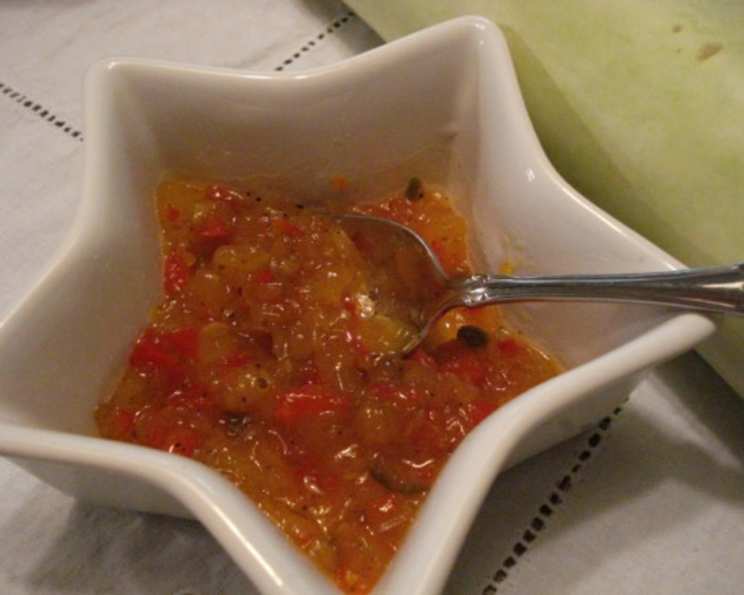
Spicy Texas Cucuzza-Pepper Relish
The first time I tasted cucuzza, I was skeptical. My Italian grandmother, Nonna Emilia, swore it was the secret ingredient to her legendary summer suppers. I remember watching her carefully tend to the sprawling vines in her garden, a mischievous glint in her eye as she whispered about the “magic” within those pale green gourds. Now, years later, I understand that magic, especially when transformed into this vibrant, spicy relish that brings a taste of Nonna’s garden to every bite.
Recipe Overview
- Prep Time: 1 hour 30 minutes
- Cook Time: 30 minutes
- Total Time: 2 hours
- Yields: 6 8 oz. jars
- Dietary Type: Vegan
Ingredients
- 2 lbs cucuzza, peeled and seeded
- 1 large yellow onion (such as Texas 1015)
- 2 red bell peppers, seeded
- 1 green bell pepper, seeded
- 2 large jalapenos, seeded
- 1/4 cup pickling salt
- 1 1/2 cups white vinegar
- 2 cups sugar
- 3 dried Thai chiles
- 1 1/2 teaspoons dry mustard
- 1 teaspoon celery seed
- 1 teaspoon cayenne pepper
- 1/2 teaspoon turmeric
- 1/4 teaspoon black pepper
- 1 tablespoon water
- 2 teaspoons cornstarch
Equipment Needed
- Large mixing bowl
- Strainer
- Wooden spoon
- Large stockpot
- Small bowl
- Sterilized canning jars
- Water bath canner (or large pot with rack)
Instructions
- Finely chop the cucuzza, onion, bell peppers, and jalapeños. A food chopper can significantly speed up this process. The more uniformly you chop the vegetables, the better the final texture of the relish will be.
- Place the chopped cucuzza, onions, bell peppers, and jalapeños in a large mixing bowl.
- Sprinkle the pickling salt over the cucuzza mixture and stir well to combine. This helps draw out excess moisture and firm up the vegetables.
- Let the cucuzza mixture sit on the counter at room temperature for 1 hour. This salting period is crucial for removing water and improving the relish’s consistency.
- Thoroughly rinse the cucuzza mixture in a strainer under cold running water. Ensure you remove all traces of salt, as leaving salt in can affect the flavor and preservation of the relish.
- Use a wooden spoon to press the veggies against the side of the strainer to drain as much water as you can. The drier the mixture, the better the relish will hold its shape and avoid being watery.
- Place the drained cucuzza mixture in a clean bowl.
- Let it sit on the counter for an additional 15 minutes, then drain again to remove any excess water that may have accumulated.
- In a large stockpot, combine the white vinegar, sugar, dried Thai peppers, dry mustard, celery seeds, cayenne pepper, turmeric, and black pepper. These ingredients create the base for the spicy-sweet-tangy relish.
- Bring to a boil, stirring occasionally. This ensures the sugar dissolves completely and the flavors begin to meld together.
- Reduce heat to simmer for about 15 minutes, stirring occasionally. Simmering allows the flavors to fully infuse into the vinegar mixture.
- Remove the Thai peppers from the pot and discard. This step controls the heat level of the relish. Removing the peppers after simmering infuses the flavor without making it overwhelmingly spicy. If you prefer a milder relish, you can remove them earlier, or if you want more heat, you can leave them in longer.
- Add the drained cucuzza mixture to the stockpot.
- Cook for an additional 5 minutes or until the veggies are tender but still slightly crisp. Overcooking can result in a mushy relish, so watch carefully.
- In a small bowl, combine the water and cornstarch; mix to dissolve. This slurry will help thicken the relish.
- Pour the cornstarch mixture into the stockpot and cook for 5 minutes, stirring constantly. This will thicken the relish to your desired consistency.
- Pour into sterilized canning jars and process in a water bath for 10 minutes. Follow proper canning procedures to ensure the relish is shelf-stable.
Expert Tips & Tricks
- Spice Level Adjustment: For a milder relish, reduce the amount of cayenne pepper or remove the seeds and membranes from the jalapeños before chopping. For extra heat, leave the seeds in the jalapeños or add more Thai chiles.
- Vegetable Prep: Using a food processor can significantly speed up the chopping process, but be careful not to over-process the vegetables into a puree.
- Canning Safety: Always follow proper canning procedures to ensure your relish is safely preserved. This includes using sterilized jars, processing for the correct amount of time, and checking for proper seal after processing. A good seal is essential for preventing spoilage.
- Flavor Enhancement: A splash of apple cider vinegar in addition to the white vinegar can add a subtle complexity to the flavor.
- Sweetness Adjustment: If you prefer a less sweet relish, you can reduce the amount of sugar slightly, but be mindful of the impact on preservation if canning.
Serving & Storage Suggestions
This Spicy Texas Cucuzza-Pepper Relish is incredibly versatile. It’s fantastic as a condiment for hot dogs, hamburgers, and sandwiches. You can also pour it over a block of cream cheese and serve as a dip with chips or crackers. It’s a delightful addition to a charcuterie board or as a side with grilled meats.
Once opened, store the relish in the refrigerator. Properly canned and sealed jars can be stored in a cool, dark place for up to a year. After opening, refrigerate and use within 2-3 weeks for the best flavor and quality.
Nutritional Information
Note: Nutritional information is an estimate and can vary based on specific ingredients and portion sizes.
| Nutrient | Amount per Serving | % Daily Value |
|---|---|---|
| Calories | 328 kcal | – |
| Fat | 0.6 g | 0% |
| Saturated Fat | 0.1 g | 0% |
| Cholesterol | 0 mg | 0% |
| Sodium | 4726.5 mg | 196% |
| Carbohydrates | 79.7 g | 26% |
| Fiber | 2 g | 7% |
| Sugars | 70.2 g | – |
| Protein | 2.1 g | 4% |
Variations & Substitutions
- Milder Version: For a milder relish, use sweet peppers instead of jalapeños or Thai chiles, or remove the seeds and membranes from the jalapeños.
- Different Vegetables: You can add other vegetables like carrots or corn to the relish for added texture and flavor.
- Vinegar Variations: Experiment with different types of vinegar, such as apple cider vinegar or rice vinegar, to alter the flavor profile.
- Sugar Alternatives: While sugar is important for preservation, you can experiment with using honey or maple syrup in small amounts, being aware that this may affect the texture and shelf life.
- Herb Infusion: Fresh herbs like cilantro or basil can be added to the relish after cooking for a burst of fresh flavor.
FAQs (Frequently Asked Questions)
Q: Do I have to use cucuzza for this recipe?
A: While cucuzza provides a unique flavor and texture, you could substitute it with zucchini or another mild squash. However, the flavor profile will be slightly different.
Q: How important is the pickling salt? Can I use regular table salt?
A: Pickling salt is preferred because it doesn’t contain iodine or anti-caking agents, which can darken the relish and affect its flavor. If you must use table salt, use it sparingly and be aware of potential color changes.
Q: Is it necessary to can the relish, or can I just refrigerate it?
A: If you plan to store the relish for an extended period (more than a few weeks), canning is recommended for safe preservation. If you only intend to use it within a few weeks, refrigeration is sufficient.
Q: Can I freeze this relish?
A: Freezing is not recommended as it can alter the texture of the vegetables, making them mushy. Canning is the preferred method for long-term storage.
Q: My relish is too watery. What did I do wrong?
A: This likely means that not enough water was extracted from the vegetables before cooking. Be sure to salt the vegetables thoroughly and drain them properly before adding them to the pot.
Final Thoughts
This Spicy Texas Cucuzza-Pepper Relish is more than just a condiment; it’s a celebration of summer’s bounty and a tribute to the resourcefulness of home cooks everywhere. Whether you have an abundance of cucuzzas from your garden or simply want to add a zesty kick to your next meal, this recipe is sure to impress. So gather your ingredients, put on your apron, and get ready to create a delicious and memorable relish that will have everyone asking for more! Don’t hesitate to experiment with the spice levels and vegetable combinations to create a relish that’s uniquely yours. And be sure to share your creations and feedback—I’d love to hear how you make this recipe your own!