
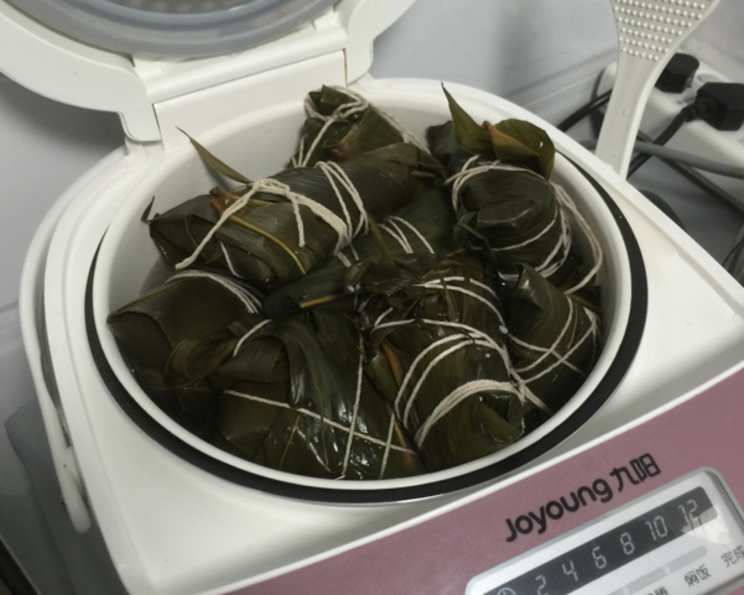
Sticky Rice Wrapped in Bamboo Leaves (Joong/Zhongzi)
The scent of bamboo leaves boiling on the stove always transports me back to my grandmother’s kitchen. Every year, as the Dragon Boat Festival approached, she would gather the family to embark on the grand task of making zhongzi. The aroma, the bustling chatter, and the communal effort – it was more than just cooking; it was a celebration of family, heritage, and the rich tapestry of flavors woven into each sticky rice dumpling. While my grandmother’s recipe was a closely guarded secret, this recipe captures the essence of those cherished memories, offering a taste of tradition with a touch of adaptation for modern palates.
Recipe Overview
- Prep Time: 6 hours (including soaking time)
- Cook Time: 2 hours
- Total Time: 8 hours
- Yields: 20 dumplings
- Serves: 20
- Dietary Type: Potentially Gluten-Free, Dairy-Free (depending on broth and fish sauce ingredients)
Ingredients
-
For the Dumplings:
- 3 lbs glutinous rice (long-grain preferred)
- 2 cups mung beans (the hulled and split type)
- 1 lb pork shoulder, cut in 3/4-inch cubes
- 3 1⁄4 teaspoons salt, divided
- 1⁄4 teaspoon ground black pepper
- 4 garlic cloves, crushed, divided
- 4 tablespoons rice wine
- 4 tablespoons water (plus water for soaking and boiling)
- 1 tablespoon rock sugar (or one smallish lump, may be broken up with a garlic press or the flat of a knife)
- 1⁄4 pinch cinnamon
- 1⁄2 pinch white pepper
- 1 pinch ground cloves
- 1⁄8 teaspoon ground coriander
- 1⁄2 teaspoon ground fennel
- 1⁄2 teaspoon ground fenugreek (optional, and these last 6 are in lieu of 5-spice powder)
- 4 tablespoons canola oil, divided
- 2 carrots, minced
- 1 yellow onion, minced
- 1 teaspoon fresh ginger, grated
- 1 cup chicken broth (home-made, or Campbells low-sodium tetra-pack)
- 1-2 tablespoons fish sauce (to replace the flavour of dried shrimp or scallops)
- 2 teaspoons white sugar
- 70 bamboo leaves, dried
- String, to wrap the dumplings
Equipment Needed
- Large bowls for soaking
- Wok or large frying pan
- Large pot for boiling
- Scissors
- Sponge or scrubbing pad
Instructions
-
Start the soaking process: The day before you plan to make the dumplings, soak the glutinous rice, mung beans, and bamboo leaves in separate containers overnight. Be sure to place a bowl or plate over the bamboo leaves to keep them fully submerged in the water.
-
Prepare the pork marinade: In a bowl, combine 2 tsp salt, black pepper, 1 crushed garlic clove, rice wine, water, rock sugar, cinnamon, white pepper, cloves, coriander, fennel, fenugreek, and 2 tbsp canola oil. Stir in the cubed pork, cover the bowl, and refrigerate it overnight.
-
Prepare the rice mixture: The next day, drain the soaked rice thoroughly and set it aside.
-
Stir-fry the aromatics: Heat the remaining canola oil in a wok or large frying pan over medium heat. Add the remaining crushed garlic, minced carrots, minced onion, and grated ginger, and stir-fry until slightly softened.
-
Incorporate the broth, pork marinade and pork: Add the chicken broth, 1 tsp salt, and fish sauce to the wok and stir well. Strain any excess marinade from the pork and add the strained marinade to the wok (return the marinated pork to the fridge). Heat until the mixture is bubbling.
-
Add the rice: Add the drained rice to the wok and stir frequently until all the liquid is absorbed. Remove from heat and let it sit until it is cool enough to handle.
-
Soften the bamboo leaves: Meanwhile, transfer the soaked bamboo leaves to a large pot of boiling water and simmer them for 30 minutes to soften and sterilize them. Adding a splash of vinegar to the water can further aid in softening the leaves. Once softened, wipe each leaf with a sponge or scrubbing pad under cool running water to remove any remaining soil or residue. You can also trim off the stems with scissors for easier handling.
-
Season the mung beans: Drain the soaked mung beans and add the white sugar and the remaining 1/4 tsp salt. Stir to combine.
-
Prepare the string: Cut approximately 25 lengths of string, each about 4 feet long. Tying groups of 5 strings together at one end, with a loop, can be helpful for hanging them from a hook on your cabinet. This allows you to hang the dumplings from the string as you tie them up, making it easier to put them into and take them out of the boiling pot in groups.
-
Set up your wrapping station: Lay out all your wrapping materials: the softened bamboo leaves, the cooked rice mixture, the seasoned mung beans, and the marinated pork. Consider keeping the bowl of marinated pork in a larger bowl filled with ice to keep it cold while you wrap, especially if you are working in a warm kitchen.
-
Wrap the dumplings: This is the most challenging part, so take your time. Take 2 bamboo leaves, overlapping them along their long sides about halfway, and form a cone shape. You can find helpful video tutorials online that demonstrate this technique.
-
Fill the cone: Pat about 2 tablespoons of the rice mixture into the cone. Then add 1/2 tablespoon of the mung beans, followed by 2 or 3 pieces of pork. Add another 1/2 – 1 tablespoon of the mung beans, and then cover with another 2 or 3 tablespoons of the rice mixture. If needed, add a third bamboo leaf to extend the cone and provide enough coverage.
-
Shape and close the dumpling: Use the ends of the leaves to firmly compress the cone of ingredients. Roughly shape the open end into a square or rectangle. Closing the bamboo leaf is tricky. Hold the cone with the leaf ends pointing away from you. Fold the near edge towards the middle, then fold the ends towards you over that fold. Carefully fold each side towards the middle, ensuring that the corners are completely covered.
Orient your leaves the same way each time, so one side consists of leaf ends and the other consists of stem ends. Aim to tuck the leaf ends under the stem ends to create a secure closure.
-
Tie the dumpling: Wind the string tightly around the wrapped dumpling until it feels secure. Keep wrapping dumplings until you have used up all the filling ingredients. Be patient, as the first few dumplings might be a bit misshapen, but you’ll quickly get the hang of it.
-
Boil the dumplings: Heat a large pot or wok of salted water to a boil. Place a few extra or ripped bamboo leaves in the bottom of the pot first, then add some dumplings, followed by some more leaves. The water should just about cover the dumplings. I recommend doing 10 at a time. Bring the water back to a boil, then cover the pot and reduce the heat to medium-low to maintain a good bubbling simmer for 2 hours. Add more water halfway through the cooking time to ensure the dumplings remain submerged.
-
Check for doneness: The dumplings should be slightly puffed and feel firm but squishy when you squeeze them gently.
-
Drain and rinse: Drain the cooked dumplings and rinse them off with cool water to remove any excess starch.
-
Cool and serve: Allow the dumplings to cool slightly before serving, or eat some hot right away.
Expert Tips & Tricks
- Don’t be discouraged if your first few dumplings are not perfect! The wrapping technique takes practice. Watch video tutorials and be patient with yourself.
- Using long-grain glutinous rice will result in a slightly less sticky texture, which some people prefer.
- If you find the bamboo leaves are still too brittle after soaking, try simmering them in boiling water with a tablespoon of vinegar for extra softening.
- Keep the pork filling cold while you’re wrapping to prevent bacterial growth.
- Tightly packed dumplings will hold their shape better during boiling.
Serving & Storage Suggestions
Serve the sticky rice dumplings hot or warm, unwrapped and enjoyed on their own. They are also delicious with a drizzle of soy sauce (if not avoiding soy) or a sprinkle of sugar.
Leftover dumplings will keep in the refrigerator for 3-5 days. To store, wrap each dumpling individually in plastic wrap or place them in an airtight container. They also freeze well for up to 6 months in a good freezer, well-wrapped to prevent freezer burn.
To reheat, steam the dumplings for about 15-20 minutes, or microwave them on high for 2-3 minutes. You can also reheat them by simmering them in boiling water for about 10 minutes.
Nutritional Information
Please note that these values are approximate and can vary based on specific ingredients and portion sizes.
| Nutrient | Amount per Serving | % Daily Value |
|---|---|---|
| Calories | 415 kcal | N/A |
| Fat | 17 g | 22% |
| Saturated Fat | 7.7 g | 11% |
| Cholesterol | 1.7 g | 8% |
| Sodium | 16.1 mg | 5% |
| Carbohydrate | 517.6 mg | 21% |
| Fiber | 70 g | 23% |
| Sugars | 6 g | 24% |
| Protein | 1 g | 4% |
| 14.2 g | 28% |
Variations & Substitutions
- Vegetarian/Vegan: Substitute the pork with marinated shiitake mushrooms or firm tofu. Use vegetable broth instead of chicken broth. Consider adding peanuts or water chestnuts for added texture and flavor.
- Gluten-Free: Ensure that your fish sauce and chicken broth are gluten-free.
- Spice it up: Add a pinch of chili flakes to the pork marinade for a touch of heat.
- Regional variations: Experiment with different fillings inspired by regional Chinese cuisines, such as salted duck egg yolk or dried scallops.
FAQs (Frequently Asked Questions)
Q: Why do I need to soak the rice and bamboo leaves overnight?
A: Soaking the rice hydrates it, ensuring it cooks evenly and becomes sticky. Soaking the bamboo leaves makes them pliable and easier to fold without tearing.
Q: Can I use short-grain glutinous rice instead of long-grain?
A: Yes, you can. Short-grain glutinous rice will result in a stickier and softer dumpling.
Q: How do I prevent the dumplings from falling apart while boiling?
A: Make sure to wrap the dumplings tightly and securely with the string. Also, avoid overcrowding the pot while boiling.
Q: What if I can’t find bamboo leaves?
A: While bamboo leaves are essential for the authentic flavor, you might be able to find large banana leaves as a substitute. However, the flavor will be different.
Q: Can I make these in advance?
A: Absolutely! Sticky rice dumplings freeze very well. Just make sure to wrap them tightly to prevent freezer burn.
Final Thoughts
Making zhongzi is a labor of love, a journey into the heart of Chinese culinary tradition. While the process may seem daunting at first, the reward is a delicious and satisfying dumpling that embodies the flavors and memories of generations past. So, gather your family, roll up your sleeves, and embark on this culinary adventure. Share your creations, seek feedback, and most importantly, savor the experience of bringing a piece of tradition to your table.