
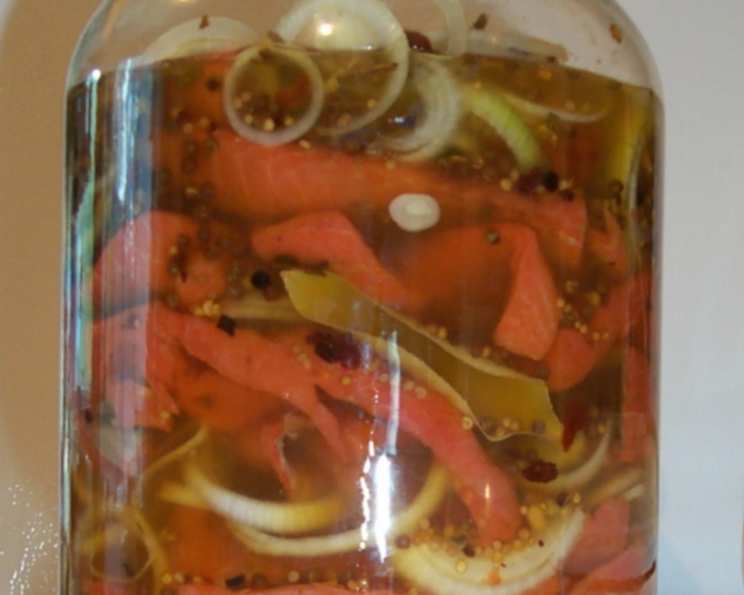
Svella Culla: A Taste of Alaskan Tradition
The scent of salt and sun on weathered wood always transports me back to summers spent on the Kenai Peninsula. My grandfather, a man whose hands knew the rhythm of the tides, taught me to fish for salmon. More importantly, he shared the traditions passed down through generations, a way of preserving the bounty of the river, and Svella Culla, that delightfully tangy pickled fish, was a cornerstone of that tradition. It’s a taste of history, a connection to the land, and a reminder of cherished moments with family, all packed into a single bite.
Recipe Overview
- Prep Time: 30 minutes
- Cook Time: 0 minutes (Brining and pickling time)
- Total Time: Approximately 1 month 2 weeks (Includes brining, rinsing, and pickling)
- Servings: Varies depending on fish quantity (Approximately 10)
- Yield: 1 gallon jar
- Dietary Type: Gluten-Free, Dairy-Free
Ingredients
- Coarse Salt (lots of it)
- 2 Salmon (Sockeye recommended)
For the Brine:
- 1 cup White Vinegar
- 1/4 cup Brown Sugar
- 3 tablespoons Pickling Spices
- Bics Sweet Mix Pickle Juice (or any sweet pickle juice)
- Onion
- 2 whole Red Peppers (optional)
- 2 Bay Leaves
Equipment Needed
- Sharp Knife (for filleting)
- Open Container (for brining)
- Tea Towel or Breathable Cloth
- Large Bowl or Sink
- Glass Gallon Jar
Instructions
-
Prepare the Salmon: Begin by filleting the salmon. Ensure all bones are removed. Next, remove the skin from the fillets. Once the fish is filleted and skinned, slice it into thin pieces. These thin slices will allow the salt to penetrate effectively during the brining process.
-
Brining the Salmon: Find a non-reactive open container. Layer the sliced salmon into the container. Between each layer of fish, add a generous amount of coarse salt. Ensure the top layer is covered with a thick layer of coarse salt. The salt draws out moisture and begins the preservation process.
-
Cover and Wait: Cover the container with a tea towel or another type of breathable cloth. This allows moisture to evaporate while keeping insects away. Do not use a plastic lid or saran wrap, as you want the liquid to evaporate. Let the salmon brine for at least one month at room temperature. This critical step draws out moisture and firms the fish.
-
Rinsing the Salt: After a month, carefully dump the contents of the container into a large bowl or sink. Rinse the salmon thoroughly under cold running water. The goal is to remove as much of the salt as possible. To accomplish this, let the water run continuously into the container for about an hour or so, ensuring the salmon is constantly being rinsed. This step is crucial for removing excess salt and achieving the desired flavor.
-
Cut into Strips: Once the salmon has been thoroughly rinsed, cut it into smaller strips. These strips will be easier to handle and pack into the pickling jar.
-
Prepare the Brine: In a saucepan, combine the white vinegar, brown sugar, and pickling spices. Heat gently until the brown sugar dissolves completely. Remove the brine from the heat and allow it to cool completely. It’s imperative that the brine is completely cool before adding it to the fish, otherwise, it will cook the fish and ruin the texture. Add the bics sweet mix pickle juice (or your sweet pickle juice of choice) and stir to combine.
-
Layering in the Jar: In a clean glass gallon jar, begin layering the salmon strips with sliced onions and optional red peppers if you are using them. Tuck in the bay leaves along the sides.
-
Add the Brine: Once the jar is layered with salmon, onions, and peppers, slowly pour the cooled brine over the fish, ensuring it is completely submerged. If necessary, gently press down on the salmon to release any trapped air bubbles.
-
Refrigerate and Wait (Again): Seal the jar tightly and place it in the refrigerator for at least two weeks. This allows the flavors to meld and the fish to fully pickle.
-
Enjoy: After two weeks, the Svella Culla is ready to enjoy!
Expert Tips & Tricks
- Salt Quality: The type of salt used matters. Coarse salt is ideal because it draws out moisture gradually without overly penetrating the fish too quickly. Avoid using iodized salt, as it can impart a metallic taste.
- Brining Time: The brining time can be adjusted slightly based on the thickness of the fish slices and your personal preference for saltiness. Taste a small piece of the fish after rinsing to determine if it needs additional rinsing.
- Brine Sweetness: The sweetness of the brine can be adjusted to your liking. If you prefer a tangier pickle, reduce the amount of brown sugar.
- Spice it up: For a spicier Svella Culla, add a pinch of red pepper flakes to the brine.
Serving & Storage Suggestions
Svella Culla is best served chilled. It can be enjoyed straight from the jar as a snack, appetizer, or as part of a smorgasbord. It pairs well with crackers, rye bread, or hardtack.
To store, keep the Svella Culla refrigerated in the sealed glass jar. Properly stored, it will last for several weeks, even months. The flavor will continue to develop over time.
Svella Culla is not suitable for freezing, as the texture will become mushy.
Nutritional Information
| Nutrient | Amount per Serving (estimated) | % Daily Value (estimated) |
|---|---|---|
| Calories | 50 kcal | 3% |
| Total Fat | 2g | 3% |
| Saturated Fat | 0.5g | 3% |
| Cholesterol | 15mg | 5% |
| Sodium | Varies greatly based on rinsing | Varies |
| Total Carbohydrate | 3g | 1% |
| Dietary Fiber | 0g | 0% |
| Sugars | 2g | 4% |
| Protein | 5g | 10% |
Note: Nutritional information is an estimate and can vary based on the exact ingredients used and portion sizes.
Variations & Substitutions
- Other Fish: While sockeye salmon is traditional, other types of salmon or even herring can be used.
- Vinegar Variations: Experiment with different types of vinegar, such as apple cider vinegar or rice vinegar, for subtle flavor variations.
- Spice Blends: Customize the pickling spices to your liking. Add mustard seeds, coriander seeds, or cloves for a unique flavor profile.
- Sweeteners: Maple syrup or honey can be used in place of brown sugar in the brine.
FAQs (Frequently Asked Questions)
Q: Why is it important to use coarse salt for brining?
A: Coarse salt draws out moisture gradually, preventing the fish from becoming overly salty and allowing for better preservation.
Q: Can I use previously frozen salmon for this recipe?
A: Yes, you can use previously frozen salmon, but ensure it is fully thawed before brining. The texture may be slightly different compared to fresh salmon.
Q: How can I tell if the Svella Culla has gone bad?
A: If the Svella Culla develops an off odor or appears slimy, it should be discarded.
Q: Can I add other vegetables besides onions and peppers?
A: Yes, you can add other vegetables such as carrots or cucumbers.
Q: How salty should the fish be after rinsing?
A: The fish should be noticeably salty, but not overwhelmingly so. The saltiness should be balanced by the sweetness and acidity of the brine.
Final Thoughts
Svella Culla is more than just pickled fish; it’s a testament to resourcefulness, tradition, and the flavors of a specific place and time. This recipe connects us to a heritage of preservation and a deeper appreciation for the natural world. I encourage you to try this recipe, experiment with your own flavor combinations, and share this delicious piece of Alaskan history with your friends and family. Gather your ingredients, embrace the process, and prepare to be transported to the wild beauty of the Alaskan coast. Consider serving alongside some crispbread and dill for a truly authentic experience. Enjoy!