
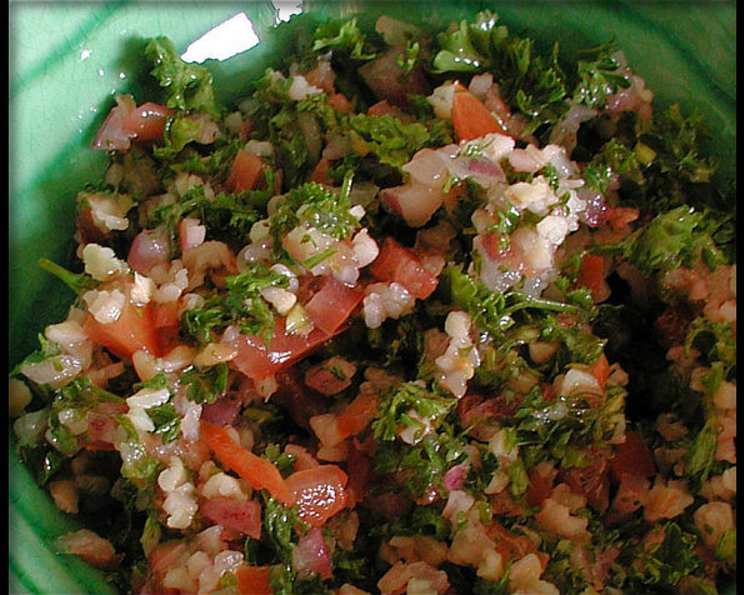
Tabbouleh: A Burst of Freshness from My Kitchen
I remember the first time I tasted tabbouleh. I was traveling through Lebanon, and a kind family invited me to share their lunch. The explosion of fresh parsley, tart lemon, and juicy tomatoes was unlike anything I had ever experienced. Each bite was a reminder of the sun-drenched gardens and warm hospitality that defined my time there. I’ve been chasing that perfect balance of flavors ever since, tweaking and adjusting until I arrived at this version, which I’m excited to share with you.
Recipe Overview
- Prep Time: 20 minutes
- Total Time: 20 minutes + chilling time
- Servings: 8
- Dietary Type: Vegan
Ingredients
- 7 cups finely minced fresh parsley (1 large bunch)
- 1 1/3 cups finely minced tomatoes
- 3 – 4 tablespoons finely minced red onions
- 1 1/2 – 2 tablespoons bulgur
- 1/2 cup fresh lemon juice
- 2 tablespoons olive oil (optional)
- 1/2 – 1 garlic clove, finely minced (optional)
- 1 1/2 teaspoons salt
- 1/2 teaspoon pepper
Equipment Needed
- Large bowl
- Sharp knife
- Cutting board
- Measuring cups and spoons
Instructions
- The key to exceptional tabbouleh is the fineness of the chop. Ensure that your parsley, tomatoes, and onions are finely minced. This helps the flavors meld together beautifully.
- In a large bowl, gently combine the finely minced parsley, tomatoes, and red onions. Be careful not to bruise the parsley.
- Prepare the bulgur according to the package instructions. This usually involves soaking it in hot water until softened. It’s crucial to cool the bulgur completely before adding it to the parsley mixture. Adding warm bulgur will wilt the fresh herbs.
- In a separate small bowl, combine the fresh lemon juice, olive oil (if using), finely minced garlic (if using), salt, and pepper. Mix well to create a vibrant dressing.
- Add the cooled bulgur to the bowl with the parsley mixture.
- Pour the lemon dressing over the salad.
- Gently mix everything together to ensure the dressing is evenly distributed.
- Refrigerate the tabbouleh until serving. This allows the flavors to meld and the salad to become even more refreshing. Tabbouleh is best when chilled for at least 30 minutes.
- Tabbouleh is best consumed within two days for optimal freshness.
Expert Tips & Tricks
- Parsley Power: Use the freshest parsley you can find. Flat-leaf parsley (also known as Italian parsley) is preferable to curly parsley, as it has a more robust flavor. Be sure to dry the parsley well after washing to prevent a soggy salad.
- Tomato Temptation: Choose ripe, flavorful tomatoes for the best results. If tomatoes are out of season, consider using good-quality cherry tomatoes, halved or quartered.
- Onion Insight: If you find red onions too strong, soak them in cold water for 10-15 minutes before mincing to mellow their bite.
- Bulgur Basics: For a quicker preparation, use fine bulgur, which requires less soaking time. Ensure it is completely cooled before adding to the other ingredients.
- Flavor Finesse: Taste and adjust the seasoning as needed. You may want to add more lemon juice for extra tanginess or more salt and pepper to enhance the overall flavor.
- Make-Ahead Magic: Tabbouleh can be made a few hours ahead of time. However, it’s best to add the dressing just before serving to prevent the parsley from wilting.
Serving & Storage Suggestions
Serve tabbouleh chilled as a refreshing side dish or as part of a mezze platter. It pairs wonderfully with grilled meats, fish, or falafel. You can also serve it as a light lunch on its own or stuff it into pita bread for a satisfying sandwich.
Store leftover tabbouleh in an airtight container in the refrigerator. It’s best consumed within two days, as the parsley will start to wilt after that. Freezing is not recommended, as the texture will change upon thawing.
Nutritional Information
| Nutrient | Amount per Serving | % Daily Value |
|---|---|---|
| Calories | 75 kcal | 4% |
| Total Fat | 3.5g | 5% |
| Saturated Fat | 0.5g | 3% |
| Cholesterol | 0mg | 0% |
| Sodium | 375mg | 16% |
| Total Carbohydrate | 9g | 3% |
| Dietary Fiber | 3g | 12% |
| Sugars | 2g | |
| Protein | 2g | 4% |
Note: Nutritional information is an estimate and may vary based on specific ingredients and portion sizes.
Variations & Substitutions
- Gluten-Free Tabbouleh: Substitute the bulgur with quinoa for a gluten-free option.
- Minty Fresh: Add a handful of finely chopped fresh mint to the salad for an extra layer of flavor.
- Cucumber Crunch: Incorporate finely diced cucumber for added texture and hydration.
- Bell Pepper Boost: Add finely diced bell peppers (red, yellow, or orange) for a pop of color and sweetness.
- Spicy Kick: Add a pinch of red pepper flakes to the dressing for a touch of heat.
- Herby Heaven: Experiment with other fresh herbs like dill or cilantro for different flavor profiles.
- Fruity Fusion: Add some finely diced pomegranate seeds for a sweet and tangy twist.
- Olive Oil Omission: For an even lighter version, omit the olive oil entirely.
FAQs (Frequently Asked Questions)
Q: Why is my tabbouleh soggy?
A: Soggy tabbouleh is usually caused by using too much water when preparing the bulgur or by not drying the parsley and tomatoes thoroughly. Be sure to squeeze out excess moisture from the tomatoes and dry the parsley well before chopping.
Q: Can I make tabbouleh ahead of time?
A: Yes, you can make tabbouleh a few hours in advance. However, it’s best to add the dressing just before serving to prevent the parsley from wilting.
Q: What is the best way to mince parsley?
A: The key is to use a very sharp knife and a rocking motion. Gather the parsley into a tight bunch and slice it thinly. Then, run the knife over the sliced parsley repeatedly until it is finely minced.
Q: Can I use dried parsley instead of fresh?
A: No, fresh parsley is essential for the flavor and texture of tabbouleh. Dried parsley will not provide the same vibrant taste or refreshing quality.
Q: What can I serve with tabbouleh?
A: Tabbouleh is a versatile dish that pairs well with many foods. It’s a great accompaniment to grilled meats, fish, or falafel. It can also be served as part of a mezze platter with hummus, baba ghanoush, and pita bread.
Final Thoughts
I hope this recipe inspires you to create your own vibrant and refreshing tabbouleh. Don’t be afraid to experiment with different ingredients and adjust the flavors to your liking. Whether you’re serving it as a side dish, a light lunch, or part of a mezze feast, I’m confident that this tabbouleh will bring a taste of sunshine to your table. Enjoy, and please let me know what you think! Perhaps you might like to pair it with a perfectly seasoned grilled chicken, the lemon of the tabbouleh singing along with the savory char of the grill. Happy cooking!