
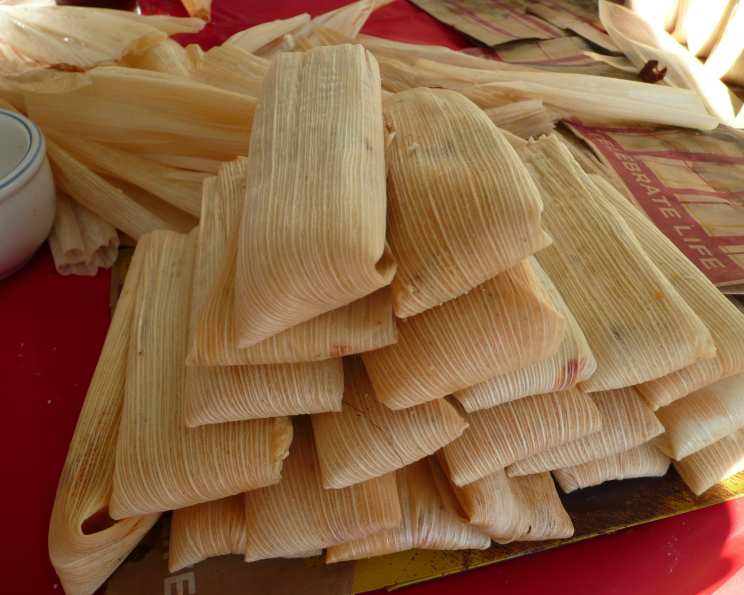
Tamales De Pollo Con Chile Verde: A Taste of Home
The memory of the first time I tasted a truly exceptional tamal is etched in my mind. It was at my Abuela Elena’s house during Christmas. The aroma of warm masa, subtly sweet and earthy, mingled with the spicy, savory scent of green chile and tender chicken. Each bite was a revelation—the perfect balance of textures and flavors, a testament to hours of loving labor. That tamal wasn’t just food; it was a connection to family, tradition, and a heritage I cherish. And now, I am excited to share this recipe with you.
Recipe Overview
- Prep Time: 2 hours 30 minutes
- Cook Time: 1 hour 15 minutes
- Total Time: 3 hours 45 minutes
- Yields: 25-30 tamales
- Dietary Type: Gluten-Free
Ingredients
- 1 (8 ounce) package dried corn husks
For the Filling
- 1 lb tomatillos, husked and rinsed (10-12 medium)
- Fresh hot green chili peppers, stemmed (roughly 2 – 6 serranos or jalapenos)
- 4 large garlic cloves, peeled
- 1 1⁄2 tablespoons vegetable oil or 1 1/2 tablespoons olive oil
- 2 cups chicken broth
- Salt
- 4 cups cooked chicken, preferably grilled, roasted (about 1 lb.) or 4 cups rotisserie chicken, coarsely shredded (about 1 lb.)
- 2⁄3 cup roughly chopped fresh cilantro
For the Batter
- 10 ounces rich-tasting pork fat, slightly softened but not at all runny (or vegetable shortening if you wish)
- 1 1⁄2 teaspoons baking powder
- 2 lbs fresh coarse-ground corn masa harina flour, for tamales or 3 1/2 cups dried masa harina, for tamales mixed with 2 1/4 cups hot water
- 1 – 1 1⁄2 cup chicken broth
Equipment Needed
- Large pot or bowl
- Baking sheet
- Food processor or blender
- Medium-size saucepan
- Electric mixer
- Large deep saucepan with collapsible vegetable steamer, tamal steamer, Asian stack steamers, or wire rack and coffee/custard cups
- Kitchen twine or thin strips of corn husks
- Towel
Instructions
- Preparing the corn husks: Place the corn husks in a large pot or bowl and cover them with very hot water. Weigh them down with a plate to ensure they stay submerged. Let them stand for at least two hours, or until the husks are pliable. This step is crucial for easy wrapping.
- Preparing the filling: Preheat your broiler. On a baking sheet, arrange the tomatillos about 4 inches below the broiler’s heat. Roast them until softened and blackened in spots, approximately 5 minutes. Flip them over and roast the other side until equally softened, another 5 minutes.
- Carefully transfer the roasted tomatillos, including all the juices that have accumulated on the baking sheet, to a food processor or blender.
- Add the stemmed green chiles and peeled garlic cloves to the tomatillos. Process until you have a smooth puree.
- In a medium-size saucepan, heat the vegetable oil or olive oil over medium-high heat. Once the oil is hot, add the tomatillo puree all at once, stirring constantly.
- Continue to stir the puree until it thickens and darkens noticeably, about 5 minutes. (It’s recommended to cover the pot with a splatter screen as it may splatter.)
- Add 2 cups of chicken broth to the thickened puree and bring to a simmer over medium heat (or high heat if preferred).
- Simmer the mixture until it thickens enough to heavily coat the back of a spoon, approximately 10 minutes or longer. The time may need to be extended for double batches of the recipe. Keep the filling simmering while you shred the chicken.
- Taste the filling and season generously with salt. Typically, about 2 teaspoons is sufficient.
- Stir in the shredded chicken and chopped fresh cilantro. Allow the filling to cool completely.
- Preparing the batter: In a large mixing bowl, using an electric mixer on medium-high speed, beat the softened pork fat (or vegetable shortening) with 2 teaspoons of salt and the baking powder until the mixture is light and fluffy, about 1 minute.
- Continue beating while gradually adding the masa (either fresh or reconstituted) in three separate additions.
- Reduce the mixer speed to medium-low and add 1 cup of the remaining chicken broth. Continue beating for another minute or so.
- To test the batter’s consistency, drop a ½-teaspoon dollop of the batter into a cup of cold water. If it floats, the batter is ready, ensuring tender and light tamales.
- Beat in enough of the remaining ½ cup of broth to achieve a soft (but not runny) cake batter consistency. The batter should hold its shape on a spoon.
- Taste the batter and adjust the salt as needed.
- For the lightest textured tamales, refrigerate the batter for an hour or so. Before using, rebeat the batter, adding a little more broth or water to restore its original soft consistency.
- Forming the tamales: Select 24 of the largest and most pliable corn husks, ensuring they are at least 6 inches wide on the wider end and 6-7 inches long. If you lack sufficient good husks, overlap some larger ones to create wider, sturdier surfaces for spreading the batter.
- Pat the chosen husks dry with a towel.
- Cut twenty-four 8- to 10-inch pieces of string or thin strips of corn husks.
- One at a time, form the tamales: Lay out a prepared corn husk with the tapering end toward you. Spread about ¼ cup of the batter into a 4-inch square, leaving at least a 1 ½-inch border on the side closest to you and a ¾-inch border along the other sides. For larger husks, the borders will be significantly wider.
- Spoon about 1 ½ tablespoons of the filling down the center of the batter.
- Pick up the two long sides of the corn husk and bring them together, causing the batter to surround the filling. If the uncovered borders of the two long sides are narrow, tuck one side under the other. If they are wide, roll both sides in the same direction around the tamal. For small husks, consider wrapping the tamal in a second husk.
- Fold up the empty 1 ½-inch section of the husk (to form a tightly closed “bottom” leaving the top open). Secure it by loosely tying one of the strings or strips of husk around the tamal.
- As you make them, stand the tamales on their folded bottoms in the prepared steamer. Avoid tying the tamales too tightly or packing them too closely in the steamer to allow room for expansion.
- Setting up the steamer: Steaming 24 husk-wrapped tamales can be done in batches using a collapsible vegetable steamer set inside a large, deep saucepan. To steam them all at once, use a large tamal steamer, Asian stack steamers, or improvise by placing a wire rack on 4 coffee or custard cups inside a large kettle.
- Line the rack or upper part of the steamer with leftover corn husks to protect the tamales from direct contact with the steam and to enhance flavor. Ensure tiny spaces between the husks allow condensing steam to drain off.
- Steaming and serving the tamales: Once all the tamales are in the steamer, cover them with a layer of leftover corn husks. If the husk-wrapped tamales don’t fill the entire steamer, fill any open spaces with loosely wadded aluminum foil to prevent the tamales from falling over.
- Set the lid in place and steam over constant medium heat for about 1 ¼ hours. Depending on the size of the tamales, steaming can take up to 4 hours.
- Monitor the water level carefully, replenishing with boiling water as needed to maintain a steady stream of steam.
- The tamales are done when the husk peels away from the masa easily.
- Let the tamales stand in the steamer off the heat for a few minutes to firm up. For the best texture, allow them to cool completely before resteaming for about 15 minutes to heat through.
Expert Tips & Tricks
- For a richer flavor, use homemade chicken broth.
- If you prefer a spicier filling, add more serrano or jalapeno peppers. Remember to handle the peppers with care, wearing gloves if necessary.
- Adjust the amount of salt to taste, as it can vary depending on the broth and masa used.
- If the batter seems too dry, add a little more chicken broth or water until you achieve the desired consistency.
- To prevent the tamales from sticking to the steamer, ensure the bottom is well-lined with corn husks.
Serving & Storage Suggestions
Serve the tamales hot, straight from the steamer. They are delicious on their own or accompanied by your favorite salsa, sour cream, or guacamole.
To store leftover tamales, allow them to cool completely, then wrap them individually in plastic wrap or aluminum foil. They can be stored in the refrigerator for up to 3 days or in the freezer for up to 2 months.
To reheat, steam the tamales for about 15-20 minutes, or until heated through. You can also microwave them, but steaming will help preserve their texture.
Nutritional Information
| Nutrient | Amount per Serving | % Daily Value |
|---|---|---|
| Calories | 299.7 kcal | N/A |
| Calories from Fat | 147 g | 49% |
| Total Fat | 16.4 g | 25% |
| Saturated Fat | 6.9 g | 34% |
| Cholesterol | 30.2 mg | 10% |
| Sodium | 130.5 mg | 5% |
| Total Carbohydrate | 29.1 g | 9% |
| Dietary Fiber | 2.7 g | 10% |
| Sugars | 1.4 g | 5% |
| Protein | 9.8 g | 19% |
Variations & Substitutions
- For a vegetarian option, substitute the chicken with roasted vegetables like zucchini, corn, and bell peppers.
- If you cannot find pork fat, vegetable shortening is a suitable alternative.
- To make a spicier version, use chile de arbol in addition to the serranos or jalapenos.
- Try adding a little queso fresco to the filling for extra flavor.
- For a different flavor profile, consider using chicken thighs instead of chicken breast for a richer, more succulent filling.
FAQs (Frequently Asked Questions)
Q: Can I make these tamales ahead of time?
A: Absolutely! You can prepare the filling and batter a day in advance and store them separately in the refrigerator. Assemble and steam the tamales when you’re ready to serve.
Q: How do I know when the tamales are fully cooked?
A: The best way to check for doneness is to see if the husk easily peels away from the masa. The masa should be firm and cooked through.
Q: Can I use store-bought masa for this recipe?
A: Yes, you can use store-bought masa harina, but make sure it’s specifically for tamales, not tortillas. Follow the package instructions for hydration.
Q: What if my tamales are too dry?
A: This can happen if they are steamed for too long or the batter wasn’t moist enough. Try adding more broth to the batter next time, and be sure to monitor the water level during steaming.
Q: Can I freeze cooked tamales?
A: Yes, cooked tamales freeze well. Let them cool completely, wrap them individually, and store them in the freezer for up to 2 months. Reheat by steaming them until warmed through.
Final Thoughts
These Tamales De Pollo Con Chile Verde are more than just a meal; they are a celebration of flavor, tradition, and the joy of sharing good food with loved ones. So, gather your ingredients, put on some music, and immerse yourself in the process. Don’t be intimidated by the multiple steps – each one is an act of love that contributes to the final, unforgettable taste. I encourage you to try this recipe, adapt it to your liking, and most importantly, share it with those you cherish. Serve with a refreshing agua fresca or a cold cerveza for a truly authentic experience. ¡Buen provecho!