
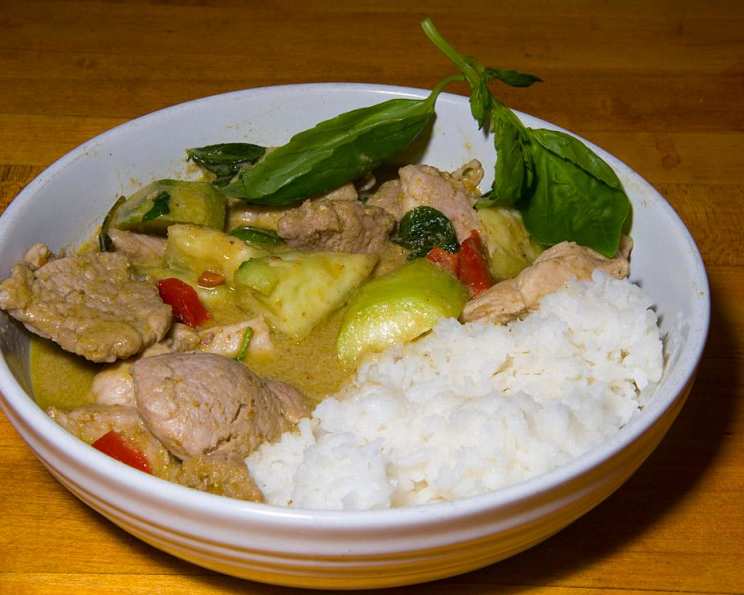
Thai Green Curry Paste With Pork and Chinese Okra
The scent of Thai green curry always transports me back to a tiny street-side stall in Bangkok. The air, thick with humidity and exhaust fumes, was somehow perfectly balanced by the fragrant steam rising from a bubbling pot of curry. Each spoonful, a fiery dance of chilies and coconut milk, was an unforgettable explosion of flavor that tingled on my tongue and warmed me from the inside out, solidifying my lifelong love affair with Thai cuisine. Recreating that same magic in my own kitchen is a constant (and delicious) pursuit.
Recipe Overview
- Prep Time: 30 minutes
- Cook Time: 45 minutes
- Total Time: 1 hour 15 minutes
- Servings: 4
- Yield: Varies depending on amount of vegetables
- Dietary Type: Not specified
Ingredients
- 2 tablespoons oil
- 1 tablespoon green curry paste (more is optional to taste)
- 1 teaspoon cumin powder
- 1 teaspoon coriander powder
- 1 1/2 lbs pork loin (end sliced)
- 1/2 – 3/4 cup coconut milk, unsweetened
- 1 cup sweet basil
- 1 small hot chili pepper (optional)
- 1 tablespoon anchovies or 1 tablespoon fish sauce
- 1/2 teaspoon sugar
- 1 1/2 tablespoons peanut butter
- 1 Chinese okra (also called Luffa)
Equipment Needed
- Large pan or wok
- Cutting board
- Knife
Instructions
-
Preparation: Begin by preparing your ingredients. De-bone the pork loin if necessary, and then cut the pork into bite-sized pieces. Set aside. This ensures that the pork cooks quickly and evenly.
-
Next, prepare the Chinese okra. Cut the long vegetable in half. Then, carefully cut away the tough outer skin using a sharp knife or vegetable peeler. Once peeled, cut the okra into bite-sized pieces and set aside. If Chinese okra isn’t available, you can substitute with zucchini or other squash.
-
Chop the sweet basil leaves. Reserve a few whole leaves (about 4 or more) for garnishing the finished dish. Set both the chopped and whole basil aside. Fresh basil adds a distinct aroma and flavor to the curry.
-
If using, prepare the hot chili pepper. Remove the seeds to control the level of heat, and then finely chop the pepper. Set aside. Remember to wash your hands thoroughly after handling chilies!
-
Chop the anchovies into small pieces. This adds a salty and umami flavor to the curry. If you prefer, you can use fish sauce instead. Set aside.
-
Cooking: Heat the oil in a large pan or wok over medium heat. Make sure the pan is hot before adding the oil.
-
Add the green curry paste to the hot oil. Next, add the coriander and cumin powder. Stir-fry the mixture for about 1 to 2 minutes, until fragrant. Be careful not to burn the spices, as this will result in a bitter taste. Stir constantly.
-
Pour in ½ to ¾ cup of the unsweetened coconut milk. Lower the heat to a simmer and let it cook for several minutes, stirring occasionally. The coconut milk will thicken slightly and infuse the curry paste with its creamy flavor.
-
Add the pork to the pan. Cook until the pork is thoroughly cooked, ensuring that no pink remains inside. The cooking time will vary depending on the size of the pork pieces, but it should take about 10-15 minutes. Stir frequently to prevent sticking.
-
Add the Chinese okra to the pan and cook until the vegetable becomes soft. It will take around 5 minutes for it to be cooked thoroughly.
-
Add the chopped basil leaves, chopped hot pepper (if using), chopped anchovies (or fish sauce), sugar, and peanut butter to the pan. Simmer for a few more minutes, stirring until all ingredients are well combined. The peanut butter adds richness and depth of flavor to the curry.
-
Once cooked, place the hot curry into individual bowls. Garnish each bowl with one or two whole basil leaves.
-
Serve immediately with rice and enjoy!
Notes:
- Using 1 tablespoon of Thai Green Curry Paste provides a noticeable level of heat. Adding more will significantly increase the spiciness, especially if you are also using a hot pepper. Adjust the amount to your personal preference.
- For a more tender pork, you can marinate it in a mixture of lime juice and chopped garlic for several hours or overnight in the refrigerator before cooking. This will also infuse the pork with additional flavor.
Expert Tips & Tricks
- Spice Level Control: Taste the curry after adding the curry paste and adjust the amount to your liking. Remember that the spiciness will intensify as the curry simmers.
- Coconut Milk Consistency: For a richer curry, use full-fat coconut milk. If you prefer a lighter version, use light coconut milk.
- Vegetable Variety: Feel free to add other vegetables to the curry, such as bell peppers, eggplant, or bamboo shoots. Adjust the cooking time accordingly.
- Flavor Enhancement: A squeeze of lime juice at the end of cooking can brighten the flavors of the curry.
- Make Ahead: The curry can be made ahead of time and stored in the refrigerator for up to 3 days. The flavors will meld together even more overnight.
Serving & Storage Suggestions
Serve the Thai Green Curry Paste with Pork and Chinese Okra hot, ideally with steamed jasmine rice to soak up the flavorful sauce. Garnish with fresh basil leaves for added aroma and visual appeal.
To store leftovers, allow the curry to cool completely before transferring it to an airtight container. Store in the refrigerator for up to 3 days. For longer storage, freeze the curry in portion-sized containers for up to 2 months.
To reheat, thaw the curry in the refrigerator overnight if frozen. Reheat gently in a saucepan over low heat, stirring occasionally, until heated through. Avoid overheating, as this can cause the coconut milk to separate. You can also reheat the curry in the microwave, but be sure to stir it frequently to ensure even heating.
Nutritional Information
| Nutrient | Amount per Serving | % Daily Value |
|---|---|---|
| Calories | 516.9 kcal | N/A |
| Calories from Fat | 358 g | 69% |
| Total Fat | 39.9 g | 61% |
| Saturated Fat | 15.1 g | 75% |
| Cholesterol | 102.1 mg | 34% |
| Sodium | 104.3 mg | 4% |
| Total Carbohydrate | 3.1 g | 1% |
| Dietary Fiber | 0.6 g | 2% |
| Sugars | 1.1 g | 4% |
| Protein | 36.4 g | 72% |
Note: Nutritional information is an estimate and may vary based on specific ingredients and portion sizes.
Variations & Substitutions
- Vegetarian/Vegan: Substitute the pork with tofu or tempeh. Use vegetable broth instead of fish sauce or anchovies.
- Spicier Curry: Add more green curry paste or a hotter chili pepper.
- Milder Curry: Reduce the amount of green curry paste or omit the chili pepper altogether.
- Other Vegetables: Use other vegetables such as eggplant, bell peppers, snow peas, or broccoli.
- Different Protein: Substitute the pork with chicken, beef, shrimp, or fish.
- Sweetness: Add a touch of honey or maple syrup instead of sugar.
FAQs (Frequently Asked Questions)
Q: Can I use red curry paste instead of green curry paste?
A: Yes, you can substitute red curry paste, but the flavor profile will be different. Red curry paste is generally spicier and has a slightly different blend of herbs and spices.
Q: How can I make this curry less spicy?
A: Start with a smaller amount of green curry paste and omit the hot chili pepper. You can also add a little extra coconut milk to dilute the spiciness.
Q: Can I freeze this curry?
A: Yes, this curry freezes well. Allow it to cool completely before transferring it to an airtight container and freezing for up to 2 months.
Q: What is Chinese okra, and where can I find it?
A: Chinese okra, also known as Luffa, is a long, green vegetable with a mild, slightly sweet flavor. You can usually find it in Asian markets or specialty grocery stores. If unavailable, zucchini or squash can be used as a substitute.
Q: Can I use canned coconut milk instead of fresh?
A: Yes, canned coconut milk works perfectly fine. Be sure to shake the can well before opening to ensure that the coconut cream is evenly distributed.
Final Thoughts
This Thai Green Curry Paste with Pork and Chinese Okra is a vibrant and flavorful dish that’s surprisingly easy to make at home. Don’t be intimidated by the list of ingredients; the complex flavors come together beautifully with just a few simple steps. I encourage you to experiment with different vegetables and spice levels to create a curry that perfectly suits your taste. Give it a try, share your creations, and enjoy the delicious journey! Pair this curry with a crisp, chilled white wine or a refreshing Thai iced tea for a truly authentic dining experience.