
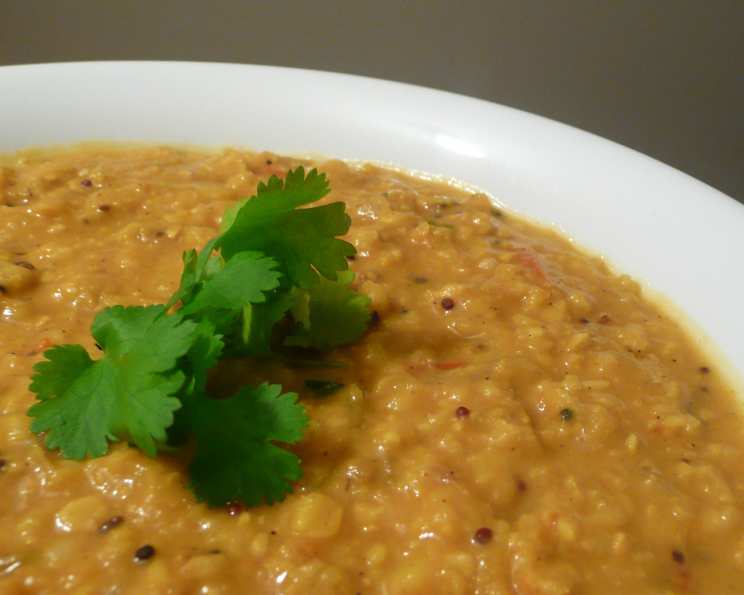
Tarka Dal: A Symphony of Lentils and Spice
The aroma alone transports me back to a tiny, bustling kitchen in Delhi. I was barely tall enough to see over the counter, mesmerized by the rhythmic clatter of the pressure cooker and the fragrant cloud rising from a pot simmering on the stove. My grandmother, with flour dusting her apron, would patiently explain the nuances of each spice as she built the complex flavors of her signature Tarka Dal. It wasn’t just a meal; it was an act of love, a story told through the language of lentils, onions, and the magic of a perfectly tempered tarka. To this day, that memory is the secret ingredient in my own version of this comforting classic.
Recipe Overview
- Prep Time: 35 minutes
- Cook Time: 1 hour
- Total Time: 1 hour 35 minutes
- Servings: 4-6
- Dietary Type: Vegetarian
Ingredients
- 2 cups channa split lentils (or yellow split peas)
- ¼ cup vegetable oil
- 2 teaspoons brown mustard seeds
- 1 teaspoon cumin seed
- 5 garlic cloves, finely chopped
- 2 teaspoons ginger, finely grated
- 10 fresh curry leaves
- 2 onions, finely chopped
- 2 tomatoes, finely chopped
- ¼ cup raw cashews, finely ground (cashew meal)
- 2 teaspoons ground turmeric
- 1 teaspoon garam masala
- 1 teaspoon chili powder
- ½ teaspoon ground coriander
- ½ cup vegetable stock
- 45g ghee
- ½ cup pouring cream
- 1 tablespoon chopped coriander (as garnish)
Equipment Needed
- Large Frypan
- Small Pan
- Strainer
- Mixing Bowl
Instructions
-
Begin by thoroughly rinsing the lentils in a strainer under cold water. Inspect the lentils and remove any debris or discolored pieces. Then, transfer the rinsed lentils to a bowl and cover them with cold water. Allow the lentils to soak for at least 30 minutes. This soaking process helps soften the lentils and reduces their cooking time. After soaking, drain the lentils in the strainer and set aside.
-
In a large frypan, heat the vegetable oil over medium heat. Once the oil is hot, add half of the brown mustard seeds and half of the cumin seeds. Stir constantly for 1 to 2 minutes, or until the mustard seeds begin to pop and crackle. This process, called tempering, releases the aromatic oils of the spices.
-
Now, add the finely chopped garlic, grated ginger, fresh curry leaves, and half of the chopped onion to the pan. Stir and cook until the onions become soft and translucent, approximately 8 minutes. Be careful not to burn the garlic; reduce the heat if necessary.
-
Next, add the chopped tomatoes, ground cashew meal, ground turmeric, garam masala, chili powder, ground coriander, and vegetable stock to the pan. Stir occasionally and allow the mixture to simmer until it thickens slightly, about 5 minutes. The cashews will help create a creamy base for the dal.
-
Add the drained lentils to the pan and pour in enough water to completely cover them – approximately 1.5 liters. Bring the mixture to a boil, then reduce the heat to low, cover the pan, and simmer gently. Stir occasionally to prevent the lentils from sticking to the bottom of the pan. Continue to simmer until the lentils are cooked through and tender, which should take about 30 minutes. If the dal becomes too thick during cooking, add more water as needed.
-
While the lentils are simmering, prepare the tarka. In a separate small pan, heat the ghee over medium heat. Once the ghee is melted and hot, add the remaining mustard seeds and cumin seeds. Stir for a couple of minutes, until fragrant and the mustard seeds start to pop.
-
Add the remaining chopped onion to the ghee and spice mixture. Stir and cook until the onion is golden brown and caramelized, adding depth of flavor. This is a crucial step in creating the characteristic flavor of Tarka Dal.
-
Carefully pour the onion and spice mixture (the tarka) into the cooked lentils. Stir well to combine, ensuring the flavors are evenly distributed.
-
Add the pouring cream to the dal and bring it to a gentle boil. Stir constantly to prevent the cream from curdling.
-
Season the Tarka Dal with salt and pepper to taste.
-
To serve, ladle the Tarka Dal into bowls and sprinkle with freshly chopped coriander for garnish.
Expert Tips & Tricks
- Soaking the lentils: While 30 minutes is the minimum soaking time, soaking the lentils for longer (up to a few hours) can improve their texture and digestibility.
- Tempering the spices: Don’t be afraid to experiment with the spices. A pinch of asafoetida (hing) can add a pungent, savory note.
- Consistency: Adjust the amount of water to achieve your desired consistency. Some prefer a thicker dal, while others like it more soupy.
- Creaminess: For an even richer dal, use coconut cream instead of pouring cream.
- The Tarka is key: The tarka is what distinguishes Tarka Dal from other lentil dishes. Don’t skimp on the ghee or the browning of the onions; this is where the deep, complex flavor comes from.
- Make Ahead: The Dal can be made a day or two ahead of time. The flavors will meld and deepen even more! Just store it in an airtight container in the refrigerator.
Serving & Storage Suggestions
Tarka Dal is traditionally served hot with rice, roti, or naan bread. It also pairs well with yogurt, raita, or a side of Indian pickles. For a complete meal, consider adding a vegetable side dish like saag paneer or aloo gobi.
Storage:
- Room Temperature: Do not leave cooked Tarka Dal at room temperature for more than 2 hours.
- Refrigeration: Store leftover Tarka Dal in an airtight container in the refrigerator for up to 3-4 days.
- Freezing: For longer storage, freeze the Tarka Dal in freezer-safe containers for up to 2-3 months. Thaw overnight in the refrigerator before reheating.
Reheating:
Reheat Tarka Dal gently over medium heat on the stovetop, adding a little water or vegetable stock if needed to restore its original consistency. You can also reheat it in the microwave, stirring occasionally.
Nutritional Information
| Nutrient | Amount per Serving | % Daily Value |
|---|---|---|
| Calories | 525.5 kcal | N/A |
| Calories from Fat | 354 g | 67% |
| Total Fat | 39.4 g | 60% |
| Saturated Fat | 15.5 g | 77% |
| Cholesterol | 62 mg | 20% |
| Sodium | 32.6 mg | 1% |
| Total Carbohydrate | 34.7 g | 11% |
| Dietary Fiber | 10.7 g | 42% |
| Sugars | 6.4 g | 25% |
| Protein | 12.9 g | 25% |
Note: Nutritional information is an estimate and may vary based on specific ingredients and portion sizes.
Variations & Substitutions
- Vegan Tarka Dal: Replace the ghee with vegetable oil and the pouring cream with coconut cream or cashew cream for a completely vegan version.
- Spice Level: Adjust the amount of chili powder to control the spiciness of the dal.
- Lentil Variations: While channa dal (split chickpeas) is traditional, you can also use red lentils (masoor dal) or a combination of lentils. Red lentils will cook much faster, so adjust the cooking time accordingly.
- Vegetable Additions: Add other vegetables such as spinach, cauliflower, or potatoes to the dal for extra nutrients and flavor.
- Herbs: Experiment with different herbs such as cilantro, mint, or fenugreek leaves for added flavor and aroma.
FAQs (Frequently Asked Questions)
Q: Can I make this recipe in a slow cooker?
A: Yes, you can! Sauté the onions, garlic, and ginger first, then transfer everything to a slow cooker and cook on low for 6-8 hours, or until the lentils are tender. Add the cream and tarka during the last 30 minutes.
Q: What if I don’t have cashew meal?
A: You can use almond meal or simply omit it. The cashews add creaminess, but the dal will still be delicious without them.
Q: Can I use a pressure cooker to speed up the cooking time?
A: Absolutely! Reduce the cooking time to about 15-20 minutes under pressure. Be sure to release the pressure carefully.
Q: How do I know when the lentils are cooked through?
A: The lentils should be tender and easily mashed with a spoon. If they are still firm, continue simmering for a few more minutes.
Q: Can I make this without curry leaves?
A: While curry leaves add a distinctive flavor, you can omit them if you don’t have any. Consider adding a bay leaf for a subtle aromatic note.
Final Thoughts
Tarka Dal is more than just a recipe; it’s a journey of flavors, a celebration of simple ingredients transformed into something extraordinary. I urge you to try this recipe, experiment with the spices, and make it your own. Share it with loved ones, and let the warmth of the dal bring comfort and joy to your table. Don’t hesitate to leave a comment and let me know how yours turned out! Pair it with a crisp Sauvignon Blanc for a delightful contrast to the richness of the dal. Enjoy the symphony of flavors!