
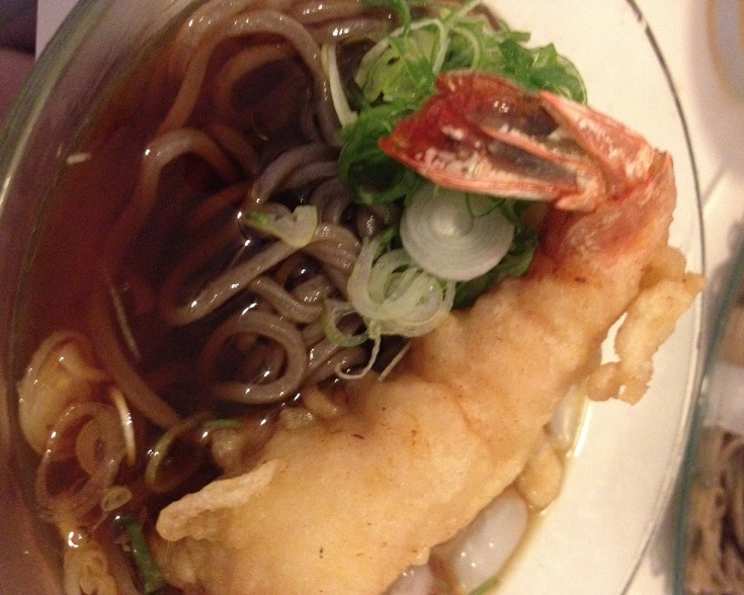
Tempura Soba: A Symphony of Crispy and Comfort
The first time I tasted tempura soba, I was huddled in a tiny, steaming noodle shop in Tokyo, the rain lashing against the windows. The contrast of the delicate, earthy buckwheat noodles, the savory broth, and the shatteringly crisp shrimp tempura was pure magic. Each bite was a small, warm comfort against the chill of the city, a perfect embodiment of Japanese culinary artistry. To this day, the memory of that first bowl transports me back to that cozy haven, making tempura soba a dish I cherish and love to recreate.
Recipe Overview
- Prep Time: 20 minutes
- Cook Time: 15 minutes
- Total Time: 35 minutes
- Servings: 1
- Dietary Type: Pescatarian
Ingredients
- 2 7⁄8 ounces dried soba noodles
- 1⁄2 gallon water, to boil
- 1⁄2 cup noodle soup base (x4 concentrate)
- 1 cup water, for noodle soup
- 2 jumbo shrimp
- 4 tablespoons tempura flour
- 3 tablespoons water
- Chopped green onion
- Wasabi
Equipment Needed
- Large pot
- Deep fryer or large pot for frying
- Skewer
- Mixing bowl
- Chopsticks or tongs
- Strainer or colander
Instructions
-
Begin by preparing the shrimp tempura. Gently pull off the outer shell of each shrimp, leaving the last segment of shell and the tail tip intact. This creates a visually appealing and flavorful handle.
-
Using a skewer, carefully devein the back of each shrimp. This removes any unwanted texture and flavor.
-
Make a few shallow slits on the underside of each shrimp. This will help prevent them from curling up during frying.
-
Hold each shrimp with both hands and gently bend it backward to straighten it. This ensures even cooking and a more visually appealing presentation.
-
Heat oil to 340°F (170°C) in a deep fryer or large pot for frying the tempura. Simultaneously, bring the 1/2 gallon of water to a boil in a large pot for the soba noodles.
-
In a mixing bowl, combine the tempura flour and cold water. Stir lightly; avoid overmixing, as this will result in a tougher batter. A few lumps are perfectly acceptable.
-
Once the oil reaches 340°F, test its readiness by dropping a small amount of batter into it. It should sizzle and turn golden brown quickly. Dust each shrimp lightly with tempura flour, then dip it in the tempura batter.
-
Carefully lower the battered shrimp into the hot oil and fry for approximately 2-3 minutes, or until golden brown and crispy. Avoid overcrowding the fryer. Remove the tempura from the oil and place it on a wire rack to drain excess oil.
-
Add the soba noodles to the boiling water and cook until al dente, typically around 5 minutes. Adjust cooking time according to package instructions.
-
While the noodles are cooking, prepare the noodle soup. In a separate pot, combine the noodle soup base and 1 cup of water. If you prefer hot noodles, warm the broth gently on the stovetop.
-
Once the soba noodles are cooked, strain away the water. If you prefer cold noodles, rinse them under cold running water to stop the cooking process and remove excess starch.
-
To serve, place the soba noodles in a bowl, pour the prepared noodle soup over them, and top with the shrimp tempura. Garnish with chopped green onion and a dollop of wasabi. Serve immediately and enjoy!
Expert Tips & Tricks
- Keep the tempura batter cold. Using ice water or placing the bowl of batter in an ice bath helps maintain a light and crispy texture.
- Don’t overcrowd the fryer. Frying too many items at once lowers the oil temperature, resulting in soggy tempura. Fry in batches.
- For extra crispy tempura, double-fry the shrimp. After the first fry, let them cool slightly, then fry them again for a shorter time.
- Use high-quality oil. Vegetable oil, canola oil, or peanut oil are all good choices for frying tempura.
- Adjust the noodle soup base to your taste. If you prefer a stronger flavor, use less water. If you prefer a milder flavor, use more water.
- If you are making the soup from scratch, consider adding dried shiitake mushrooms or kombu to the broth for extra umami.
Serving & Storage Suggestions
Tempura soba is best enjoyed immediately after preparation. The crispiness of the tempura diminishes as it sits in the broth. However, if you have leftovers, store the noodles and broth separately in the refrigerator for up to 2 days. Reheat the broth on the stovetop or in the microwave. The tempura is best reheated in an oven or air fryer to restore some of its crispness, although it will never be quite as good as freshly made.
Nutritional Information
| Nutrient | Amount per Serving | % Daily Value |
|---|---|---|
| Calories | 315 kcal | – |
| Calories from Fat | 10g | 3% |
| Total Fat | 1.1 g | 1% |
| Saturated Fat | 0.2 g | 0% |
| Cholesterol | 70.6 mg | 23% |
| Sodium | 1031.2 mg | 42% |
| Total Carbohydrate | 61.6 g | 20% |
| Dietary Fiber | 0 g | 0% |
| Sugars | 0 g | 0% |
| Protein | 19.4 g | 38% |
Note: Nutritional information is an estimate and may vary based on specific ingredients and preparation methods.
Variations & Substitutions
- Vegetarian/Vegan: Replace the shrimp with tofu or vegetables such as sweet potato, eggplant, or mushrooms. Use a vegan dashi (Japanese soup stock) for the noodle soup.
- Gluten-Free: Use gluten-free soba noodles made from 100% buckwheat flour (some soba noodles contain wheat flour). Ensure your tempura flour and soup base are also gluten-free.
- Spicy: Add a pinch of red pepper flakes or a dash of chili oil to the noodle soup for a touch of heat.
- Seasonal: In the spring, add edible flowers or bamboo shoots to the dish. In the fall, try adding maitake mushrooms or kabocha squash tempura.
- Regional: Explore different types of dashi. In some regions of Japan, dashi made with iriko (dried anchovies) is popular.
FAQs (Frequently Asked Questions)
Q: Can I use pre-made tempura batter?
A: Yes, you can use pre-made tempura batter, but homemade batter generally results in a lighter and crispier texture.
Q: What is mentsuyu?
A: Mentsuyu is the Japanese dipping sauce typically served with soba or udon noodles. It’s made from soy sauce, mirin, sake, sugar, and dashi. In this recipe, a concentrated noodle soup base is used as a convenient alternative.
Q: How do I prevent the shrimp from curling while frying?
A: Slitting the underside of the shrimp and gently straightening it before coating it in batter helps prevent curling.
Q: Can I make the noodle soup ahead of time?
A: Yes, the noodle soup can be made ahead of time and stored in the refrigerator for up to 3 days.
Q: What if I don’t have a deep fryer?
A: You can use a large pot with high sides filled with enough oil for deep-frying. Just be sure to monitor the oil temperature carefully.
Final Thoughts
Tempura soba is more than just a meal; it’s an experience. It’s the perfect balance of textures and flavors, a comforting hug in a bowl. Don’t be intimidated by the seemingly complex preparation; with a little practice, you’ll be whipping up this restaurant-quality dish in no time. I encourage you to try this recipe and share your creations and feedback! Pair it with a crisp Japanese beer or a cup of warm sake for the ultimate culinary delight.