
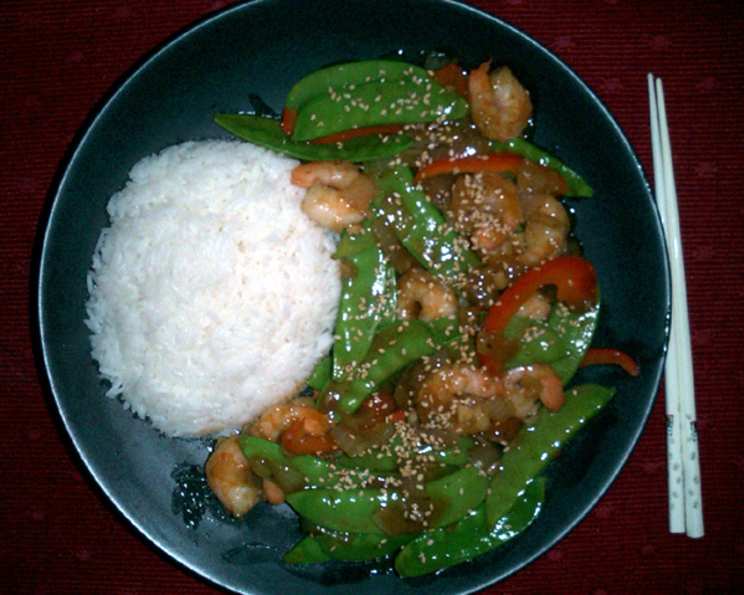
Thai Shrimp and Roasted Red Chili Stir-Fry
The first time I tasted anything remotely like this dish, I was backpacking through Southeast Asia. It wasn’t in a fancy restaurant, but at a streetside stall in Bangkok, the air thick with the scent of chilies, lemongrass, and exhaust fumes. An elderly woman with a wok blackened by years of use tossed shrimp, vegetables, and a fiery red sauce with effortless grace. The explosion of sweet, spicy, and savory flavors in that single bite was transformative – a culinary epiphany that forever changed my perception of what food could be. I’ve been chasing that perfect balance ever since, and this recipe comes pretty darn close to capturing that magic.
Recipe Overview
- Prep Time: 10 minutes
- Cook Time: 15 minutes
- Total Time: 25 minutes
- Servings: 2-3
- Dietary Type: Dairy-Free
Ingredients
- 2 tablespoons vegetable oil
- 2 teaspoons garlic, finely chopped (2-3 cloves)
- 1/2 cup yellow onion, coarsely chopped
- 1/2 – 1 tablespoon brown sugar (to taste)
- 1 tablespoon Thai Kitchen Roasted Red Chili Paste
- 2-3 tablespoons Thai Kitchen Premium Fish Sauce (to taste)
- 1/2 cup red bell pepper, cut into thin strips
- 1 cup snow peas or 1 cup sugar snap peas
- 12 ounces large shrimp, shelled and deveined
- 1/2 tablespoon cornstarch (optional)
- 1/2 cup chicken broth (optional) or 1/2 cup water (optional)
- Toasted sesame seeds (optional)
Equipment Needed
- Large wok or skillet
Instructions
-
Begin by preparing all your ingredients. This type of dish is best cooked quickly. Finely chop the garlic, coarsely chop the yellow onion, slice the red bell pepper into thin strips, and have your snow peas or sugar snap peas, and shrimp ready to go. If using the optional thickening slurry, whisk together the cornstarch and chicken broth or water in a small bowl until smooth and set aside.
-
Heat the vegetable oil in a large wok or skillet over medium-high heat. The wok should be hot enough that a drop of water sizzles and evaporates almost immediately.
-
Add the finely chopped garlic and coarsely chopped onion to the hot oil and stir-fry for about 30 seconds. Be careful not to burn the garlic. You want it fragrant and slightly softened but not browned.
-
Now, add the brown sugar, Thai Kitchen Roasted Red Chili Paste, and Thai Kitchen Premium Fish Sauce to the wok. Continue stir-frying for 2 to 3 minutes, until the onion starts to wilt and soften. This step is crucial for building the flavor base of the sauce. Taste and adjust the amount of brown sugar, chili paste, and fish sauce to your preference. I often find that an extra half tablespoon of chili paste adds a nice kick. Remember that the flavors will intensify as they cook.
-
Add the red bell pepper and snow peas or sugar snap peas to the wok and cook for another 3 minutes, stirring frequently. You want the vegetables to be tender-crisp, retaining some of their bite.
-
Add the shrimp to the wok and cook until they turn orange-pink in color and are cooked through, about 1 to 2 minutes. Overcooking shrimp results in a rubbery texture, so keep a close eye on them. They should be opaque and slightly firm to the touch.
-
If the sauce needs thickening, give the cornstarch slurry a quick whisk and add it to the wok. Cook, stirring constantly, until the sauce thickens and becomes bubbly. This usually takes just a minute or two.
-
Remove the wok from the heat and garnish with toasted sesame seeds, if desired. Serve immediately with hot jasmine rice.
Expert Tips & Tricks
- High Heat is Key: A wok is designed to be used at high heat, which helps to create that characteristic “wok hei” – a slightly smoky, charred flavor. If you don’t have a wok, a large, heavy-bottomed skillet will work. Just be sure not to overcrowd the pan, as this will lower the temperature and result in steamed, rather than stir-fried, ingredients.
- Mise en Place is Your Friend: “Mise en place” is a French term that means “everything in its place.” Before you even turn on the heat, have all your ingredients prepped, measured, and ready to go. This ensures that the stir-fry cooks quickly and evenly.
- Adjust the Spice Level: The amount of chili paste can be adjusted to your personal preference. Start with less and add more to taste. If you’re sensitive to spice, you can also remove the seeds from the chili paste before adding it to the wok.
- Don’t Overcook the Shrimp: Shrimp cooks very quickly, so it’s important to watch it closely. Overcooked shrimp is tough and rubbery. As soon as the shrimp turns pink and opaque, it’s done.
- Toast Your Sesame Seeds: Toasting sesame seeds enhances their nutty flavor and adds a pleasant crunch to the dish. Simply toast them in a dry skillet over medium heat until they are golden brown and fragrant, about 3-5 minutes. Watch them closely, as they can burn easily.
- Deglaze for Extra Flavor: After stir-frying the aromatics (garlic and onion), consider deglazing the wok with a splash of dry sherry or rice wine before adding the other ingredients. This will loosen any browned bits from the bottom of the wok and add extra depth of flavor to the sauce.
Serving & Storage Suggestions
Serve this Thai Shrimp and Roasted Red Chili Stir-Fry immediately with hot jasmine rice. Garnish with extra toasted sesame seeds and a sprig of cilantro for a pop of color.
Leftovers can be stored in an airtight container in the refrigerator for up to 2 days. Reheat gently in a wok or skillet over medium heat, adding a splash of water or chicken broth if needed to loosen the sauce. While the flavors will still be delicious, the shrimp may become slightly less tender upon reheating. I do not recommend freezing this dish, as the texture of the shrimp will suffer.
Nutritional Information
| Nutrient | Amount per Serving | % Daily Value |
|---|---|---|
| Calories | 380 kcal | N/A |
| Calories from Fat | 152 g | 40% |
| Total Fat | 16.9 g | 26% |
| Saturated Fat | 2.4 g | 12% |
| Cholesterol | 271.3 mg | 90% |
| Sodium | 1659.5 mg | 69% |
| Total Carbohydrate | 16.6 g | 5% |
| Dietary Fiber | 2.6 g | 10% |
| Sugars | 9.2 g | N/A |
| Protein | 39.5 g | 78% |
Note: Percent Daily Values are based on a 2,000 calorie diet. Nutritional information is an estimate and can vary based on specific ingredients and portion sizes.
Variations & Substitutions
- Vegetarian/Vegan: Substitute the shrimp with firm tofu, tempeh, or extra vegetables like broccoli, mushrooms, or bell peppers. Replace the fish sauce with soy sauce or tamari.
- Gluten-Free: Ensure the fish sauce and chili paste are gluten-free. Tamari can be used in place of soy sauce as well.
- Spicier: Add a pinch of red pepper flakes or a finely chopped Thai chili for extra heat.
- Sweeter: Increase the amount of brown sugar to your liking. A drizzle of honey or maple syrup can also be used.
- Different Vegetables: Feel free to substitute other vegetables based on what you have on hand or what’s in season. Carrots, bok choy, and zucchini would all work well in this dish.
- Protein Swap: Chicken or Beef could be easily swapped with the Shrimp. Just ensure to adjust the cooking time accordingly.
FAQs (Frequently Asked Questions)
Q: Can I make this dish ahead of time?
A: While the sauce can be prepared ahead of time, it’s best to cook the shrimp and vegetables just before serving to prevent them from becoming overcooked or soggy.
Q: I don’t have Thai Kitchen Roasted Red Chili Paste. What can I use instead?
A: You can substitute with another type of chili paste, such as sambal oelek or gochujang, but the flavor will be slightly different. Adjust the amount to your preference.
Q: How do I prevent the shrimp from becoming rubbery?
A: Don’t overcook the shrimp! Cook them just until they turn pink and opaque, about 1-2 minutes.
Q: Can I use frozen shrimp?
A: Yes, you can use frozen shrimp. Just be sure to thaw them completely before cooking and pat them dry with paper towels.
Q: What’s the best way to reheat this dish?
A: Reheat gently in a wok or skillet over medium heat, adding a splash of water or chicken broth if needed to loosen the sauce.
Final Thoughts
This Thai Shrimp and Roasted Red Chili Stir-Fry is a testament to the power of simple ingredients and bold flavors. It’s a dish that’s both quick to prepare and deeply satisfying, perfect for a weeknight meal or a special occasion. So, gather your ingredients, fire up your wok, and embark on a culinary adventure. Don’t be afraid to experiment with the flavors and make it your own. And most importantly, savor every bite. I encourage you to try this recipe and share your feedback – and perhaps pair it with a crisp, cold Singha beer for the full Thai experience.