
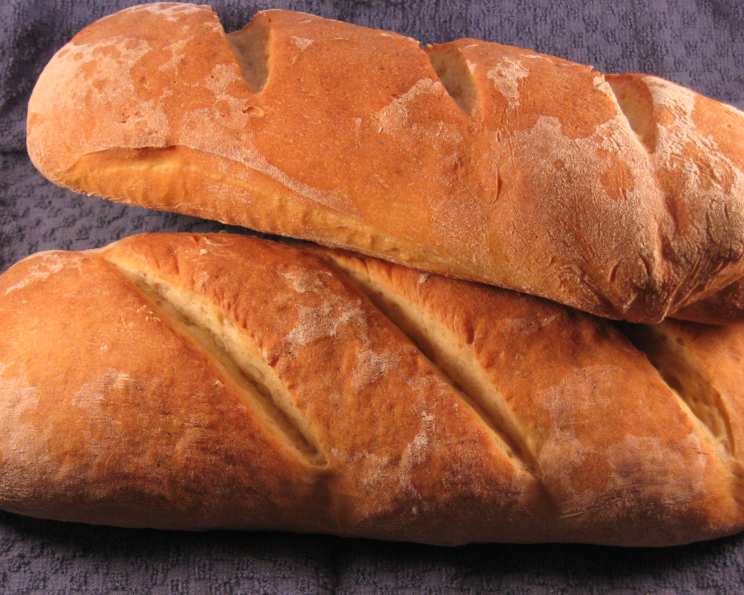
Traditional Artisan Style Baguette: Rustic French Bread
The scent of baking bread has always been more than just an aroma to me; it’s a portal back to my grandmother’s sun-drenched kitchen in the French countryside. I remember standing on a wobbly stool, mesmerized as she coaxed life from simple ingredients, transforming flour, water, and yeast into golden loaves of unparalleled flavour. The crackling crust, the airy crumb, the sheer joy of tearing off a piece still warm from the oven – these are the memories I strive to recreate every time I bake a baguette. It’s a tradition, a connection to my heritage, and a way to share a piece of that warmth with others.
Recipe Overview
- Prep Time: 20 minutes
- Rise Time: 1 hour 30 minutes
- Cook Time: 25-30 minutes
- Total Time: 2 hours 25 minutes
- Yield: 2 baguettes
- Dietary Type: Vegetarian
Ingredients
- 1 (1/4 ounce) packet active dry yeast
- 1 tablespoon organic honey
- 1 1/2 cups warm water
- 2 teaspoons natural sea salt
- 4 – 4 1/2 cups unbleached all-purpose flour
Equipment Needed
- Large mixing bowl
- Measuring cups and spoons
- Wooden spoon
- Lightly floured work surface
- Oiled bowl
- Plastic wrap or clean kitchen towel
- Lightly greased baking sheet
- Serrated knife
- Cooling rack
Instructions
-
In a large bowl, combine the yeast, honey, and warm water. Let the mixture stand for about 5 minutes, or until it becomes foamy. This step is crucial to ensure the yeast is active and will properly leaven the dough. If it doesn’t foam, your yeast might be old and you’ll need to start with a fresh packet.
-
In a separate bowl, whisk together the salt and the flour. The salt controls the yeast activity and enhances the flavour of the bread, so don’t skip it!
-
Using a wooden spoon, gradually stir 2 cups of the flour mixture into the yeast mixture. Once combined, add the remaining flour mixture. The dough will be quite stiff.
-
Turn the dough out onto a lightly floured work surface. Knead the dough with floured hands for about 5-7 minutes, or until it becomes smooth and elastic. Add a little flour, about 1 tablespoon at a time, if necessary to prevent the dough from sticking to the surface or your hands. Don’t over-flour, though, as that will result in a dry baguette.
-
Place the kneaded dough into an oiled bowl, turning it once to coat the entire surface. This prevents the dough from drying out as it rises. Cover the bowl with plastic wrap or a clean kitchen towel, and leave it to rise in a warm place until doubled in bulk, about 1 1/2 hours. The rising time can vary depending on the temperature of your environment.
-
Preheat your oven to 400°F (200°C). Make sure the oven is fully preheated before baking the baguettes, as this is important for achieving a good crust.
-
Gently punch the dough down to deflate it. This releases the built-up carbon dioxide and prepares the dough for shaping.
-
Divide the dough in half and shape each portion into an oblong baguette. Aim for a classic baguette shape: long and slender with tapered ends.
-
Dust the tops of the baguettes lightly with flour and place them on a lightly greased baking sheet. Let them rise uncovered for another 30 minutes. This second rise allows the baguettes to develop a lighter texture.
-
Use a serrated knife to cut 3-5 small diagonal slits across the tops of the baguettes. These slashes not only look beautiful but also allow the bread to expand properly in the oven and prevent cracking. Lightly sprinkle the baguettes with cool water just before baking. This creates steam in the oven, which helps to form a crisp, golden crust.
-
Bake the baguettes in the middle of the preheated oven for 25-30 minutes, or until they are golden brown. The internal temperature should reach around 200-210°F (93-99°C).
-
Transfer the baked baguettes to a cooling rack to cool completely before slicing and serving. This allows the steam to escape and prevents the crust from becoming soggy.
Expert Tips & Tricks
- Achieve that perfect crust: The key to a crispy, golden crust is steam. Sprinkling the baguettes with water before baking helps. You can also place a pan of hot water on the bottom rack of the oven during baking. Be careful when adding or removing the hot water!
- Don’t over-knead: Over-kneading can result in a tough baguette. Knead just until the dough is smooth and elastic.
- Proofing time matters: Adjust the proofing time depending on the temperature of your kitchen. A warmer environment will speed up the process.
- Use a baking stone: For an even crispier crust, bake the baguettes on a preheated baking stone.
Serving & Storage Suggestions
This artisan baguette is best enjoyed fresh, on the same day it’s baked. The crust is at its crispiest and the crumb at its most tender. Serve it alongside soups, salads, cheeses, or charcuterie. It’s also perfect for making sandwiches or bruschetta.
To store leftover baguette, wrap it tightly in a clean kitchen towel or place it in a paper bag. It will stay relatively fresh for 1-2 days at room temperature. For longer storage, you can freeze the baguette. Wrap it tightly in plastic wrap and then in foil, and it will keep in the freezer for up to 2 months. To reheat, thaw completely and then bake in a preheated oven at 350°F (175°C) for about 5-10 minutes, or until warmed through.
Nutritional Information
| Nutrient | Amount per Serving | % Daily Value |
|---|---|---|
| Calories | 477 kcal | N/A |
| Fat | 1.4 g | 2% |
| Saturated Fat | 0.2 g | 1% |
| Cholesterol | 0 mg | 0% |
| Sodium | 1169 mg | 48% |
| Carbohydrates | 100.4 g | 33% |
| Fiber | 3.9 g | 15% |
| Sugars | 4.7 g | N/A |
| Protein | 13.6 g | 27% |
Note: Nutritional information is an estimate and may vary based on specific ingredients and portion sizes.
Variations & Substitutions
- Whole Wheat Baguette: Substitute 1-2 cups of the all-purpose flour with whole wheat flour for a heartier flavour and texture.
- Herb-Infused Baguette: Add 1-2 tablespoons of chopped fresh herbs, such as rosemary, thyme, or oregano, to the dough during the kneading process.
- Garlic Baguette: Brush the baked baguette with garlic-infused olive oil while it’s still warm.
- Sourdough Baguette: For a tangier flavour, use a sourdough starter instead of commercial yeast.
FAQs (Frequently Asked Questions)
Q: Why is my baguette not crispy?
A: The most common reason is lack of steam during baking. Try sprinkling the baguettes with water before baking or placing a pan of hot water in the oven.
Q: My dough didn’t rise, what went wrong?
A: The yeast may be old or the water was too hot or too cold. Make sure to use fresh yeast and water that is warm but not scalding.
Q: Can I use bread flour instead of all-purpose flour?
A: Yes, bread flour will result in a chewier baguette with a slightly tighter crumb.
Q: How do I get those nice diagonal slashes on the top of my baguette?
A: Use a sharp serrated knife and make quick, decisive cuts at a 45-degree angle.
Q: Can I make the dough ahead of time?
A: Yes, you can prepare the dough and let it rise in the refrigerator overnight. This will slow down the fermentation process and develop a more complex flavour. Allow the dough to come to room temperature before shaping and baking.
Final Thoughts
There’s something incredibly satisfying about baking your own bread, and this artisan baguette is no exception. It’s a simple recipe, but with a little practice and attention to detail, you can create a loaf that’s truly exceptional. So, gather your ingredients, preheat your oven, and embark on a culinary adventure. Don’t hesitate to add your own personal touch! Pair it with a hearty bowl of French onion soup or a glass of your favorite wine and enjoy the simple pleasures of homemade bread. Bon appétit!