
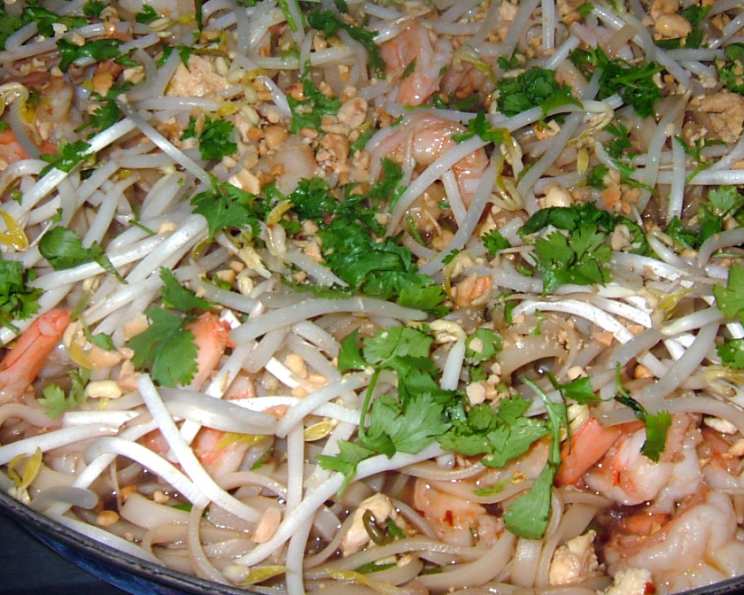
Sizzling Streets of Bangkok: My Chicken & Shrimp Pad Thai Journey
The first time I tasted truly authentic Pad Thai, I was a wide-eyed culinary student backpacking through Southeast Asia. The air hung thick with the scent of fish sauce, tamarind, and grilling meats. A street vendor, a wizened woman with a wok that looked older than me, deftly tossed noodles, shrimp, and tofu with lightning speed. The explosion of sweet, sour, salty, and savory flavors was unlike anything I’d ever experienced. It was a culinary revelation, a symphony of textures and tastes that transported me to the bustling heart of Bangkok. This recipe is my humble attempt to capture that magic.
Recipe Overview
- Prep Time: 15 minutes
- Cook Time: 15 minutes
- Total Time: 30 minutes
- Servings: 4
- Dietary Type: Gluten Free Option
Ingredients
- 7 ounces rice noodles, uncooked
- ¼ cup water
- ¼ cup low sodium soy sauce (or gluten-free tamari)
- ¼ cup fish sauce
- 2 tablespoons brown sugar
- ½ teaspoon red pepper flakes
- 2 teaspoons sesame oil, divided
- 1 egg, lightly beaten
- 3 garlic cloves, minced
- 6 ounces boneless skinless chicken breasts, sliced into thin strips
- 6 ounces medium shrimp, peeled and deveined
- 3 green onions, chopped
- 2 cups fresh bean sprouts
- ½ cup cilantro leaf, whole, chopped
- 2 tablespoons peanuts, chopped
Equipment Needed
- Large pan or wok
- Small bowl
- Large bowl
Instructions
-
Prepare the rice noodles: Cook the rice noodles according to package directions. Once cooked, drain and rinse them under cold water to stop the cooking process. Transfer the noodles to a large bowl and set aside. Rinsing the noodles prevents them from sticking together during the stir-fry.
-
Make the sauce: In a small bowl, combine the water, soy sauce, fish sauce, brown sugar, and red pepper flakes. Whisk until the brown sugar is dissolved. Set the sauce aside. This is the heart of the Pad Thai flavor, so make sure to taste and adjust the sweetness or spiciness to your preference.
-
Scramble the egg: Heat 1 teaspoon of sesame oil in the pan or wok over medium heat. Pour in the lightly beaten egg and stir-fry until it is scrambled. Remove the scrambled egg from the pan and add it to the bowl with the noodles. The scrambled egg adds a delicate richness and texture to the Pad Thai.
-
Cook the chicken and shrimp: Add the remaining 1 teaspoon of sesame oil to the heated pan. Stir in the garlic, chicken, and shrimp. Stir-fry until the chicken turns opaque and loses its pink color, and the shrimp turns pink and firm, which should take about 3-5 minutes. Be careful not to overcook the shrimp, as it can become rubbery.
-
Add the green onions: Add the chopped green onions to the pan with the chicken and shrimp. Cook for an additional minute, until the green onions are slightly softened and fragrant. The green onions add a fresh, mild onion flavor to the dish.
-
Combine everything: Add the noodle-egg mixture to the pan with the chicken, shrimp, and green onions. Pour the prepared sauce over the mixture. Cook everything together, stirring constantly, until the noodles are thoroughly heated and coated with the sauce, about 2-3 minutes.
-
Finish and serve: Remove the pan from the heat. Toss in the bean sprouts and cilantro. Sprinkle with chopped peanuts. Serve immediately. The bean sprouts and cilantro add a refreshing crunch and vibrant flavor to the Pad Thai, while the peanuts provide a satisfying nutty crunch.
Expert Tips & Tricks
- Prep is key: Pad Thai comes together quickly, so having all your ingredients chopped, measured, and ready to go is crucial for a seamless cooking experience. This is known as “mise en place” in culinary terms, and it makes a world of difference.
- Noodle Perfection: Be careful not to overcook the rice noodles, as they can become mushy. If you’re using thicker noodles, you might need to soak them for a longer time before cooking.
- Spice Level: Adjust the amount of red pepper flakes to control the heat level. If you prefer a milder dish, start with a pinch and add more to taste.
- Tamarind Paste: For a more authentic flavor, consider adding a teaspoon of tamarind paste to the sauce. Tamarind adds a distinct sweet and sour note that is characteristic of traditional Pad Thai.
- Wok Hei: For a true restaurant-style flavor, cook the Pad Thai in a wok over high heat. This creates a smoky, charred flavor known as “wok hei.”
Serving & Storage Suggestions
Serve your Chicken & Shrimp Pad Thai immediately while it’s hot and the noodles are still tender. Garnish with extra chopped peanuts, cilantro, and a wedge of lime for squeezing.
Storage: Leftovers can be stored in an airtight container in the refrigerator for up to 2 days.
Reheating: To reheat, microwave on medium power, stirring occasionally, until heated through. You can also reheat it in a pan over medium heat with a splash of water or broth to prevent it from drying out.
Freezing is not recommended, as the noodles can become mushy upon thawing.
Nutritional Information
| Nutrient | Amount per Serving | % Daily Value |
|---|---|---|
| Calories | 386.8 kcal | N/A |
| Calories from Fat | 68 g | 18% |
| Total Fat | 7.6 g | 11% |
| Saturated Fat | 1.4 g | 7% |
| Cholesterol | 127.7 mg | 42% |
| Sodium | 2353.8 mg | 98% |
| Total Carbohydrate | 56.1 g | 18% |
| Dietary Fiber | 2.7 g | 10% |
| Sugars | 10.3 g | N/A |
| Protein | 23 g | 46% |
Note: Nutritional information is an estimate and may vary based on specific ingredients and portion sizes.
Variations & Substitutions
- Vegetarian Pad Thai: Substitute the chicken and shrimp with tofu or extra vegetables like broccoli, carrots, or bell peppers.
- Gluten-Free Pad Thai: Use gluten-free tamari instead of soy sauce. Make sure your fish sauce is also gluten-free, as some brands contain wheat.
- Spicy Pad Thai: Add more red pepper flakes or a dash of chili oil to the sauce.
- Peanut-Free Pad Thai: Omit the peanuts or substitute them with chopped cashews or sunflower seeds.
- Different Noodles: While rice noodles are traditional, you can experiment with other types of noodles like glass noodles or even zucchini noodles for a low-carb option.
FAQs (Frequently Asked Questions)
Q: Can I make Pad Thai ahead of time?
A: While it’s best served immediately, you can prep the ingredients in advance. Cook the noodles and make the sauce ahead of time, then quickly stir-fry everything together just before serving.
Q: What if I don’t have fish sauce?
A: Fish sauce adds a unique umami flavor, but you can substitute it with soy sauce or tamari in a pinch. Add a squeeze of lime juice to mimic the tanginess of fish sauce.
Q: How do I prevent the noodles from sticking together?
A: Rinse the cooked noodles under cold water to remove excess starch. Toss them with a little oil to prevent them from clumping together.
Q: Can I add other vegetables to Pad Thai?
A: Absolutely! Feel free to add your favorite vegetables like carrots, bell peppers, broccoli, or snap peas.
Q: How can I adjust the sweetness of the Pad Thai?
A: Adjust the amount of brown sugar in the sauce to your preference. You can also add a touch of honey or maple syrup for a different flavor.
Final Thoughts
Now, it’s your turn to bring the vibrant flavors of Bangkok into your own kitchen. Don’t be intimidated – Pad Thai is easier than you think! Experiment with the ingredients, adjust the spice level to your liking, and most importantly, have fun. Share your creations with friends and family, and don’t forget to let me know how it turns out. Pair this delicious Chicken & Shrimp Pad Thai with a refreshing Thai iced tea for a truly authentic culinary experience. Happy cooking!