
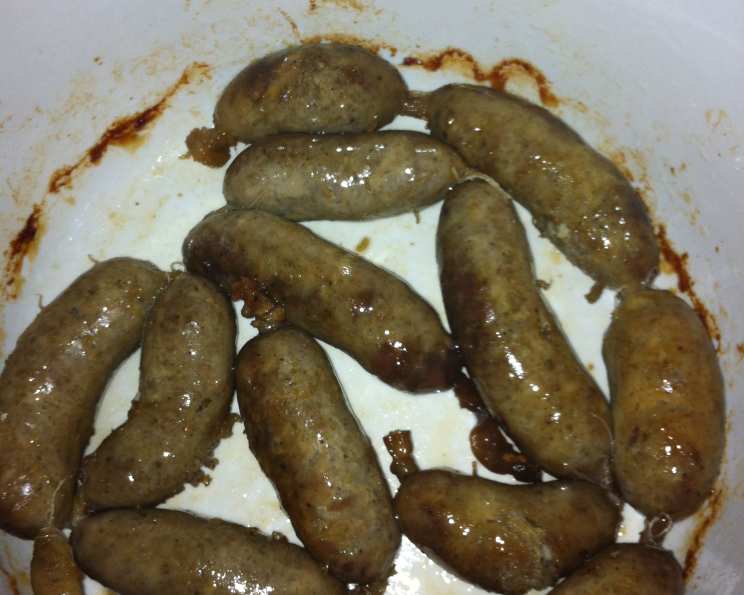
Ukrainian Homemade Sausage (Kovbasa)
The scent of garlic, pork, and smoke still takes me straight back to my Baba’s kitchen. Every Christmas, Easter, and family gathering, her homemade kovbasa was the undisputed star of the table. I can almost see her now, her hands stained pink from the meat, carefully stuffing the casings with a mix of love and tradition. The taste was always incredible – a savory symphony that spoke of generations past, a reminder of family, and a taste of home I will always cherish.
Recipe Overview
- Prep Time: 2 hours
- Cook Time: 30-40 minutes
- Total Time: 2 days 40 minutes (including refrigeration time)
- Servings: Varies depending on sausage length; approximately 10-12 sausages
- Yield: Approximately 8-9 pounds of sausage
- Dietary Type: Not specified (contains meat and pork fat)
Ingredients
- 5 lbs pork shoulder
- 2 lbs beef chuck
- 1 lb pork fat
- 4-6 ounces coarse salt (to taste)
- 2 tablespoons fresh ground black pepper
- 1 tablespoon allspice (ground)
- 1 head garlic
- 3 1⁄2 cups water
- 2 teaspoons peperivka spiced whiskey, see below, to taste (optional)
- 3 yards natural hog casings (or as needed)
Ingredient Notes:
- Pork shoulder provides a good balance of fat and flavor.
- Beef chuck adds depth and richness.
- Pork fat is crucial for moisture and texture. You can use back fat or leaf lard.
- Coarse salt is preferred as it distributes more evenly. Adjust the amount to your taste.
- Peperivka spiced whiskey is optional but adds a unique kick. If you don’t have it, a pinch of cayenne pepper can be substituted.
Equipment Needed
- Meat grinder
- Sharp knife
- Large mixing bowls
- Mortar and pestle (or garlic press)
- Sausage stuffer (funnel attachment)
- Wide pot
Instructions
- Grind the pork shoulder coarsely using a meat grinder. One grind is sufficient for the desired texture.
- Bone and chill the beef chuck. Chilling the beef makes it easier to dice.
- Dice 2 pounds of the beef chuck with a very sharp knife into ¼ inch cubes. This provides a more rustic texture compared to grinding all the beef.
- Dice ½ pound of the pork fat similarly into ¼ inch cubes. Grind the remaining ½ pound of pork fat. The diced fat adds pockets of richness, while the ground fat binds the sausage.
- Mix the meats and fat in a large bowl. Ensure everything is evenly distributed for consistent flavor.
- Mash the peeled garlic with the coarse salt in a mortar using a pestle. This creates a paste that evenly flavors the sausage. Alternatively, use a garlic press. Then, add the black pepper and allspice to the garlic paste and mix well.
- Incorporate the spice mixture into the meat mixture. Use your hands to thoroughly combine all the ingredients, ensuring the spices are evenly dispersed.
- Add water to the mixture. Use 1 cup of water for each 2 pounds of meat, which amounts to 3 ½ cups in total. The water helps bind the ingredients and keeps the sausage moist.
- Add the peperivka spiced whiskey to taste. Start with the suggested 2 teaspoons and adjust according to your preference.
- Cook a small sample in a little boiling water. This is crucial for tasting and adjusting the seasoning before stuffing the entire batch.
- Taste the cooked sample and adjust the seasoning as needed. Be conservative with the salt, as the flavor will intensify during the refrigeration period. Add more pepper or allspice according to your taste.
- Wash the natural hog casings thoroughly in cold water, rinsing several times. This removes excess salt and ensures they are pliable.
- Carefully thread 1 yard of casing over the sausage funnel attachment of your stuffer. Ensure the casing is securely attached.
- Stuff the sausage, taking care not to leave any air pockets. Pack the meat mixture into the stuffer and begin filling the casing.
- Do not overpack the sausages, or they will burst during cooking. Maintain a consistent pressure while stuffing and avoid creating tight links.
- Tie the ends of each sausage link with string. This creates individual portions and prevents the filling from escaping during cooking.
- Repeat the stuffing process until all the meat mixture is used. Work efficiently to prevent the meat from warming up too much.
- Refrigerate the stuffed sausages, loosely covered with a towel, for 48 hours. This allows the flavors to meld and the sausage to firm up.
- Sausage may be smoked (following smoker directions) or cooked fresh. Smoking adds another layer of flavor and helps preserve the sausage.
- TO COOK FRESH: Simmer the sausages gently in a wide pot one-third full of water until cooked through, about 30-40 minutes. The internal temperature should reach 160°F (71°C).
- Drain, cool, and refrigerate the cooked sausages loosely covered.
- TO SERVE: Sauté the cooked sausage in a little fat for color and crispness. Alternatively, serve cold in thin diagonal slices.
NOTE: Peperivka, cayenne-flavored whiskey, is made by soaking 10 whole red cayenne peppers in a pint of blended whiskey or bourbon for at least 48 hours.
Expert Tips & Tricks
- Keep the meat and fat as cold as possible throughout the entire process. This prevents the fat from rendering and ensures a better texture.
- Use high-quality natural hog casings for the best flavor and texture.
- Don’t be afraid to experiment with different spice combinations. Caraway seeds, marjoram, or paprika can add interesting variations.
- If you don’t have a sausage stuffer, you can use a piping bag with a large tip. However, a stuffer makes the process much easier and more efficient.
- Prick the sausages with a needle before cooking to prevent them from bursting.
- For a richer flavor, try using a combination of smoked and unsmoked paprika.
Serving & Storage Suggestions
Kovbasa can be served in a variety of ways. It’s delicious sautéed and served with fried onions and potatoes, added to soups and stews for a savory depth, or simply enjoyed cold in thin slices with crusty bread and mustard.
Store cooked kovbasa in an airtight container in the refrigerator for up to 5 days. For longer storage, freeze the sausages for up to 2 months. To reheat, thaw in the refrigerator overnight and then sauté, bake, or grill until heated through.
Nutritional Information
| Nutrient | Amount per Serving | % Daily Value |
|---|---|---|
| Calories | 2922.1 kcal | N/A |
| Calories from Fat | 2293 g | 78% |
| Total Fat | 254.8 g | 392% |
| Saturated Fat | 107.6 g | 537% |
| Cholesterol | 683.1 mg | 227% |
| Sodium | 11582.1 mg | 482% |
| Total Carbohydrate | 8.2 g | 2% |
| Dietary Fiber | 1.5 g | 6% |
| Sugars | 0.2 g | 0% |
| Protein | 138.2 g | 276% |
Note: Nutritional information is an estimate and may vary depending on specific ingredients and portion sizes.
Variations & Substitutions
- Spicy Kovbasa: Add more peperivka, cayenne pepper, or hot paprika for a spicier kick.
- Smoked Kovbasa: Smoke the sausages after stuffing them for a smoky flavor. Use your preferred smoking method and wood chips.
- Garlic-Herb Kovbasa: Add chopped fresh herbs such as parsley, thyme, or marjoram to the meat mixture. Increase the amount of garlic for a more intense flavor.
- Kovbasa with Cheese: Add small cubes of cheese, such as cheddar or mozzarella, to the meat mixture before stuffing. Be careful not to overfill the sausages.
- Venison Kovbasa: Substitute some of the beef with ground venison for a gamey flavor.
FAQs (Frequently Asked Questions)
Q: Can I use pre-ground meat for this recipe?
A: While you can, grinding your own meat provides a fresher flavor and allows you to control the texture. If using pre-ground meat, choose high-quality cuts.
Q: What if I can’t find natural hog casings?
A: Natural hog casings are preferred, but you can use collagen casings as a substitute. They are more readily available but may not provide the same traditional flavor and texture.
Q: How can I tell if the sausage is cooked through?
A: The internal temperature should reach 160°F (71°C). You can use a meat thermometer to check. The juices should also run clear when pierced with a fork.
Q: My sausages burst while cooking. What did I do wrong?
A: Overpacking the sausages, not pricking them with a needle, or cooking them at too high a heat can cause them to burst. Ensure you don’t overfill the casings and simmer them gently.
Q: Can I freeze uncooked sausage?
A: Yes, you can freeze uncooked sausage. Wrap them tightly in freezer-safe plastic wrap or place them in a freezer bag. They can be stored in the freezer for up to 2-3 months. Thaw completely in the refrigerator before cooking.
Final Thoughts
Homemade Ukrainian Kovbasa is more than just a sausage; it’s a connection to culture, family, and tradition. While the process may seem daunting at first, the reward of creating a delicious and authentic sausage from scratch is well worth the effort. Don’t be afraid to experiment with different spice combinations and make it your own. I encourage you to try this recipe and experience the joy of sharing homemade kovbasa with your loved ones. Let me know what you think and what variations you came up with. Na zdorov’ya!