
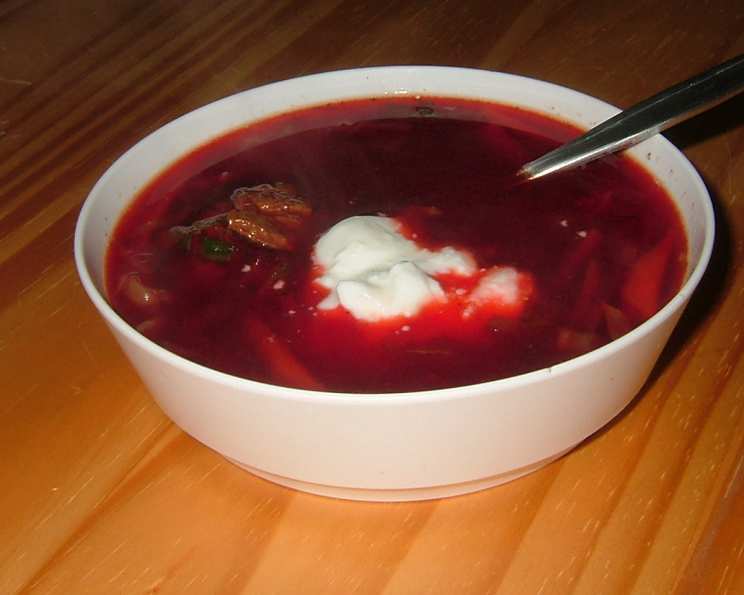
Ukrainian Standard Borsch: A Taste of Home
The aroma of simmering beets and beef always takes me back to my grandmother’s kitchen. I remember watching her, a whirlwind of motion, meticulously slicing vegetables into the thinnest strips imaginable – a technique she swore enhanced the flavor. The air would be thick with the promise of a comforting, hearty meal, a taste of Ukraine that transcended borders and generations. Every spoonful felt like a warm hug, a connection to heritage and family that I cherish to this day.
Recipe Overview
- Prep Time: 30 minutes
- Cook Time: 2 hours 50 minutes
- Total Time: 3 hours 20 minutes
- Servings: 8
- Yield: About 10 cups
- Dietary Type: Varies (See Variations)
Ingredients
- 1 1/2 lbs soup meat, with bone
- 10-12 cups cold water
- 1 teaspoon salt
- 1 medium onion, chopped
- 2 medium beets, cut in thin strips
- 1 small carrot, cut in thin strips
- 1 medium potato, diced
- 1/2 cup thinly sliced celery
- 1/2 cup diced string beans or 1/2 cup cooked white beans
- 2-3 cups shredded cabbage
- 3/4 cup strained tomatoes or 3/4 cup tomato juice
- 1/2 garlic clove, crushed (if desired)
- 1 tablespoon flour
- Beet kvas or lemon juice, to taste
- Salt and pepper, to taste
- Chopped fresh dill, for garnish
- 1/2 cup sour cream, for serving (optional)
Equipment Needed
- Large stockpot or Dutch oven
- Cutting board
- Knife
- Measuring cups and spoons
- Ladle
Instructions
- In a large stockpot or Dutch oven, place the soup meat and cover with cold water.
- Add the salt and bring the water slowly to a boil over medium-high heat. Once boiling, skim off any foam or impurities that rise to the surface. This will ensure a clearer and cleaner-tasting broth.
- Reduce the heat to low, cover the pot, and simmer gently for 1 1/2 hours. This allows the meat to become tender and infuses the water with rich flavor.
- Add the chopped onion and beet strips to the pot. Cook for 10 to 15 minutes, or until the beets are almost tender. If you are using young, tender beets, you can add them along with the other vegetables later in the process.
- Add the carrot strips, diced potato, thinly sliced celery, and diced string beans to the pot. Continue cooking for about 10 minutes.
- If using cooked white beans, add them after the cabbage has been cooked. This helps the beans retain their white color and prevents them from becoming mushy.
- Add the shredded cabbage to the pot and cook until it is tender. Be careful not to overcook the cabbage, as it can become bitter.
- Stir in the strained tomatoes or tomato juice and the crushed garlic (if using).
- In a small bowl, blend the flour with 3 tablespoons of cold water to create a smooth slurry. Gradually spoon in some of the hot soup liquid into the flour mixture, whisking constantly to temper it. This prevents lumps from forming when you add the slurry to the borsch.
- Pour the tempered flour slurry into the borsch and stir well to combine. If you prefer a thinner borsch, you can omit the flour altogether.
- Add a small quantity of beet kvas or lemon juice to the borsch, tasting as you go. Be careful not to add too much acid, as you want the borsch to be pleasantly tart, not sour.
- Season the borsch to taste with salt and pepper.
- Bring the borsch back to a boil and then reduce the heat to low.
- Stir in the chopped fresh dill.
- When ready to serve, ladle the borsch into bowls and top with a dollop of sour cream. Alternatively, you can serve the borsch without sour cream or allow each person to add their own cream to their individual serving.
Expert Tips & Tricks
- For a deeper, richer flavor, consider adding a small piece of smoked pork (such as bacon or ham hock) to the pot along with the soup meat.
- If you don’t have beet kvas on hand, a splash of apple cider vinegar can also be used to add a touch of acidity.
- To prevent the beets from staining other vegetables, you can blanch them separately for a few minutes before adding them to the pot.
- If you find that your borsch is too sweet, add a pinch of salt or a little more acid to balance the flavors.
- The quality of your broth makes a huge difference. Don’t skimp on the simmering time for the meat! The longer it simmers, the more flavorful the broth will be.
- Feel free to adjust the vegetables to your liking. Some people prefer more cabbage, while others like more potatoes.
Serving & Storage Suggestions
Serve the Ukrainian Standard Borsch hot, garnished with fresh dill and a dollop of sour cream. It’s traditionally served with a side of pampushki (Ukrainian garlic bread rolls).
Leftover borsch can be stored in an airtight container in the refrigerator for up to 3-4 days. It can also be frozen for up to 2-3 months. To reheat, gently warm the borsch on the stovetop over medium-low heat until heated through. Avoid boiling the borsch when reheating, as this can cause the vegetables to become mushy. It is best to add the sour cream right before serving, not during the reheating process.
Nutritional Information
(Note: Nutritional information is an estimate and may vary based on specific ingredients used.)
| Nutrient | Amount per Serving | % Daily Value |
|---|---|---|
| Calories | 250 kcal | 13% |
| Total Fat | 10g | 15% |
| Saturated Fat | 5g | 25% |
| Cholesterol | 30mg | 10% |
| Sodium | 500mg | 22% |
| Total Carbohydrate | 30g | 11% |
| Dietary Fiber | 5g | 18% |
| Sugars | 10g | – |
| Protein | 10g | 20% |
Variations & Substitutions
- Vegetarian/Vegan Borsch: Omit the soup meat and use vegetable broth instead of water. To add richness, consider adding a tablespoon of olive oil or coconut oil to the pot.
- Gluten-Free Borsch: Ensure that the tomato juice or strained tomatoes you use are gluten-free. Omit the flour slurry or use a gluten-free flour blend.
- Spicy Borsch: Add a pinch of cayenne pepper or a few drops of hot sauce to the borsch for a spicy kick.
- Creamy Borsch (Dairy-Free): Instead of sour cream, use a dollop of coconut cream or cashew cream for a dairy-free creamy topping.
- Regional Variations: Different regions of Ukraine have their own variations of borsch. Some include apples, beans, or even prunes. Feel free to experiment and adapt the recipe to your liking.
FAQs (Frequently Asked Questions)
Q: Can I make borsch ahead of time?
A: Absolutely! Borsch actually tastes even better the next day, as the flavors have more time to meld together. Prepare it a day or two in advance and store it in the refrigerator.
Q: What is beet kvas and where can I find it?
A: Beet kvas is a traditional fermented beet beverage that adds a unique tangy flavor to borsch. You can find it at some Eastern European grocery stores or make it yourself at home.
Q: Can I freeze borsch?
A: Yes, borsch freezes well. Allow it to cool completely before transferring it to an airtight container and freezing for up to 2-3 months.
Q: What if I don’t have all the vegetables listed in the recipe?
A: Don’t worry! Borsch is a forgiving soup. Feel free to substitute or omit vegetables based on what you have available. Root vegetables like parsnips or turnips would work well.
Q: How do I prevent the beets from staining everything pink?
A: Adding a splash of vinegar or lemon juice to the pot early on can help to set the color of the beets and prevent them from staining other vegetables. Also, try not to stir the soup too much while the beets are cooking.
Final Thoughts
Ukrainian Standard Borsch is more than just a soup; it’s a connection to history, family, and tradition. This recipe is a wonderful starting point, but don’t be afraid to experiment and make it your own. I encourage you to gather your ingredients, put on some Ukrainian folk music, and embark on a culinary journey that will warm your heart and soul. And please, share your creations and adaptations – I’d love to hear how you make this classic dish your own. Serve it with a crusty loaf of bread and a side of good company, and you’ll have a meal to remember.