
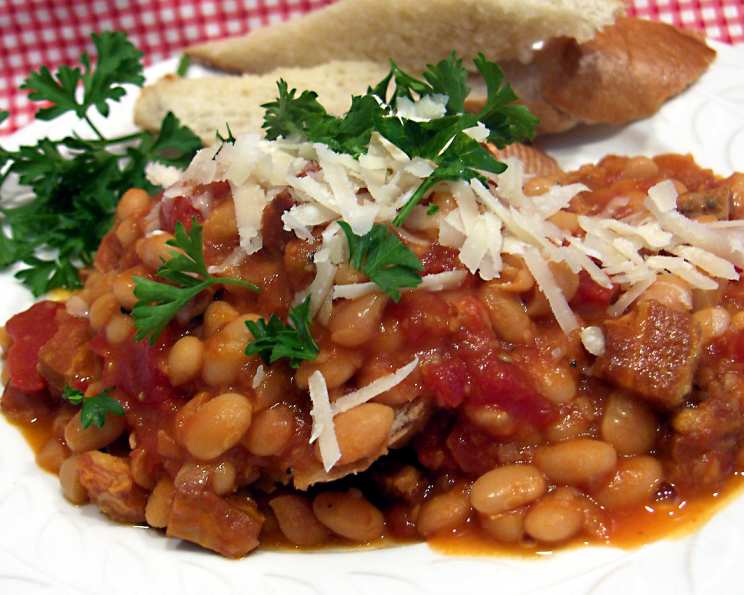
Ultimate Great Northern Beans: A Taste of Appalachian Comfort
The first time I tasted beans like these, I was perched on a weathered porch swing in the Blue Ridge Mountains, the scent of woodsmoke and honeysuckle thick in the air. My great-aunt, a woman whose hands held the stories of generations, ladled a steaming bowl into my lap. The creamy texture, the subtle smoky undertones, and the gentle spice were a revelation. It wasn’t just food; it was history, hospitality, and a warmth that settled deep in my soul. To this day, a bite of these beans transports me back to that porch, to simpler times, and to the comforting embrace of family.
Recipe Overview
- Prep Time: 12 hours, 5 minutes (includes soaking)
- Cook Time: 2-3 hours
- Total Time: 14-15 hours
- Servings: 8
- Yield: 8 cups
- Dietary Type: Gluten-Free (easily adaptable to Dairy-Free)
Ingredients
- 16 ounces great northern beans
- 48 ounces water
- 30 ounces canned chicken broth
- 15 ounces diced tomatoes with green chilies (Ro-Tel)
- 1 large white onion, chopped
- 1 tablespoon cooking oil (vegetable, olive, or canola oil)
- 6 ounces smoked pork jowl, cut into chunks (see substitutions below)
- ¾ teaspoon salt
- 1 teaspoon black pepper
Ingredient Notes:
-
Pork Jowl: If you can’t find pork jowl, you can substitute with smoked ham hock, bacon, or even salt pork. The smoked flavor is key to the overall taste profile. For a vegetarian or vegan version, try adding a teaspoon of smoked paprika and a tablespoon of liquid smoke to the pot. You could also use smoked tofu for texture.
-
Chicken Broth: Vegetable broth can be substituted to make the recipe dairy-free.
Equipment Needed
- Large cooking pot or Dutch oven
- Measuring cups and spoons
- Colander or strainer
- Cutting board
- Knife
Instructions
-
Soak the Beans: Place the great northern beans in a large bowl or pot. Cover with 48 ounces of cold water, ensuring the water level is at least twice the volume of the beans. The beans will absorb a significant amount of water as they soak. Let them soak for at least 8 hours, or preferably overnight. This rehydrates the beans, reducing cooking time and promoting even cooking.
-
Prepare the Pork Jowl: In a large cooking pot or Dutch oven, heat the cooking oil over medium heat. Add the smoked pork jowl chunks. Stir frequently and allow them to sizzle for about 5-6 minutes, until they are lightly browned and have rendered some of their fat. Browning the pork adds depth of flavor to the entire dish.
-
Deglaze the Pot: After the pork jowl has browned, deglaze the pot by pouring in about 4 ounces of the chicken broth. Use a wooden spoon or spatula to scrape up any browned bits (fond) stuck to the bottom of the pot. These browned bits are packed with flavor and will add richness to the beans.
-
Sauté the Onion: Add the chopped white onion to the pot. Reduce the heat slightly and allow the onion to simmer until it is tender and translucent, stirring often. This usually takes about 5-7 minutes. Sautéing the onion first mellows its flavor and adds sweetness to the dish.
-
Combine Ingredients: Rinse the soaked beans thoroughly in fresh water using a colander or strainer. This helps remove any starches released during soaking. After draining, add the rinsed beans to the pot, along with the remaining 26 ounces of chicken broth, the diced tomatoes with green chilies (Ro-Tel), salt, and black pepper.
-
Simmer the Beans: Bring the mixture to a boil, then immediately reduce the heat to low. Cover the pot tightly with a lid. Allow the beans to simmer gently over low heat for approximately 2-3 hours, or until the beans are tender. Stir the beans occasionally to prevent them from sticking to the bottom of the pot. Check the water level periodically, and if the beans are becoming too dry, add a little more broth or water.
-
Check for Doneness: To check if the beans are done, carefully scoop out a few beans and taste them. They should be tender and creamy, not hard or chalky. If the beans are still firm, continue to simmer them for another 30 minutes, checking again for doneness. Cooking time can vary depending on the age and quality of the beans.
-
Adjust Seasoning: Once the beans are tender, taste and adjust the seasoning as needed. You may want to add more salt or pepper to taste.
-
Serve: Serve hot.
Expert Tips & Tricks
- Soaking is Key: Don’t skip the soaking step! It significantly reduces cooking time and makes the beans more digestible.
- Low and Slow: Cooking the beans at a low simmer is crucial for achieving the desired creamy texture. Avoid boiling them vigorously, as this can cause the skins to burst and the beans to become mushy.
- Smoked Flavor Boost: For an even more intense smoky flavor, consider adding a smoked paprika to the mix.
- Salt Timing: It’s generally best to add salt towards the end of the cooking process, as salt can sometimes inhibit the beans from softening properly.
Serving & Storage Suggestions
These Ultimate Great Northern Beans are delicious served hot as a side dish or as a main course. They pair perfectly with cornbread, fried potatoes, eggs, and biscuits. Garnish with a dollop of sour cream or a sprinkle of fresh herbs for an extra touch of flavor.
Storage:
- Room Temperature: Do not leave cooked beans at room temperature for more than 2 hours to prevent bacterial growth.
- Refrigerator: Store leftover beans in an airtight container in the refrigerator for up to 3-4 days.
- Freezer: For longer storage, freeze the beans in freezer-safe containers or bags for up to 2-3 months.
Reheating:
- Reheat refrigerated beans on the stovetop over medium heat, adding a little broth or water if needed to prevent them from drying out. You can also microwave them until heated through.
- Thaw frozen beans in the refrigerator overnight before reheating.
Nutritional Information
Note: Nutritional information is an estimate and may vary based on specific ingredients and portion sizes.
| Nutrient | Amount per Serving | % Daily Value |
|---|---|---|
| Calories | 241 kcal | N/A |
| Fat | 17.4 g | 26% |
| Saturated Fat | 5.9 g | 29% |
| Cholesterol | 19.2 mg | 6% |
| Sodium | 793.3 mg | 33% |
| Carbohydrates | 13.6 g | 4% |
| Fiber | 3.5 g | 13% |
| Sugars | 1.1 g | N/A |
| Protein | 8 g | 15% |
Variations & Substitutions
- Spicy Beans: Add a pinch of cayenne pepper or a dash of hot sauce for a spicier kick.
- Vegetarian/Vegan Beans: Omit the pork jowl and use vegetable broth instead of chicken broth. Add smoked paprika and liquid smoke for a smoky flavor. Consider adding other vegetables like carrots, celery, or bell peppers.
- Creamy Beans: For extra creamy beans, mash a portion of them with a fork or immersion blender before serving.
- Different Beans: While this recipe is specifically for great northern beans, you can also adapt it for other types of beans, such as cannellini beans or navy beans. Cooking times may vary.
FAQs (Frequently Asked Questions)
Q: Do I really need to soak the beans overnight?
A: While you can skip soaking in a pinch, it’s highly recommended. Soaking significantly reduces cooking time, promotes even cooking, and makes the beans easier to digest.
Q: Can I use canned beans instead of dried beans?
A: While convenient, canned beans lack the depth of flavor and creamy texture of dried beans cooked from scratch. If you must use canned, reduce the cooking time significantly and adjust the liquid accordingly.
Q: How do I prevent my beans from being bland?
A: Don’t be afraid to season generously! Salt, pepper, and the smoky flavor from the pork jowl are essential. You can also add other herbs and spices to taste.
Q: My beans are taking forever to cook. What am I doing wrong?
A: Several factors can affect cooking time, including the age of the beans and the hardness of your water. Make sure you’re simmering the beans over low heat and that the pot is tightly covered.
Q: Can I make this recipe in a slow cooker?
A: Yes! Sauté the pork jowl and onions as directed in the recipe, then transfer everything to a slow cooker. Cook on low for 6-8 hours, or on high for 3-4 hours, until the beans are tender.
Final Thoughts
These Ultimate Great Northern Beans are more than just a recipe; they’re an invitation to slow down, savor simple pleasures, and connect with a rich culinary heritage. Whether you’re cooking them over a campfire or on your stovetop, I hope this dish brings you as much comfort and joy as it has brought me over the years. Don’t hesitate to experiment with variations and make it your own. And most importantly, share it with the people you love!