
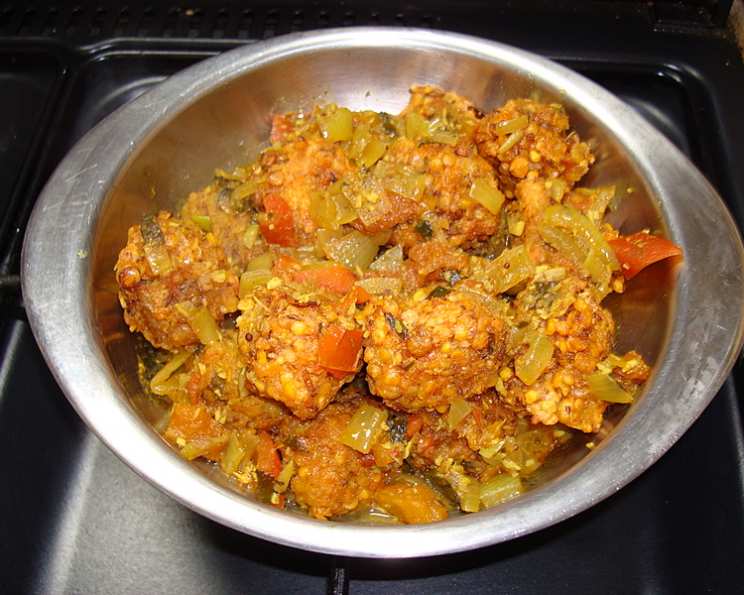
Vadai Curry: A South Indian Delight
The aroma of freshly fried vadas mingling with the rich, spiced gravy always transports me back to my grandmother’s kitchen. I remember being a curious child, perched on a stool, watching her deft hands shape the lentil batter into perfect little rounds before they plunged into the hot oil, sizzling to golden perfection. The anticipation was almost unbearable, knowing that these crispy, savory delights would soon be swimming in a luscious curry, ready to be devoured with fluffy idlis. It’s a flavor memory I cherish, and one I’m excited to share with you.
Recipe Overview
- Prep Time: 1 hour 15 minutes
- Cook Time: 45 minutes
- Total Time: 2 hours
- Servings: 3-4
- Dietary Type: Vegetarian
Ingredients
For the Vadas:
- 2 cups bengal gram dal (chana dal)
- 2 tablespoons onions, chopped
- 1 teaspoon salt
- Oil for deep frying
For the Curry Gravy:
- 2 cups onions, chopped
- 1 cup fresh tomato, chopped
- 2 cloves
- 1 cinnamon stick
- 1 bay leaf
- 1 teaspoon anise seed (saunf)
- 2 teaspoons red chili powder
- ½ teaspoon turmeric
- 1 teaspoon garam masala
- 2 teaspoons salt (or to taste)
- 3 garlic cloves
- 2 teaspoons onions, chopped (for the paste)
- 1 tablespoon chutney, gram
- 1 green chili
- 2 red chilies
- 1 tablespoon coconut, grated
- 2 tablespoons coriander, chopped
- 3 golden fried cashews
- 3 cups water
Equipment Needed
- Large bowl for soaking
- Grinder or food processor
- Deep frying pan or wok
- Slotted spoon or spider
- Large saucepan or pot
- Small grinder or spice grinder
Instructions
- Begin by soaking the bengal gram dal in water for 1 hour. This will soften the lentils and make them easier to grind.
- After soaking, drain the water completely. It’s crucial to remove excess water for the right consistency of the vada batter.
- Grind the drained bengal gram dal to a coarse paste using a grinder or food processor. Avoid adding too much water; the paste should be thick and slightly textured.
- Transfer the ground paste to a bowl and mix in 1 teaspoon of salt and 2 tablespoons of chopped onions. Mix well to combine all the ingredients.
- Heat oil in a deep frying pan or wok over medium-high heat. Ensure the oil is hot enough for deep frying; test by dropping a tiny piece of batter – it should sizzle and rise to the surface quickly.
- Take small portions of the bengal gram dal mixture and gently shape them into small dumplings. You can use your fingers or a spoon to create the vada shape.
- Carefully slide the shaped vadas into the hot oil, ensuring not to overcrowd the pan. Fry them until they turn golden brown on all sides. This usually takes about 4-5 minutes per batch.
- Remove the fried vadas from the oil using a slotted spoon or spider and place them on a paper towel-lined plate to drain excess oil. Set aside.
- Now, prepare the gravy. In a small grinder or spice grinder, make a smooth paste by grinding together the following ingredients using very little water: anise seed, garlic cloves, chopped onions (2 teaspoons), chutney gram, green chili, red chilies, and grated coconut. The paste should be fine and aromatic.
- Heat some oil (approximately 2 tablespoons) in a large saucepan or pot over medium heat.
- Add the cloves, cinnamon stick, and bay leaf to the hot oil. Fry them until a nice aroma is released, which usually takes about 30 seconds to a minute. Be careful not to burn the spices.
- Mix in the chopped onions (2 cups) and sauté until they turn golden brown. This step is crucial for the flavor of the curry.
- Add the chopped tomatoes and continue stirring. Cook until the tomatoes become mushy and the oil starts to separate from the mixture.
- Mix in the red chili powder, turmeric, and garam masala. Fry for about a minute, ensuring the spices are well combined and fragrant. Be careful not to burn the spices.
- Add the ground paste to the pan and fry until the oil floats on top. This process takes about 4-5 minutes of frying and stirring continuously.
- Pour in 3 cups of water and bring the gravy to a boil.
- Add the deep-fried vadas and 2 teaspoons of salt to the boiling gravy. Let it cook for some time (about 10-15 minutes) until the vadas soak up some of the gravy and become soft.
- Adjust the salt and the consistency of the gravy to your liking. If the gravy is too thick, add a little more water.
- Serve the hot vadai curry garnished with chopped coriander and golden fried cashews with steaming hot idlis.
Expert Tips & Tricks
- For a richer flavor, use ghee instead of oil for tempering the spices.
- To make the vadas extra crispy, add a tablespoon of rice flour to the batter.
- If you don’t have gram chutney, you can substitute it with a teaspoon of tamarind paste for a tangy flavor.
- Soaking the chana dal overnight, instead of just for an hour, yields softer vadas.
Serving & Storage Suggestions
Serve the vadai curry hot, garnished with fresh coriander and golden fried cashews, alongside idlis, dosas, or even rice. Leftovers can be stored in an airtight container in the refrigerator for up to 2-3 days. To reheat, gently warm the curry on the stovetop over low heat, adding a splash of water if needed to prevent it from drying out. Freezing is not recommended, as the vadas may become soggy upon thawing.
Nutritional Information
| Nutrient | Amount per Serving | % Daily Value |
|---|---|---|
| Calories | 350 kcal | 18% |
| Total Fat | 15g | 23% |
| Saturated Fat | 5g | 25% |
| Cholesterol | 0mg | 0% |
| Sodium | 1000mg | 42% |
| Total Carbohydrate | 40g | 13% |
| Dietary Fiber | 8g | 32% |
| Sugars | 10g | – |
| Protein | 15g | 30% |
Note: Nutritional information is an estimate and may vary based on specific ingredients and portion sizes.
Variations & Substitutions
- Spicier Curry: Increase the amount of red chili powder or add a few extra green chilies to the gravy.
- Coconut Milk Curry: Substitute water with coconut milk for a richer and creamier curry.
- Vegetable Additions: Add diced carrots, potatoes, or peas to the gravy for extra nutrition and texture.
- No Onion Garlic Version: Omit the onion and garlic. Increase the quantity of the other gravy ingredients to achieve a balanced flavor. You can add asafoetida (hing) while tempering in oil.
FAQs (Frequently Asked Questions)
Q: Can I make the vadas ahead of time?
A: Yes, you can fry the vadas a day in advance and store them in an airtight container at room temperature. Add them to the gravy just before serving.
Q: What can I use if I don’t have gram chutney?
A: If you don’t have gram chutney, you can use 1 teaspoon of tamarind paste or 1 tablespoon of tomato paste for a similar tangy flavor.
Q: How can I prevent the vadas from becoming too oily?
A: Ensure the oil is hot enough before frying the vadas. Also, do not overcrowd the pan, and drain the fried vadas on paper towels to absorb excess oil.
Q: Can I use a different type of lentil for the vadas?
A: While bengal gram dal (chana dal) is traditionally used, you can experiment with other lentils like urad dal (black gram) for a different flavor and texture.
Q: How do I adjust the thickness of the gravy?
A: To thicken the gravy, simmer it for a longer time without the vadas. To thin it, add more water until you reach your desired consistency.
Final Thoughts
Vadai Curry is more than just a dish; it’s a celebration of South Indian flavors and a testament to the magic that happens when simple ingredients are combined with love and care. I encourage you to try this recipe and experience the joy of creating this comforting and flavorful dish in your own kitchen. Feel free to adjust the spice levels and ingredients to your liking, and don’t hesitate to share your creations and feedback. Pair it with a refreshing glass of buttermilk or a cup of hot filter coffee for the ultimate South Indian experience!