
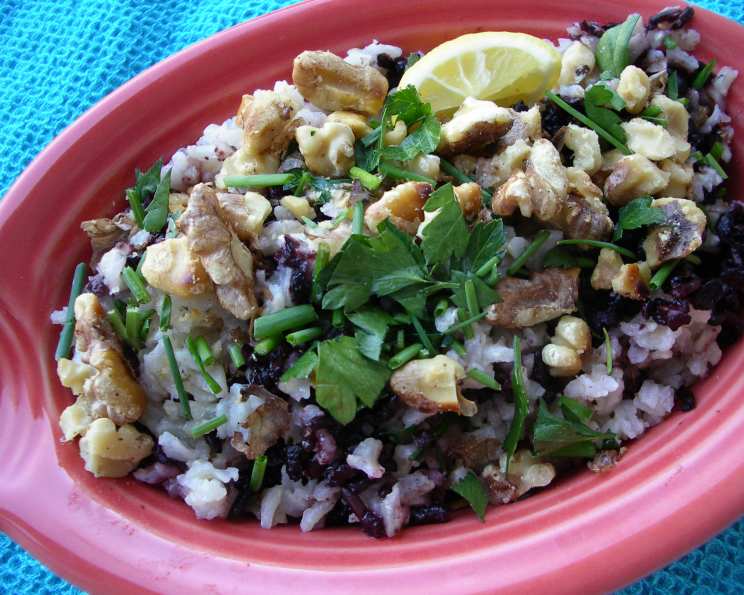
Wild Rice and Walnut Pilaf: A Taste of Autumn Harmony
The first time I tasted wild rice pilaf was at a Thanksgiving dinner hosted by a friend’s family in Minnesota. The air was crisp, the leaves were ablaze with color, and the aroma of woodsmoke mingled with roasting turkey. But it was this unassuming side dish that truly captured the essence of the season. The nutty fragrance of the wild rice, the earthy sweetness of the herbs, and the satisfying crunch of toasted walnuts created a symphony of textures and flavors that still resonates with me today, a warm echo of that perfect autumn evening.
Recipe Overview
- Prep Time: 5 minutes
- Cook Time: 45 minutes
- Total Time: 50 minutes
- Servings: 4
- Dietary Type: Vegetarian
Ingredients
- 1 teaspoon butter
- 1/4 cup finely chopped onion
- 2 1/2 cups water
- 3/4 cup long-grain brown and wild rice mix (such as Lundberg’s)
- 1/2 teaspoon salt, divided
- 2 tablespoons chopped fresh parsley
- 1 tablespoon chopped fresh chives
- 1 tablespoon fresh lemon juice
- 1 teaspoon olive oil
- 2 tablespoons chopped walnuts, toasted
Equipment Needed
- Small saucepan with lid
- Measuring cups and spoons
- Cutting board
- Knife
Instructions
- Begin by melting 1 teaspoon of butter in a small saucepan over medium heat. The gentle sizzle of the butter is the first step towards a delicious pilaf.
- Add 1/4 cup of finely chopped onion to the melted butter. Cook for about 3 minutes, stirring frequently, until the onion becomes translucent and fragrant. This step is crucial for building a flavorful base for the pilaf. Be careful not to brown the onion; you want it soft and sweet, not caramelized.
- Pour in 2 1/2 cups of water. Then, stir in 3/4 cup of long-grain brown and wild rice mix. I recommend using a high-quality mix like Lundberg’s for the best flavor and texture.
- Add 1/4 teaspoon of salt to the mixture. Stir well to combine all the ingredients.
- Bring the mixture to a boil over medium-high heat. Once it’s boiling, reduce the heat to low.
- Cover the saucepan tightly with a lid. Let the pilaf simmer gently for 40 minutes, or until all the liquid is absorbed by the rice. It’s essential to keep the lid on during this time to trap the steam and ensure the rice cooks evenly. Resist the temptation to peek!
- After 40 minutes, remove the saucepan from the heat. Let it stand, covered, for a few minutes to allow the rice to finish steaming.
- Now, it’s time to add the finishing touches. Stir in the remaining 1/4 teaspoon of salt, 2 tablespoons of chopped fresh parsley, 1 tablespoon of chopped fresh chives, 1 tablespoon of fresh lemon juice, and 1 teaspoon of olive oil. These ingredients will brighten the flavor of the pilaf and add a touch of freshness.
- Finally, sprinkle each serving with 2 tablespoons of chopped, toasted walnuts. The toasted walnuts add a delightful crunch and nutty flavor that perfectly complements the earthy rice and herbs.
Expert Tips & Tricks
- Toast those walnuts! Toasting the walnuts is a game-changer. It intensifies their nutty flavor and gives them a satisfying crunch. Simply spread the chopped walnuts on a baking sheet and toast them in a 350°F (175°C) oven for 5-7 minutes, or until lightly golden and fragrant. Watch them carefully, as they can burn quickly.
- Don’t skip the onion. Sautéing the onion in butter at the beginning creates a flavor base that permeates the entire dish.
- Use good quality rice. A high-quality wild rice blend will have a noticeable impact on the final flavor and texture.
- Control the heat. Maintaining a gentle simmer is key to perfectly cooked rice. If the heat is too high, the water will evaporate too quickly, and the rice will be undercooked. If the heat is too low, the rice may become mushy.
- Fluff it up! Before serving, use a fork to gently fluff the pilaf. This will help separate the grains and prevent them from clumping together.
Serving & Storage Suggestions
Wild Rice and Walnut Pilaf is a versatile side dish that pairs beautifully with a variety of main courses. It’s a classic accompaniment to roasted chicken, turkey, or pork. It also complements grilled fish, vegetarian entrees, and hearty stews.
For serving, consider garnishing with a sprig of fresh parsley or a lemon wedge. This adds a pop of color and visual appeal.
To store leftovers, transfer the pilaf to an airtight container and refrigerate. It will keep for up to 3-4 days. Reheat it gently in a saucepan over low heat, adding a splash of water or broth if needed to prevent it from drying out. You can also reheat it in the microwave. I do not recommend freezing this pilaf as the texture may change.
Nutritional Information
| Nutrient | Amount per Serving | % Daily Value |
|---|---|---|
| Calories | 47.9 kcal | N/A |
| Calories from Fat | 40 g | 84% |
| Total Fat | 4.5 g | 6% |
| Saturated Fat | 1 g | 4% |
| Cholesterol | 2.5 mg | 0% |
| Sodium | 301.9 mg | 12% |
| Total Carbohydrate | 2 g | 0% |
| Dietary Fiber | 0.5 g | 1% |
| Sugars | 0.6 g | 2% |
| Protein | 0.8 g | 1% |
Note: Nutritional information is an estimate and may vary based on specific ingredients and cooking methods.
Variations & Substitutions
- Vegan Pilaf: Substitute the butter with olive oil or your favorite plant-based butter alternative. This will keep the recipe entirely vegan.
- Nut Variations: Feel free to experiment with different nuts. Pecans, almonds, or hazelnuts would all be delicious substitutes for walnuts.
- Herb Variations: Try adding other fresh herbs like thyme, rosemary, or sage for a different flavor profile.
- Vegetable Boost: Incorporate finely chopped vegetables such as carrots, celery, or mushrooms along with the onion for added nutrition and flavor.
- Broth Upgrade: Use vegetable or chicken broth instead of water for a richer flavor.
FAQs (Frequently Asked Questions)
Q: Can I use pre-cooked rice for this recipe?
A: While you could technically use pre-cooked rice, the texture and flavor won’t be the same. The long simmering process allows the rice to absorb the flavors of the other ingredients, resulting in a more cohesive and delicious pilaf.
Q: How do I know when the rice is cooked?
A: The rice is cooked when all the liquid has been absorbed and the grains are tender. If the rice is still crunchy after 40 minutes, add a little more water and continue simmering until it’s done.
Q: Can I make this pilaf ahead of time?
A: Yes, you can make the pilaf ahead of time and store it in the refrigerator for up to 2-3 days. Reheat it gently before serving. Add the toasted walnuts just before serving to maintain their crunch.
Q: What if I don’t have fresh parsley or chives?
A: You can use dried herbs in a pinch. Use about 1 teaspoon of dried parsley and 1/2 teaspoon of dried chives for every 2 tablespoons and 1 tablespoon of fresh herbs, respectively.
Q: My pilaf turned out mushy. What did I do wrong?
A: Mushy pilaf is usually caused by using too much water or cooking the rice for too long. Make sure to use the correct amount of water specified in the recipe, and check the rice periodically towards the end of the cooking time.
Final Thoughts
Wild Rice and Walnut Pilaf is more than just a side dish; it’s a celebration of simple ingredients transformed into something truly special. The earthy flavors, satisfying textures, and delightful aroma make it a perfect addition to any meal, especially during the autumn season. I encourage you to give this recipe a try and experience the magic for yourself. Feel free to experiment with different variations and substitutions to create your own signature pilaf. And please, share your feedback and creations with me – I’d love to hear how it turns out! Perhaps pair it with a pan-seared salmon and a crisp glass of white wine for a truly memorable meal.