
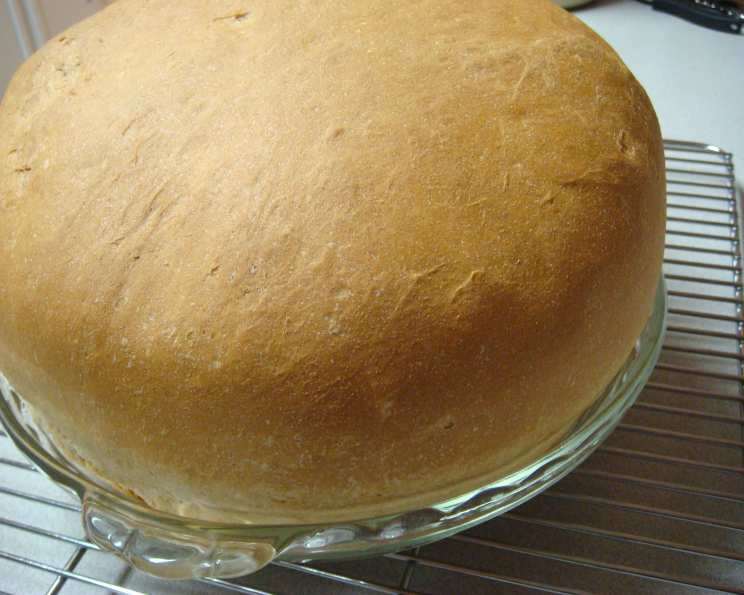
Mad Dog’s Ultimate Whole Wheat Semolina Bread
I still remember the first time I baked this bread. The aroma alone transported me back to my grandmother’s kitchen, where the scent of freshly baked goods was a constant, comforting presence. But this wasn’t just any bread; it was a symphony of textures and flavors, the subtle nuttiness of whole wheat playing perfectly with the slightly sweet, golden semolina. Each slice, warm from the oven, was a taste of pure, unadulterated bliss – a simple pleasure that elevated the everyday.
Recipe Overview
- Prep Time: 2 hours 23 minutes
- Cook Time: 35 minutes
- Total Time: 2 hours 58 minutes
- Yields: 1 loaf
- Dietary Type: Vegetarian
Ingredients
- 2 cups bread flour
- 1 cup whole wheat flour
- 1 cup semolina flour
- 1 teaspoon salt
- 1 tablespoon yeast
- 1 1/2 tablespoons honey
- 1 1/2 tablespoons butter, melted
- 1 1/3 cups water, heated to 120°F
Equipment Needed
- Large mixing bowl
- Measuring cups and spoons
- Damp cloth
- Metal bread loaf pan (large size recommended)
- Cooling rack
- Oven
Instructions
- Proof the yeast: In a small bowl, combine 1 cup of the warm water (120°F) with the honey. Stir until the honey is dissolved. Sprinkle the yeast over the honey-water mixture and let it stand for 10 minutes, or until foamy. This indicates that the yeast is active.
- Combine dry ingredients: In a large mixing bowl, sift together the bread flour, whole wheat flour, semolina flour, and salt. Sifting ensures a lighter, more even texture.
- Add melted butter: Pour the melted butter into the flour mixture and mix until evenly distributed. This adds richness and tenderness to the bread.
- Incorporate wet ingredients: Add the proofed yeast mixture to the flour mixture. Gradually add the remaining water, mixing until a dough ball forms. You may need to adjust the amount of water slightly depending on the humidity and the type of flour used.
- Knead the dough: Turn the dough out onto a lightly floured surface and knead for 10 minutes, or until the dough is smooth and elastic. Kneading develops the gluten, which gives the bread its structure and chewy texture.
- First rise: Place the dough in a lightly buttered bowl, turning to coat. Cover the bowl with a damp cloth to prevent the dough from drying out. Place the bowl in a warm, draft-free place to rise for at least 1 hour, or until the dough has doubled in size. A slightly warm oven (heated to 115°F and then turned off) is an ideal environment for rising.
- Punch down the dough: Once the dough has doubled, punch it down to release the air. This helps to redistribute the yeast and creates a more even texture in the final bread.
- Shape the loaf: Form the dough into a loaf shape and place it in a well-buttered metal bread loaf pan. The size of the pan should be appropriate for a large loaf.
- Second rise: Cover the loaf pan with a damp cloth and let the dough rise again in a warm, draft-free place for at least 1 hour, or until the loaf has doubled in size. A microwave (turned off) is a good option for this second rise, as it provides a humid environment. Leave the loaf uncovered during the second rise.
- Bake the bread: Preheat the oven to 375°F (190°C). Once the oven is preheated, bake the bread for 35 minutes, or until the internal temperature reaches 180-200°F (82-93°C). Use a thermometer to ensure the bread is fully cooked.
- Cool the bread: Remove the bread from the oven and immediately turn it out onto a cooling rack. Let the bread cool completely before slicing and serving. This prevents the bread from becoming gummy.
Expert Tips & Tricks
- Temperature is key: Ensure the water used to proof the yeast is between 110-120°F. Too hot, and you’ll kill the yeast; too cold, and it won’t activate.
- Kneading is crucial: Don’t skimp on the kneading time. A well-kneaded dough is essential for a good rise and a chewy texture.
- Warm, draft-free rise: Find a consistently warm place for the dough to rise. If your kitchen is cold, try placing the bowl on top of the refrigerator or inside a slightly warmed oven (turned off).
- Doneness check: If the bread seems to be browning too quickly, tent it with foil during the last 10-15 minutes of baking.
- Shiny crust: For a glossy crust, brush the top of the loaf with melted butter or an egg wash before baking.
Serving & Storage Suggestions
Serve this bread warm, with a smear of butter or a drizzle of olive oil. It’s also fantastic toasted and topped with avocado or your favorite spreads.
To store, wrap the cooled bread tightly in plastic wrap or a bread bag. It will last for 2-3 days at room temperature. For longer storage, slice the bread and freeze it in a freezer-safe bag. Frozen bread can be reheated in the oven or toaster. Reheat frozen slices of bread in a 350°F oven for about 5-7 minutes or until warmed through.
Nutritional Information
| Nutrient | Amount per Serving (approx. 1 slice) | % Daily Value* |
|---|---|---|
| Calories | 183 kcal | 9% |
| Total Fat | 2.03 g | 3% |
| Saturated Fat | 1.11 g | 6% |
| Cholesterol | 3.82 mg | 1% |
| Sodium | 206.2 mg | 9% |
| Total Carbohydrate | 35.8 g | 12% |
| Dietary Fiber | 2.54 g | 10% |
| Sugars | 2.26 g | N/A |
| Protein | 5.69 g | 11% |
*Percent Daily Values are based on a 2,000 calorie diet.
Variations & Substitutions
- Sweet bread: Add 1/4 cup of brown sugar or maple syrup to the dough for a sweeter flavor.
- Herb bread: Mix in 1-2 tablespoons of chopped fresh herbs, such as rosemary, thyme, or oregano, to the flour mixture.
- Seed bread: Sprinkle the top of the loaf with sesame seeds, poppy seeds, or sunflower seeds before baking.
- Nut bread: Add 1/2 cup of chopped nuts, such as walnuts or pecans, to the dough.
- Vegan variation: Substitute the butter with a plant-based butter alternative, like vegan margarine or olive oil.
FAQs (Frequently Asked Questions)
Q: Can I use active dry yeast instead of instant yeast?
A: Yes, you can. However, you may need to let it proof for a slightly longer period (10-15 minutes) to ensure it’s fully activated.
Q: Why is my bread dense and not rising properly?
A: This could be due to several factors: using old or inactive yeast, not kneading the dough enough, or not allowing the dough enough time to rise in a warm place.
Q: Can I make this dough in a bread machine?
A: Yes, you can. Follow your bread machine’s instructions for whole wheat bread recipes.
Q: How do I prevent the crust from becoming too hard?
A: You can brush the loaf with melted butter immediately after baking. This will soften the crust slightly.
Q: What is semolina flour and where can I find it?
A: Semolina flour is a coarse, pale yellow flour made from durum wheat. It is commonly used in pasta making but also adds a wonderful texture and flavor to bread. You can find it in most well-stocked grocery stores or online.
Final Thoughts
I hope this recipe inspires you to create your own loaf of Mad Dog’s Ultimate Whole Wheat Semolina Bread. Don’t be afraid to experiment with different variations and substitutions to make it your own. This bread is more than just a recipe; it’s a comforting and delicious experience that I hope you’ll share with your loved ones. Happy baking, and please let me know how yours turns out!