
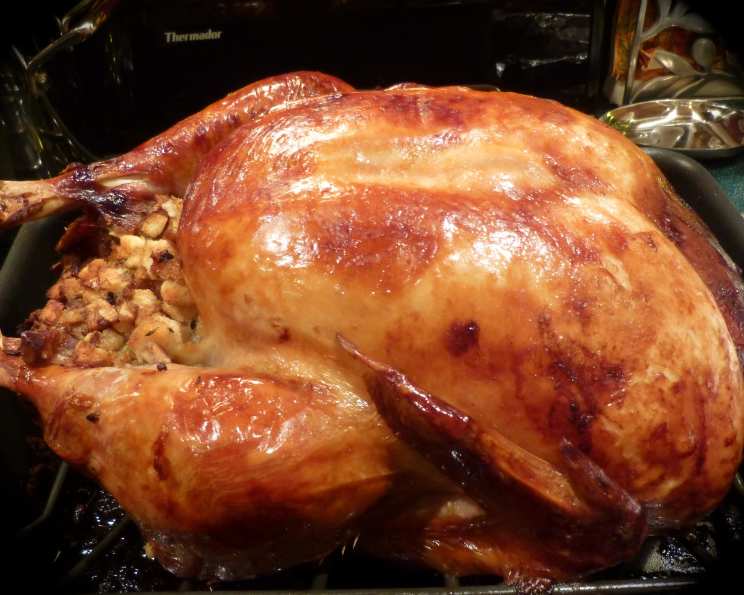
Martha’s Perfect Roast Turkey: A Thanksgiving Tradition
There’s something truly magical about the aroma of a roasting turkey filling the house on Thanksgiving. My earliest memory is perched on a stool in my grandmother’s kitchen, watching her meticulously baste the bird, the golden-brown skin glistening under the warm kitchen light. The air was thick with anticipation, a symphony of savory scents promising a feast to remember. Now, years later, I cherish the chance to recreate that comforting memory for my own family, and this recipe, inspired by Martha Stewart, helps me do just that.
Recipe Overview
- Prep Time: 2 hours 15 minutes
- Cook Time: 4 hours
- Total Time: 6 hours 15 minutes
- Servings: 12-14
- Yield: 1 roast turkey with gravy
- Dietary Type: Not specified
Ingredients
- 1 (20-21 lb) fresh whole turkey, giblets and neck removed from cavity and reserved
- 1 1/2 cups unsalted butter, melted, plus 4 tablespoons unsalted butter, room temperature
- 1 (750 ml) bottle dry white wine
- 2 teaspoons salt
- 2 teaspoons freshly ground black pepper
- Turkey stuffing (your favorite recipe)
- 1 cup dry red wine (optional) or 1 cup white wine, for gravy (optional)
- Giblet stock
Equipment Needed
- Heavy metal roasting pan
- Roasting rack
- Large bowl
- Cheesecloth
- Pastry brush
- Kitchen string
- Toothpicks
- Instant-read thermometer
- Glass measuring cup
- Wooden spoon
- Gravy boat
- Strainer
Instructions
-
Begin by rinsing the turkey thoroughly with cool water, both inside and out. Pat it completely dry with paper towels. This crucial step helps ensure even browning. Allow the turkey to stand at room temperature for 2 hours. This helps it cook more evenly.
-
Position a rack on the lowest level of your oven. Preheat the oven to 450 degrees Fahrenheit (232 degrees Celsius).
-
In a large bowl, combine the melted butter and white wine. Set aside.
-
Fold a large piece of cheesecloth into quarters and cut it into a 17-inch, four-layer square. This cheesecloth acts as a basting blanket, keeping the turkey moist.
-
Immerse the cheesecloth in the butter and wine mixture; let it soak thoroughly. Ensure the cheesecloth is fully saturated; this step is vital for infusing the turkey with flavor.
-
Place the turkey, breast side up, on a roasting rack in a heavy metal roasting pan. If your turkey comes with a pop-up timer, remove it. An instant-read thermometer provides a much more accurate indication of doneness.
-
Fold the wing tips under the turkey. This prevents them from burning during the long roasting time.
-
Sprinkle 1/2 teaspoon each of salt and pepper inside the turkey.
-
Fill the large cavity and neck cavity loosely with as much stuffing as they hold comfortably. Do not pack the stuffing tightly, as it will expand during cooking. If you have remaining stuffing, cook it in a buttered baking dish for 45 minutes at 375 degrees Fahrenheit (190 degrees Celsius).
-
Tie the legs together loosely with kitchen string, preferably in a bow for easy removal later.
-
Fold the neck flap under, and secure it with toothpicks.
-
Rub the turkey with the softened butter, ensuring even coverage. Sprinkle with the remaining 1 1/2 teaspoons salt and pepper.
-
Lift the soaked cheesecloth out of the liquid, and squeeze it slightly, leaving it very damp. Spread it evenly over the breast and about halfway down the sides of the turkey; it can cover some of the leg area.
-
Place the turkey, legs first, in the preheated oven. Cook for 30 minutes.
-
Using a pastry brush, baste the cheesecloth and exposed parts of the turkey with the butter and wine mixture.
-
Reduce the oven temperature to 350 degrees Fahrenheit (175 degrees Celsius) and continue to cook for 2 1/2 more hours, basting every 30 minutes. Keep a close watch on the pan juices; if the pan gets too full, spoon out the juices, reserving them for gravy.
-
After this third hour of cooking, carefully remove and discard the cheesecloth.
-
Turn the roasting pan so that the breast is facing the back of the oven. Baste the turkey with the pan juices. If there are not enough juices, continue to use the butter and wine mixture. The skin becomes fragile as it browns, so baste carefully.
-
Cook for 1 more hour, basting after 30 minutes.
-
After this fourth hour of cooking, insert an instant-read thermometer into the thickest part of the thigh, being careful not to touch a bone. The temperature should reach 180 degrees Fahrenheit (82 degrees Celsius). The stuffing should be between 140 degrees Fahrenheit (60 degrees Celcius) and 160 degrees Fahrenheit (71 degrees Celcius), and the turkey should be golden brown. The breast does not need to be checked for temperature. If the legs are not yet fully cooked, baste the turkey, return it to the oven, and cook for another 20 to 30 minutes.
-
When fully cooked, transfer the turkey to a serving platter, and let it rest for about 30 minutes. This allows the juices to redistribute, resulting in a more tender and flavorful bird.
-
Meanwhile, make the gravy. Pour all the pan juices into a glass measuring cup. Let stand until the grease rises to the surface, about 10 minutes, then skim it off.
-
Place the roasting pan over medium-high heat. Add 1 cup dry red or white wine, or water, to the pan. Using a wooden spoon, scrape the pan until the liquid boils and all the crisp bits are unstuck from the pan.
-
Add the giblet stock to the pan. Stir well, and bring back to a boil. Cook until the liquid has reduced by half, about 10 minutes.
-
Add the defatted pan juices, and cook over medium-high heat 10 minutes more. You will have about 2 1/2 cups of gravy. Season to taste, strain into a warm gravy boat, and serve with the turkey.
Expert Tips & Tricks
- Brining: For an extra-moist turkey, consider brining it for 12-24 hours before roasting.
- Herb Butter: Add fresh herbs like rosemary, thyme, and sage to the softened butter for a more aromatic flavor.
- Resting is Key: Don’t skip the resting period! It’s essential for juicy meat.
- Oven Thermometer: Use an oven thermometer to ensure your oven is accurately calibrated.
- Gravy Consistency: Adjust the amount of giblet stock to achieve your desired gravy consistency.
Serving & Storage Suggestions
Serve the roasted turkey immediately after carving. Arrange the slices artfully on a platter, garnished with fresh herbs like parsley or sage. Present the gravy in a warmed gravy boat alongside.
Store leftover turkey in an airtight container in the refrigerator for up to 3-4 days. The turkey can also be frozen for up to 2-3 months. Reheat the turkey in the oven at 325 degrees Fahrenheit (163 degrees Celsius) with a bit of broth or gravy to keep it moist.
Nutritional Information
| Nutrient | Amount per Serving | % Daily Value |
|---|---|---|
| Calories | 1140 kcal | N/A |
| Calories from Fat | 606 g | 53% |
| Total Fat | 67.4 g | 103% |
| Saturated Fat | 27.1 g | 135% |
| Cholesterol | 437.3 mg | 145% |
| Sodium | 753.5 mg | 31% |
| Total Carbohydrate | 1.9 g | 0% |
| Dietary Fiber | 0.1 g | 0% |
| Sugars | 0.6 g | 2% |
| Protein | 113.3 g | 226% |
Note: These values are estimates and can vary based on the specific ingredients and portion sizes.
Variations & Substitutions
- Gluten-Free: Use a gluten-free stuffing recipe and ensure your gravy is thickened with a gluten-free alternative like cornstarch.
- Herb Variations: Experiment with different herb combinations in the butter rub, such as lemon thyme and chives.
- Wine Substitution: If you prefer not to use wine, substitute chicken or vegetable broth in the basting mixture.
- Smoked Turkey: For a smoky flavor, try using a smoked turkey as your base. Adjust cooking times as necessary.
FAQs (Frequently Asked Questions)
Q: Why is it important to let the turkey stand at room temperature before cooking?
A: Allowing the turkey to stand at room temperature for a couple of hours helps it cook more evenly because it reduces the temperature difference between the surface and the center of the bird.
Q: Can I use salted butter instead of unsalted butter?
A: While you can, it’s best to use unsalted butter to control the overall saltiness of the dish. If using salted butter, reduce the amount of added salt.
Q: How do I prevent the turkey breast from drying out?
A: Basting frequently with the butter and wine mixture, using the cheesecloth, and not overcooking the turkey are key to keeping the breast moist. Also, letting the turkey rest after cooking allows the juices to redistribute.
Q: What if I don’t have cheesecloth?
A: If you don’t have cheesecloth, you can baste the turkey more frequently to keep it moist, about every 20 minutes.
Q: How long can I store leftover gravy?
A: Leftover gravy should be stored in an airtight container in the refrigerator and used within 1-2 days for the best quality and safety.
Final Thoughts
This roasted turkey recipe is more than just a set of instructions; it’s an invitation to create lasting memories around your Thanksgiving table. Don’t be intimidated by the length of the recipe; each step is designed to ensure a perfectly moist and flavorful turkey. Gather your loved ones, embrace the process, and savor the delicious results. And of course, I would love to hear about your experience with the recipe—share your pictures and feedback! I highly recommend pairing this succulent turkey with roasted root vegetables and cranberry sauce for a truly unforgettable Thanksgiving feast.