
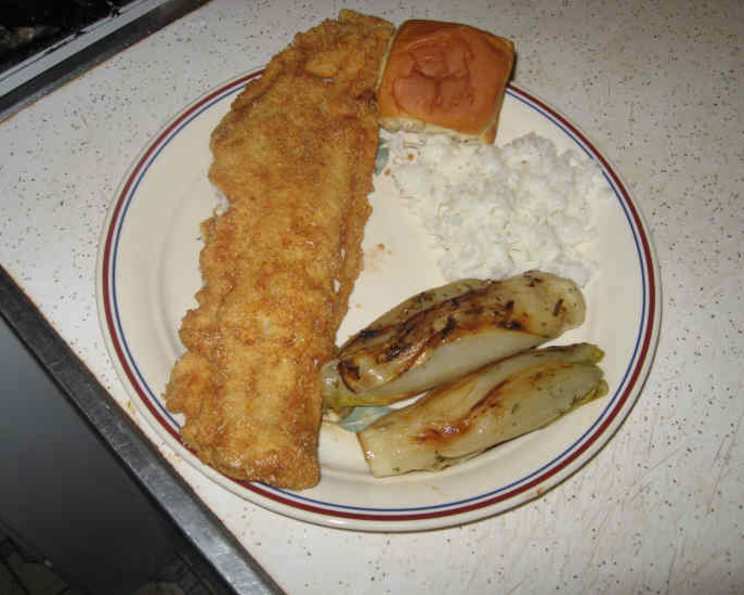
Pat’s Southern-Fried Panfish
The smell of hot Crisco still takes me back to my grandmother’s kitchen. Summer evenings were spent on the porch, the air thick with humidity and the promise of a simple, honest meal. She’d stand over the stove, her brow furrowed in concentration, transforming humble panfish into golden-brown delicacies. It wasn’t fancy, but it was love on a plate, and every crispy bite was a reminder of family, warmth, and simpler times.
Recipe Overview
- Prep Time: 3 hours 25 minutes (includes marinating)
- Cook Time: 7-10 minutes per batch
- Total Time: 3 hours 35 minutes
- Servings: 6
- Yield: 6 fillets
- Dietary Type: Pescatarian
Ingredients
- 24 ounces bass fillets, 4 ounces each
- 2 cups all-purpose flour, divided
- 3/4 cup yellow cornmeal
- 2 tablespoons kosher salt, for dredge
- 2 large eggs, for drench
- 1/2 teaspoon white pepper
- 2 cups vegetable shortening (I use only Crisco!)
- 2 teaspoons table salt, for marinade
- 1 quart water, for marinade and drench
Equipment Needed
- Small paper bag
- Wax paper
- Large skillet
- Fork or whisk
- Medium-sized bowl
- Platter
- Paper towels
Instructions
-
Begin by preparing the marinade. In a large bowl or container, combine almost all of the water (reserving 4 tablespoons) with the table salt. Submerge the bass fillets in this saltwater solution. Cover and refrigerate for 3 hours. This step is crucial; it seasons the fish and helps to firm up the flesh.
-
After the marinating time has elapsed, remove the fillets from the brine and thoroughly pat them dry with paper towels. Moisture is the enemy of crispy fried fish!
-
Pour one cup of the all-purpose flour into a small paper bag. Place the fillets into the bag, one at a time, and gently shake to coat them lightly with the flour. The flour should be a very light dusting. Remove the fillets from the bag, shaking off any excess flour. Reserve this flour-filled bag for a later step.
-
Lay the lightly floured fillets out on a piece of wax paper. Allow them to sit at room temperature for 20 minutes. This allows the flour to adhere better to the fish.
-
While the fillets are resting, prepare the shortening. In a large skillet, add the vegetable shortening. Heat over medium-high heat until the shortening is very hot. To test if it’s hot enough, drop a tiny amount of water into the skillet. If it crackles loudly and immediately, you’re ready to go. The shortening needs to be hot enough to fry the fish properly without it becoming greasy.
-
Next, prepare the egg drench. In a medium-sized bowl, using a fork or whisk, vigorously beat the eggs together with the remaining 4 tablespoons of water for at least 20 seconds, or until well combined and slightly frothy. Set aside.
-
Now, it’s time to create the dredge. On a platter, combine the flour from the paper bag (the flour that was previously used to dust the fish), the remaining all-purpose flour (1 cup), the kosher salt, the yellow cornmeal, and the white pepper. Mix thoroughly until all ingredients are evenly distributed.
-
Prepare each fillet for frying individually. Begin by dipping it into the egg drench, ensuring it is fully coated. Allow most of the excess egg to drip off.
-
Immediately transfer the drenched fillet to the platter with the flour mixture, coating it thoroughly on both sides. Shake the fillet very lightly to remove any large clumps of flour and cornmeal. Too much coating can prevent the fish from cooking evenly and lead to a less crispy result.
-
Carefully lay each coated fillet into the very hot shortening. It should begin to fry immediately upon contact. If it doesn’t, the shortening isn’t hot enough, and you’ll need to wait for it to heat up further. Avoid overcrowding the skillet. Fry the fillets in batches to ensure even cooking and maintain the temperature of the shortening.
-
Allow each fillet to fry until it is lightly browned on the first side. This will take approximately 3-5 minutes. Carefully turn the fillet to the other side using a spatula or tongs.
-
Continue frying until the fillet is lightly browned on both sides (about 7-10 minutes total cooking time). The fish is done when it is very white and flaky in the thickest part of the fillet. You can test for doneness by gently flaking the fish with a fork.
-
Remove the fried fillets from the skillet and place them on a wire rack or paper towel-lined plate to drain excess oil.
-
Serve immediately.
Expert Tips & Tricks
-
Maintain Oil Temperature: The most crucial element to perfectly fried fish is maintaining the right oil temperature. If the oil isn’t hot enough, the fish will absorb it, resulting in a greasy, soggy texture. If it’s too hot, the outside will burn before the inside is cooked. Use a thermometer to monitor the oil, aiming for a consistent 350-375°F (175-190°C).
-
Don’t Overcrowd the Pan: Fry the fish in batches. Overcrowding lowers the oil temperature, leading to uneven cooking and greasy fish.
-
Seasoning is Key: Don’t be afraid to adjust the seasonings in the dredge to your liking. A pinch of cayenne pepper or garlic powder can add a nice kick.
-
Double Dredge: For an extra crispy coating, consider a double dredge. After the initial dredge, dip the fish back into the egg wash, then back into the dredge mixture.
Serving & Storage Suggestions
Serve Pat’s Southern-Fried Panfish immediately while it’s hot and crispy. It’s fantastic with classic sides like coleslaw, hushpuppies, and french fries. Ketchup, tartar sauce, or even a squeeze of fresh lemon are perfect accompaniments.
Leftovers can be stored in an airtight container in the refrigerator for up to 3 days. Reheat in a preheated oven at 350°F (175°C) for about 10-15 minutes, or until heated through. Avoid microwaving, as it will make the coating soggy.
Nutritional Information
| Nutrient | Amount per Serving | % Daily Value |
|---|---|---|
| Calories | 482.6 kcal | |
| Calories from Fat | 241.2 kcal | |
| Total Fat | 26.8 g | 41 % |
| Saturated Fat | 7.1 g | 35 % |
| Cholesterol | 73.8 mg | 25 % |
| Sodium | 1606.3 mg | 67 % |
| Total Carbohydrate | 21.9 g | 7 % |
| Dietary Fiber | 1.2 g | 5 % |
| Sugars | 0.2 g | |
| Protein | 36.4 g | 73 % |
Variations & Substitutions
-
Gluten-Free: Substitute the all-purpose flour with a gluten-free blend. Ensure the blend contains xanthan gum for binding.
-
Spice It Up: Add a pinch of cayenne pepper, smoked paprika, or chili powder to the dredge for a spicier kick.
-
Different Fish: While this recipe is excellent for bass, it also works well with other firm, white-fleshed fish like catfish, cod, or haddock. Adjust cooking times accordingly.
-
Air Fryer Option: For a lighter option, try air frying the fillets. Preheat your air fryer to 400°F (200°C). Lightly spray the coated fillets with cooking spray and air fry for 8-10 minutes, flipping halfway through, until golden brown and cooked through.
FAQs (Frequently Asked Questions)
Q: Why do I need to marinate the fish in saltwater?
A: The saltwater marinade seasons the fish and helps to firm up the flesh, resulting in a better texture after frying.
Q: Can I use a different type of oil for frying?
A: Yes, you can use other high-heat oils like peanut oil, canola oil, or grapeseed oil. However, Crisco vegetable shortening is a traditional choice for Southern-fried fish and contributes to its characteristic flavor and texture.
Q: How can I tell if the fish is cooked through?
A: The fish is cooked through when it is opaque and flakes easily with a fork in the thickest part.
Q: What if my coating keeps falling off the fish?
A: Make sure you are patting the fish dry before dusting with flour, and that the egg wash is coating the fish evenly. Also, allow the floured fillets to sit for 20 minutes before dredging, as this allows the flour to adhere better.
Q: Can I make this ahead of time?
A: While best served immediately, you can prepare the dredged fillets a few hours in advance and store them in the refrigerator on a wire rack. This will help the coating set.
Final Thoughts
Pat’s Southern-Fried Panfish is more than just a recipe; it’s a taste of tradition, a celebration of simple flavors, and a reminder of the joy of cooking. Don’t be intimidated by the frying process; with a little practice and attention to detail, you’ll be turning out perfectly crispy, golden-brown fish in no time. Gather your ingredients, fire up the Crisco, and get ready to experience a true Southern classic. I encourage you to try this recipe and let me know what you think!