
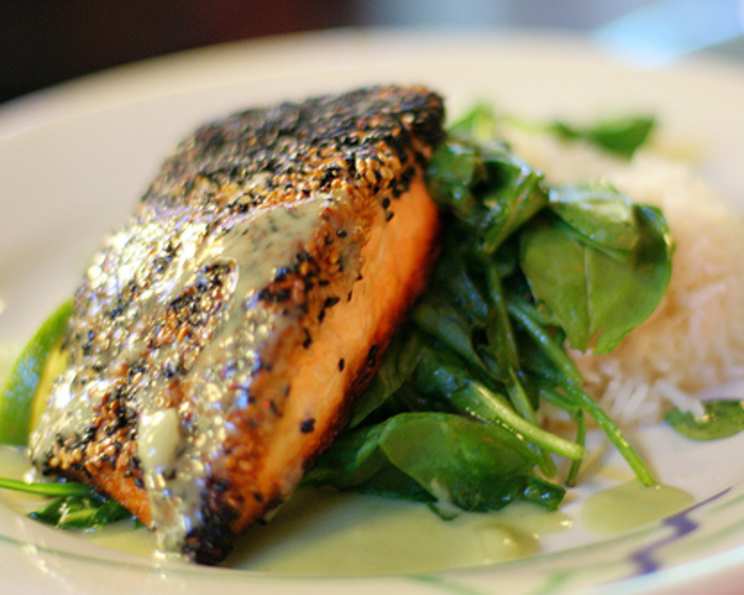
Sesame Crusted Wild Salmon: A Symphony of Flavors
The first time I tasted salmon prepared with a sesame crust, it was at a small, family-run restaurant nestled on the coast of British Columbia. The air was thick with the scent of the ocean and woodsmoke. The flaky salmon, its richness balanced by the nutty sesame and a delicate ginger-infused sauce, transported me. That simple dish sparked a lifelong fascination with the interplay of flavors, and it’s a memory I cherish every time I prepare this dish, bringing that west coast experience into my own kitchen.
Recipe Overview
- Prep Time: 10 minutes
- Cook Time: 15 minutes
- Total Time: 25 minutes
- Servings: 6
- Dietary Type: Pescatarian, Gluten-Free (check coconut milk ingredients)
Ingredients
- 6 salmon fillets, 5-6 ounces each
- 4 tablespoons sesame seeds
- 1 tablespoon sesame oil
- 1 red onion, sliced
- ½ teaspoon salt
- ⅓ teaspoon pepper
- 3 tablespoons ginger, minced
- 1 tablespoon butter
- 3 tablespoons rice vinegar
- 1 cup coconut milk or 1 cup 35% cream
Equipment Needed
- Baking dish
- Oven
- Small skillet
Instructions
-
Begin by preheating your oven to 450 degrees Fahrenheit (232 degrees Celsius). This high heat will ensure the salmon cooks quickly and retains its moisture.
-
Next, toast the sesame seeds. Spread them evenly on a baking sheet (or use the same baking dish you’ll cook the salmon in, cleaning it first). Place the baking sheet in the preheated oven for approximately 5 minutes. Keep a close watch; you want the seeds to be lightly browned and fragrant, not burnt. Burnt sesame seeds will impart a bitter taste.
-
While the sesame seeds are toasting, prepare the salmon. Gently rub the top of each salmon fillet with sesame oil. This will help the sesame seeds adhere and add a subtle nutty flavor.
-
Season each fillet with salt and pepper to taste. Be mindful not to over-salt, as the sauce will also contribute to the overall saltiness of the dish.
-
Once the sesame seeds are toasted, remove them from the oven. Carefully press the tops of the salmon fillets into the toasted seeds, ensuring they are well-coated. This creates a delicious and visually appealing crust.
-
Lightly butter a baking dish. This will prevent the salmon from sticking and add a touch of richness. Place the sesame-crusted salmon fillets in the prepared baking dish.
-
Transfer the baking dish to the preheated oven. Bake for 10-15 minutes, depending on the thickness of the salmon fillets. The internal temperature should reach 145 degrees Fahrenheit (63 degrees Celsius). The salmon is done when it flakes easily with a fork. Be careful not to overcook it, as it will become dry.
-
While the salmon is baking, prepare the sauce. Melt the butter in a small skillet over medium-high heat.
-
Add the sliced red onion and minced ginger to the melted butter. Sauté for about 5 minutes, or until the onion is translucent and softened. The ginger will release its fragrant aroma, filling your kitchen with a delightful scent.
-
Season the onion and ginger mixture with a pinch of salt and pepper.
-
Pour the rice vinegar into the skillet and allow it to simmer until it evaporates, about 1-2 minutes. This step helps to mellow the acidity of the vinegar and allows its flavor to meld with the onion and ginger.
-
Stir in the coconut milk (or cream, if using). Bring the mixture to a boil, then reduce the heat to low and simmer for 2 minutes, stirring occasionally. This will allow the sauce to thicken slightly.
-
Once the salmon is cooked, remove it from the oven.
-
To serve, spoon a generous portion of the onion-ginger sauce onto each plate. Top with a sesame-crusted salmon fillet. Serve immediately with your choice of sides, such as basmati rice and steamed vegetables.
Expert Tips & Tricks
- For an even more intense sesame flavor, lightly toast the sesame seeds in a dry skillet before coating the salmon.
- If you don’t have rice vinegar, you can substitute white wine vinegar or apple cider vinegar.
- To prevent the sesame seeds from burning during toasting, keep a close eye on them and stir them occasionally.
- A squeeze of fresh lime or lemon juice over the finished dish adds a bright, zesty note.
- If you’re using frozen salmon fillets, make sure they are completely thawed before cooking. Pat them dry with paper towels to remove any excess moisture.
Serving & Storage Suggestions
Serve the sesame-crusted wild salmon immediately after cooking for the best flavor and texture. Arrange the salmon on a plate with a generous spoonful of the onion-ginger sauce, and accompany it with sides like steamed vegetables, basmati rice, or a fresh salad. Leftovers can be stored in an airtight container in the refrigerator for up to 2 days. Reheat gently in a skillet or microwave until warmed through. Be careful not to overcook the salmon during reheating, as it can become dry. Freezing is not recommended as it changes the texture of the fish.
Nutritional Information
| Nutrient | Amount per Serving | % Daily Value |
|---|---|---|
| Calories | 420 kcal | 21% |
| Total Fat | 25g | 38% |
| Saturated Fat | 15g | 75% |
| Cholesterol | 140mg | 47% |
| Sodium | 350mg | 15% |
| Total Carbohydrate | 8g | 3% |
| Dietary Fiber | 2g | 7% |
| Sugars | 3g | N/A |
| Protein | 40g | 80% |
Note: Nutritional information is an estimate and can vary based on specific ingredients and portion sizes.
Variations & Substitutions
- Spicy Sesame Crust: Add a pinch of red pepper flakes to the sesame seed mixture for a touch of heat.
- Gluten-Free: Ensure that your coconut milk is certified gluten-free.
- Maple-Ginger Glaze: Substitute maple syrup for rice vinegar for a sweeter glaze.
- Different Fish: If you don’t have salmon, this recipe works well with other types of fish, such as tuna or cod. Adjust cooking time as needed.
- Dairy-Free: To make this entirely dairy-free, ensure your butter is a plant-based alternative.
FAQs (Frequently Asked Questions)
Q: Can I use frozen salmon for this recipe?
A: Yes, you can use frozen salmon. Make sure to thaw it completely before cooking and pat it dry with paper towels to remove excess moisture.
Q: How do I know when the salmon is cooked through?
A: The salmon is cooked through when it flakes easily with a fork and the internal temperature reaches 145 degrees Fahrenheit (63 degrees Celsius).
Q: Can I prepare the sauce ahead of time?
A: Yes, you can prepare the sauce ahead of time. Store it in an airtight container in the refrigerator for up to 2 days. Reheat gently before serving.
Q: What vegetables go well with this dish?
A: Steamed broccoli, asparagus, or green beans are excellent choices. You can also serve it with a side of roasted vegetables, such as Brussels sprouts or sweet potatoes.
Q: Can I use black sesame seeds instead of white sesame seeds?
A: Absolutely! Black sesame seeds will add a slightly nuttier flavor and a striking visual contrast to the dish.
Final Thoughts
I encourage you to try this Sesame Crusted Wild Salmon recipe and experience the delightful combination of flavors for yourself. The simplicity of the preparation belies the complexity of the taste. Don’t be afraid to experiment with variations and substitutions to make it your own. If you make this dish, please share your feedback and any creative twists you’ve added. Consider pairing it with a crisp Sauvignon Blanc to complement the richness of the salmon and the brightness of the ginger. Bon appétit!