
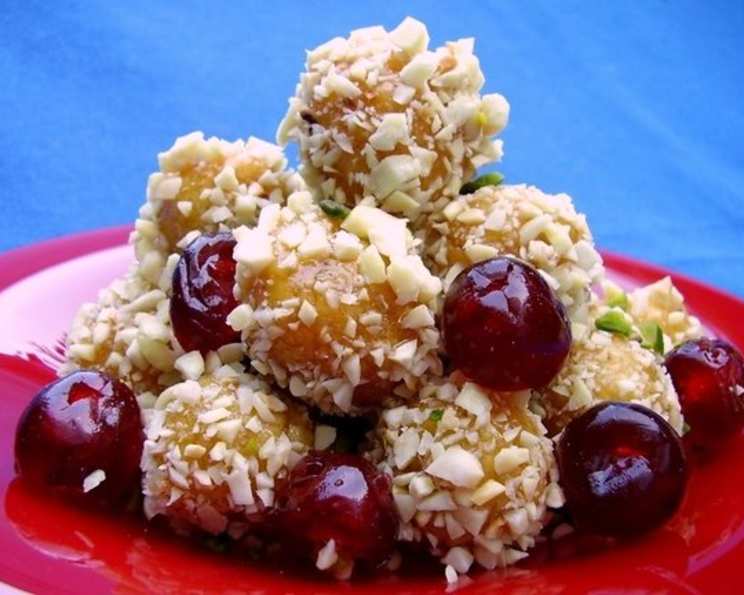
The Sticky Sweet Nostalgia of Tayglach
The scent of warm honey and ginger always takes me back to Bubbe’s kitchen, a tiny, sun-drenched space overflowing with love and the aroma of Jewish holidays. During Rosh Hashanah, her famous tayglach, those impossibly sticky, honey-drenched balls studded with almonds and raisins, would take center stage. Each glistening bite was a tiny treasure, a symbol of sweetness and a promise of a good year to come. I remember sneaking extra pieces when no one was looking, a secret indulgence I always got away with. To this day, making tayglach brings back those cherished memories and fills my own kitchen with Bubbe’s warmth.
Recipe Overview
- Prep Time: 45 minutes
- Cook Time: 35-40 minutes
- Total Time: 1 hour 20 minutes
- Servings: 36-40
- Yield: 36-40 pieces
- Dietary Type: Not specified
Ingredients
- 1 ¾ cups all-purpose flour
- 1 cup sugar, plus 1 tablespoon sugar (may use half amt. of Splenda)
- ½ teaspoon salt
- 3 eggs, beaten (if large, you might need to add a bit more flour)
- 10 ounces unsalted roasted almonds
- 5 ounces golden raisins
- 1 lb honey (I suggest clover)
- 1 teaspoon ground ginger or ½ inch fresh ginger, peeled
- 1 tablespoon vegetable oil or 1 tablespoon canola oil
- ¾ cup hot filtered water
- ½ cup sweet wine (optional)
Equipment Needed
- Large bowl
- Wooden spoon
- Floured board
- Large pot
- Slotted spoon
- Cookie sheet or flat platter
Instructions
-
In a large bowl, create a well with the flour, salt, and 1 tablespoon of sugar.
-
Add the oil and beaten eggs to the well. Mix very well with a wooden spoon until a dough forms. Be prepared for the dough to be quite elastic.
-
Pinch off large egg-sized pieces of the dough.
-
Roll each piece between your hands (lightly flour if needed) until you have a piece as long as a drinking straw.
-
Place the rolled dough on a floured board and roll flat so it is approximately 1 inch wide.
-
Cut the flattened dough into 1-inch pieces.
-
Place one almond and two raisins on each piece of dough.
-
Roll the dough around the almond and raisins, forming a ball. Ensure the dough is sealed completely to prevent the fillings from escaping during cooking.
-
Set the formed tayglach balls aside.
-
In a large pot, bring the honey, remaining sugar, and ginger to a boil over medium-high heat.
-
Once boiling, gently drop the tayglach pieces into the honey mixture and reduce the heat to medium.
-
Cook for 35 to 40 minutes, stirring with a wooden spoon as needed to prevent sticking and ensure even cooking. Adjust the heat to maintain a slow rolling boil; this is crucial for proper caramelization.
-
Remove the cooked tayglach pieces from the honey with a slotted spoon and set them aside on a separate plate or bowl.
-
Turn the heat to low under the pot of remaining honey. Add the hot filtered water and cook down, stirring frequently.
-
Continue cooking the honey mixture until it has reduced to about ¼ of its original volume. Watch carefully to prevent burning.
-
Remove the pot from the heat. Return the tayglach pieces to the honey and toss gently to coat them thoroughly once more.
-
Remove the coated tayglach with a slotted spoon and arrange them on a cookie sheet or flat platter to cool completely.
-
While still slightly tacky, you can sprinkle the tayglach with crushed almonds (if you have any leftovers) for added texture and visual appeal.
-
If desired, plump the raisins by soaking them in the sweet wine before using. Make sure they are drained and patted dry before adding them to the dough. If you choose not to use the wine for soaking, you can always enjoy it as a beverage while you bake!
Expert Tips & Tricks
-
Dough Consistency: If your eggs are particularly large, the dough may be too sticky. Gradually add a bit more flour, a tablespoon at a time, until the dough is manageable.
-
Sealing the Balls: Ensuring the dough is tightly sealed around the almond and raisins is critical. A loose seal will cause the fillings to fall out during cooking, resulting in misshapen tayglach.
-
Honey Temperature Control: Maintaining a slow rolling boil in step 12 is key. Too high a heat will cause the honey to burn and develop a bitter taste. Too low, and the tayglach won’t caramelize properly.
-
Preventing Sticking: Stirring frequently during the honey cooking process is essential to prevent sticking and burning. Pay close attention, especially as the honey reduces.
-
Ginger Intensity: If you prefer a more pronounced ginger flavor, use fresh ginger. Grate it finely before adding it to the honey mixture.
Serving & Storage Suggestions
The finished tayglach will be delightfully sticky, and should remain that way! They are best served at room temperature. Get creative with presentation! You can arrange them artfully on a platter or build them into a pyramid, securing them with cut red and green candied cherries for a festive touch. Store any leftover tayglach in an airtight container at room temperature. They will keep nicely for several weeks, becoming even stickier and more flavorful over time. Freezing is not recommended as it can alter the texture.
Nutritional Information
| Nutrient | Amount per Serving | % Daily Value |
|---|---|---|
| Calories | 152.8 kcal | N/A |
| Calories from Fat | 45 g | 30% |
| Total Fat | 5.1 g | 7% |
| Saturated Fat | 0.5 g | 2% |
| Cholesterol | 17.6 mg | 5% |
| Sodium | 39.5 mg | 1% |
| Total Carbohydrate | 25.8 g | 8% |
| Dietary Fiber | 1.3 g | 5% |
| Sugars | 19.1 g | 76% |
| Protein | 3.1 g | 6% |
Variations & Substitutions
-
Nut Variations: Feel free to experiment with different nuts, such as walnuts, pecans, or hazelnuts, in place of almonds.
-
Spice Variations: Add a pinch of ground cinnamon, cloves, or nutmeg to the honey mixture for a warmer, spicier flavor profile.
-
Citrus Zest: A teaspoon of lemon or orange zest added to the dough can brighten the flavor and add a subtle citrus note.
-
Honey Options: While clover honey is recommended, other varieties like wildflower or buckwheat honey can be used, each imparting a unique flavor.
-
Raisin Alternatives: Substitute dried cranberries, chopped dates, or other dried fruits for the raisins.
FAQs (Frequently Asked Questions)
Q: Why is my tayglach dough so sticky?
A: Tayglach dough is naturally sticky due to the honey content. Make sure to flour your hands and work surface well, and add a bit more flour to the dough if needed, a tablespoon at a time, until it becomes manageable.
Q: How do I prevent the tayglach from sticking to the pot while cooking?
A: Stir the tayglach frequently with a wooden spoon to prevent sticking and ensure even cooking. Maintaining a slow rolling boil is also crucial.
Q: Can I make tayglach ahead of time?
A: Yes, tayglach can be made ahead of time. In fact, they often taste even better after a day or two, as the flavors meld together. Store them in an airtight container at room temperature.
Q: My tayglach are too hard. What did I do wrong?
A: Overcooking the honey mixture can result in hard tayglach. Be sure to maintain a slow rolling boil and remove the tayglach from the heat as soon as they are cooked through.
Q: Can I freeze tayglach?
A: While technically possible, freezing is not recommended as it can alter the texture of the tayglach. They are best stored at room temperature.
Final Thoughts
Now it’s your turn to create a little sweetness! Don’t be intimidated by the seemingly long process – each step is simple and rewarding. As you roll those tiny balls and watch them simmer in the honey, think of the generations who have enjoyed this treat before you. I encourage you to try this recipe and share your own memories and creations with friends and family. Perhaps pair your tayglach with a steaming cup of tea or a glass of sweet wine for the ultimate indulgence. And please, don’t hesitate to share your feedback and experiences – I’d love to hear how your tayglach turn out!