
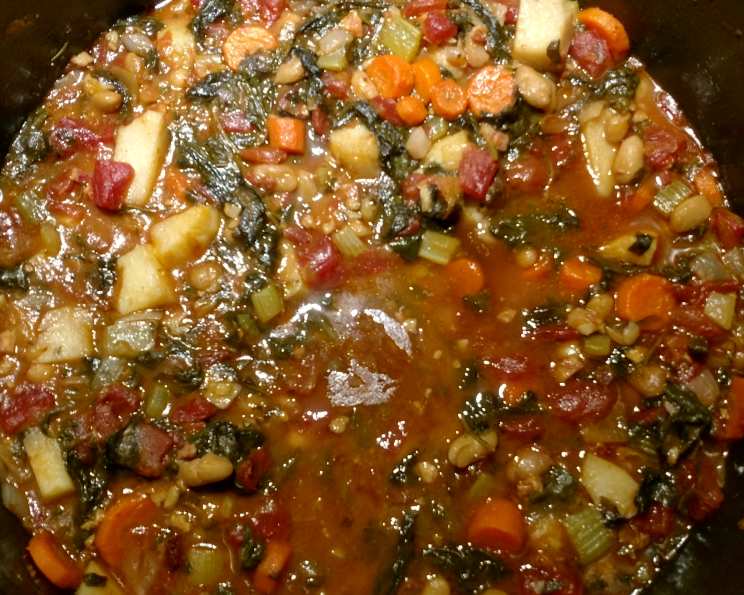
Winter Minestrone – Giada De Laurentiis
The first bite of minestrone always transports me back to my grandmother’s kitchen. It wasn’t just the warmth of the soup on a chilly day, but the vibrant colors of the vegetables swimming in the broth, each spoonful bursting with the flavors of the garden. She always said minestrone was a celebration of the season, and this Winter Minestrone, inspired by Giada De Laurentiis, perfectly captures that sentiment, bringing a touch of Italian sunshine even on the greyest days.
Recipe Overview
- Prep Time: 20 minutes
- Cook Time: 35 minutes
- Total Time: 55 minutes
- Servings: 4-6
- Yield: About 8 cups
- Dietary Type: Adaptable (See Variations)
Ingredients
- 2 tablespoons olive oil
- 1 onion, chopped
- 2 carrots, peeled and chopped
- 2 celery ribs, chopped
- 3 ounces thinly sliced pancetta, coarsely chopped
- 2 garlic cloves, minced
- 1 lb Swiss chard, stems trimmed, leaves coarsely chopped
- 1 russet potato, peeled and cubed
- 1 (14 1/2 ounce) can diced tomatoes
- 1 fresh rosemary sprig
- 1 (15 ounce) can cannellini beans, drained and rinsed
- 2 (14 ounce) cans low sodium beef broth
- 1 ounce Parmesan cheese rind
- 2 tablespoons chopped fresh Italian parsley
- Salt and pepper to taste
Equipment Needed
- Heavy large pot or Dutch oven
- Food processor or blender
- Measuring spoons and cups
- Cutting board
- Chef’s knife
Instructions
- Begin by heating the olive oil in a heavy large pot or Dutch oven over medium heat. This will be your workhorse for developing the rich flavors of the minestrone.
- Add the chopped onion, carrots, celery, pancetta, and garlic to the pot. Sauté the vegetables until the onion becomes translucent, about 10 minutes. This step is crucial for building a flavorful base for the soup. Make sure to stir frequently to prevent the garlic from burning.
- Introduce the Swiss chard and cubed potato to the party. Sauté for another 2 minutes, allowing the greens to wilt slightly and the potato to begin to soften.
- Pour in the can of diced tomatoes and add the fresh rosemary sprig. Simmer until the Swiss chard is wilted and the tomatoes begin to break down, approximately 10 minutes. The acidity of the tomatoes balances the richness of the pancetta.
- While the vegetable mixture is simmering, prepare the cannellini bean puree. In a food processor or blender, combine 3/4 cup of the drained and rinsed cannellini beans with 1/4 cup of the beef broth. Process until the mixture is almost smooth. This puree will add body and creaminess to the soup.
- Pour the pureed bean mixture, the remaining beef broth, and the Parmesan cheese rind into the pot with the vegetable mixture. The cheese rind infuses the broth with a savory, umami flavor.
- Simmer the soup until the potato pieces are tender, stirring occasionally, about 15 minutes. Check the potato for doneness by piercing a cube with a fork; it should be easily pierced.
- Stir in the remaining whole cannellini beans and chopped fresh Italian parsley. Simmer until the beans are heated through and the soup has thickened slightly, about 2 minutes.
- Season the minestrone with salt and pepper to taste. Be sure to taste as you go and adjust the seasoning according to your preference.
- Before serving, remove and discard the Parmesan cheese rind and the rosemary sprig. The rosemary leaves will have likely fallen off the stem and infused their aroma into the soup.
- Ladle the Winter Minestrone into bowls and serve immediately.
Expert Tips & Tricks
- For a vegetarian version, simply omit the pancetta. You can add a teaspoon of smoked paprika to the sautéing vegetables to mimic the smoky flavor.
- Don’t overcook the Swiss chard; it should retain some of its vibrant green color and texture.
- If you prefer a smoother soup, you can use an immersion blender to partially puree the soup after the potatoes are cooked. However, leaving some of the vegetables whole adds to the rustic charm of minestrone.
- If the soup is too thick, add a little extra beef broth or water to reach your desired consistency.
- The Parmesan rind adds incredible depth of flavor. Save rinds from your Parmesan blocks in the freezer and use them to enhance soups and sauces.
- For an even more intense flavor, use homemade beef broth.
Serving & Storage Suggestions
Ladle the Winter Minestrone into warm bowls and garnish with a drizzle of extra virgin olive oil and a sprinkle of fresh Parmesan cheese (if not vegan). Serve with crusty bread for dipping. Leftover minestrone can be stored in an airtight container in the refrigerator for up to 3 days. For longer storage, freeze in individual portions for up to 2 months. Reheat gently on the stovetop or in the microwave until heated through. Frozen minestrone may lose some of its texture, but the flavor will remain delicious.
Nutritional Information
| Nutrient | Amount per Serving | % Daily Value |
|---|---|---|
| Calories | 328 kcal | N/A |
| Fat | 9.6 g | 14% |
| Saturated Fat | 2.3 g | 11% |
| Cholesterol | 6.2 mg | 2% |
| Sodium | 395.7 mg | 16% |
| Carbohydrate | 46.7 g | 15% |
| Fiber | 11.3 g | 45% |
| Sugars | 4.8 g | N/A |
| Protein | 17 g | 34% |
Note: Nutritional information is an estimate and may vary based on specific ingredients and portion sizes.
Variations & Substitutions
- Vegan Minestrone: Omit the pancetta and Parmesan cheese rind. Use vegetable broth instead of beef broth.
- Gluten-Free Minestrone: This recipe is naturally gluten-free. Ensure that your beef broth is also gluten-free.
- Seasonal Variations: Feel free to adapt the vegetables based on what’s in season. In the spring, add asparagus, peas, or fava beans. In the summer, add zucchini, yellow squash, or green beans.
- Pasta Addition: For a heartier soup, add small pasta shapes like ditalini or orzo during the last 10 minutes of cooking time.
- Spicy Kick: Add a pinch of red pepper flakes to the sautéing vegetables for a little heat.
- Bean Variations: Substitute other beans like kidney beans, great northern beans, or borlotti beans for the cannellini beans.
FAQs (Frequently Asked Questions)
Q: Can I make this minestrone ahead of time?
A: Yes! Minestrone is often even better the next day as the flavors have had time to meld together. Store it in the refrigerator and reheat before serving.
Q: Can I freeze this soup?
A: Absolutely! Freeze in airtight containers for up to 2 months. The texture of the vegetables may change slightly upon thawing, but the flavor will remain delicious.
Q: What can I substitute for Swiss chard?
A: If you can’t find Swiss chard, you can use other leafy greens like spinach, kale, or escarole.
Q: Do I have to use pancetta?
A: No, the pancetta adds a savory flavor, but you can omit it for a vegetarian version or substitute it with diced bacon or prosciutto.
Q: Can I use dried rosemary instead of fresh?
A: Yes, use about 1 teaspoon of dried rosemary. Add it to the pot along with the diced tomatoes.
Final Thoughts
Winter Minestrone is more than just a soup; it’s a hug in a bowl, a vibrant celebration of seasonal flavors that warms the soul on even the chilliest of days. Inspired by Giada De Laurentiis’ accessible Italian style, this recipe offers a delightful blend of textures and tastes, easily customizable to your preferences and dietary needs. So, gather your favorite vegetables, embrace the aroma of simmering herbs, and create your own comforting memory with this timeless classic. Don’t hesitate to experiment with variations and share your creations – buon appetito!